
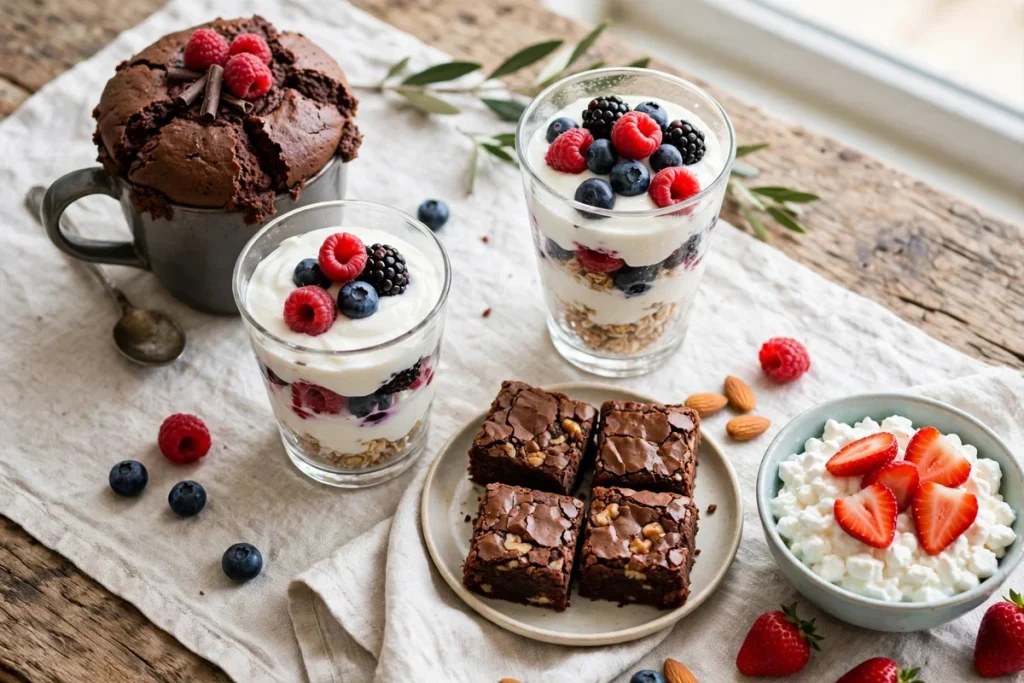

Dessert does not have to break a protein target. Greek yogurt, cottage cheese, protein powder and egg whites turn sweet treats into snacks that pack real protein — from 6 g in a peanut butter ball to 32 g in a mug cake. These healthy protein dessert recipes all list calories and protein per serving, worked out from the ingredients below, so the numbers add up.
Figures use standard USDA-style values: a scoop of whey protein powder is about 120 calories and 24 g protein, nonfat Greek yogurt about 100 calories and 17 g protein per 170 g, and cottage cheese about 98 calories and 11 g protein per 100 g. Brands differ slightly, so treat each total as an honest estimate, not a lab measurement.
1. Greek Yogurt Berry Parfait
Serves 1. The fastest dessert on this list — no cooking, no powder, just assembly.
- 170 g nonfat Greek yogurt
- 1/2 cup mixed berries
- 2 tbsp granola
Spoon the yogurt into a glass. Top with the berries and granola. Eat straight away so the granola stays crunchy.
Per serving: about 200 calories, 19 g protein.
2. Chocolate Protein Mug Cake
Serves 1. A single-serve cake for the days when only chocolate will do.
- 1 scoop (30 g) chocolate whey protein powder
- 1 tbsp cocoa powder
- 1 egg white
- 1/4 cup oat flour
- 2 tbsp water
- Stevia to taste
Mix everything in a mug until smooth. Microwave for 60–90 seconds until just set. Rest for 1 minute before eating.
Per serving: about 224 calories, 32 g protein.
3. Cottage Cheese Chocolate Mousse
Serves 2. Blended cottage cheese turns silky and the cocoa hides it completely.
- 300 g low-fat cottage cheese
- 2 tbsp cocoa powder
- 1 tbsp honey
- 1/2 tsp vanilla extract
Blend everything until completely smooth. Chill for 30 minutes. Spoon into two small bowls.
Per serving: about 190 calories, 18 g protein.
4. Protein Brownies
Makes 6 brownies. Dense, fudgy and genuinely filling for a brownie.
- 2 scoops chocolate whey protein powder
- 1/2 cup almond flour
- 1/4 cup cocoa powder
- 2 eggs
- 1/4 cup maple syrup
Mix into a thick batter. Spread in a small lined pan. Bake at 180°C (350°F) for 15–18 minutes, then cool before cutting.
Per brownie: about 160 calories, 13 g protein.
5. Peanut Butter Protein Balls
Makes 12 balls. No baking, and they keep in the fridge for a week.
- 1/2 cup peanut butter
- 1 scoop vanilla whey protein powder
- 1 cup rolled oats
- 2 tbsp honey
Mix everything into a stiff dough. Roll into 12 balls. Chill for at least 30 minutes.
Per ball: about 110 calories, 6 g protein.
6. Baked Protein Cheesecake
Serves 8. A lighter slice that still tastes like cheesecake, thanks to the lemon.
- 300 g low-fat cottage cheese
- 200 g nonfat Greek yogurt
- 1 scoop vanilla whey protein powder
- 2 eggs
- 2 tbsp honey
- Zest of 1 lemon
Blend until smooth. Pour into a small lined cake tin. Bake at 160°C (325°F) for 35–40 minutes, then chill before slicing.
Per slice: about 100 calories, 11 g protein.
7. Protein Ice Cream
Serves 2. Frozen bananas plus a scoop of powder — the classic nice cream, upgraded.
- 2 frozen bananas, sliced
- 1 scoop vanilla whey protein powder
- 100 ml skim milk
Blend everything until thick and smooth. Eat straight away as soft-serve, or freeze for 30 minutes for a firmer scoop.
Per serving: about 185 calories, 16 g protein.
At a Glance: Calories and Protein Compared
Protein per 100 calories is simply protein divided by calories, times 100. It shows which dessert gives you the most protein for the calories it costs.
| Recipe | Calories | Protein | Protein per 100 calories |
|---|---|---|---|
| Greek Yogurt Berry Parfait | 200 | 19 g | 9.5 g |
| Chocolate Protein Mug Cake | 224 | 32 g | 14.3 g |
| Cottage Cheese Chocolate Mousse | 190 | 18 g | 9.5 g |
| Protein Brownies | 160 | 13 g | 8.1 g |
| Peanut Butter Protein Balls | 110 | 6 g | 5.5 g |
| Baked Protein Cheesecake | 100 | 11 g | 11.0 g |
| Protein Ice Cream | 185 | 16 g | 8.6 g |
The mug cake wins on efficiency, while the peanut butter balls trade efficiency for portability — the right pick depends on whether you want the most protein per calorie or a snack you can carry.
3 Tips for Better Protein Desserts
Sweeteners: count the liquid ones
A tablespoon of sugar adds about 48 calories and no protein, while stevia or monk fruit add sweetness for near-zero calories. Honey and maple syrup taste better in some bakes, but count them: the brownies’ 1/4 cup of maple syrup is 210 calories of the batch.
Whey vs casein: pick by texture
Whey blends smoothly into shakes, mug cakes and ice cream. Casein thickens into a pudding-like texture, which suits mousse — but it can turn bakes rubbery if you use too much. Our protein powder guide compares the types per scoop.
Do not overbake protein bakes
Protein bakes dry out fast. Pull brownies and cheesecake while the centre still looks slightly underdone — they set as they cool. Overbaked whey turns chalky, and no topping fixes it.
Want more high-protein ideas? Our high-protein snacks list covers savoury options too, and our calories in protein guide explains why protein is worth 4 calories per gram.
Frequently Asked Questions
What dessert has the most protein?
Of the recipes here, the chocolate protein mug cake, at about 32 g protein per serving from a full scoop of whey, an egg white and oat flour. The parfait (19 g) and the mousse (18 g) are the best no-powder options.
Can dessert fit a high-protein diet?
Yes, when the dessert itself carries protein. A 100–230 calorie dessert with 11–32 g protein works like any other snack: it counts toward your daily target instead of against it. The trick is building the dessert around yogurt, cottage cheese, egg whites or powder rather than adding them as an afterthought.
Which protein powder is best for desserts?
Whey for most things: it blends smoothly and bakes well in small amounts. Casein gives a thicker, pudding-like texture that suits mousse. Plant blends work too but can taste earthier — chocolate flavours hide that best. See our protein powder guide for per-scoop numbers.
Are protein desserts good for weight loss?
They can help: protein keeps you full longer than sugar alone, and a 100–200 calorie dessert is easier to fit into a calorie deficit than a 400-calorie slice of cake. They still contain calories, though — a protein ball is a snack, not a free food.
How do you add protein to a dessert?
Start with a protein-rich base: swap cream for Greek yogurt or blended cottage cheese, add a scoop of protein powder to batters and nice cream, or use egg whites to lighten a cake. Each recipe above shows the maths, so you can see exactly where the protein comes from.



Pingback: Low Calorie Chocolate Bars: 8 Picks Under 160 Calories