
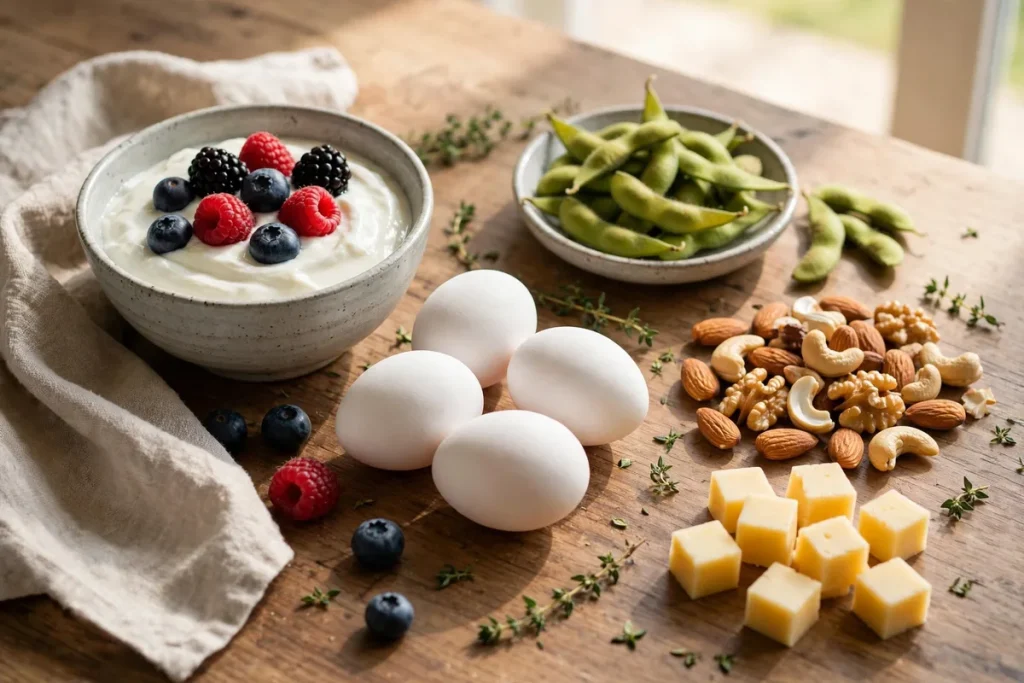

A snack only earns the title “high-protein” at about 10 g of protein or more — ideally for roughly 100-200 kcal. Below that line you have a snack with some protein, which is fine, but it will not keep you full for long. The best everyday options are simple ones: Greek yogurt or skyr, cottage cheese, hard-boiled eggs, tuna pouches, jerky and edamame.
Below are the 15 high protein snacks for weight loss and busy days that hold up best, each with its protein and calories side by side so you can trade them off yourself. The figures are typical label values for the serving described — brands vary, so treat every number as “about” and let your own label win any argument.
One habit ties the list together: the snack is planned. A protein snack eaten on purpose at 4 p.m. bridges the long gap between lunch and dinner; the same calories grazed mindlessly from a shared candy bowl do nothing except arrive before a full dinner anyway. Stock first, snack second — the drawer section at the end shows how.
What separates this list from a generic “healthy snacks” roundup is the protein floor. Everything from the shake down to the string cheese clears 10 g; the last three entries fall a little short of that line, and they are included honestly — for crunch, fiber and variety — because a snack system built only on shakes and jerky gets quietly abandoned by February.
Why Protein Snacks Help (Especially for Weight Loss)
Protein is the most filling nutrient per calorie — more than fat, and far more than carbohydrate. A snack with 15 g of protein genuinely switches hunger off for two or three hours, while a 150-kcal handful of crackers or pretzels (2-3 g of protein) mostly starts a clock ticking toward the next handful. For anyone in a calorie deficit, that difference in fullness per calorie is the entire game.
It also prevents the classic spiral: no snack at 4 p.m., ravenous by 6, and suddenly the vending machine or the drive-through makes a 400-kcal decision for you. A planned 150-kcal protein snack is cheaper, in every sense, than the unplanned 400. And the grams are not wasted effort — snack protein counts toward your daily total exactly like meal protein does, which you can size for yourself with our protein calculator.
There is a quieter benefit, too: in a deficit, adequate protein helps you lose fat rather than muscle. Most people undershoot protein at meals alone — breakfast especially — so a deliberate protein snack is often the difference between a day that lands near target and one that never gets close.
A word on timing, because it comes up constantly: there is no magic snack window. Protein eaten at 4 p.m. works the same as protein at 10 a.m. — what matters is that it fills the longest hungry gap in your day. For most people that gap is mid-afternoon; for night-shift workers it might be 2 a.m. The snack goes where the gap is.
The 15 Snacks
Ordered roughly by protein, with the two crunchy plant-based finishers at the end — they earn their place on fiber and satisfaction even at 7 g:
| Snack | Protein (about) | Calories (about) | Note |
|---|---|---|---|
| Protein shake or high-protein smoothie | About 20-25 g | 150-200 kcal | Brands vary — check the label |
| Skyr, 1 cup | About 17-19 g | 130-150 kcal | Thicker and higher-protein than regular yogurt |
| Greek yogurt (2% or nonfat), 1 cup | About 15-17 g | 120-150 kcal | Add berries; skip the sugary granola |
| Tuna pouch, single-serve | About 16-17 g | 110-130 kcal | Zero prep |
| Edamame, 1 cup shelled | About 17 g | 190 kcal | Plant-based, with fiber |
| Turkey and cheese roll-ups | About 13-14 g | 180 kcal | Deli slices wrapped around a cheese stick |
| Cottage cheese, ½ cup | About 12-13 g | 110 kcal | Sweet with fruit, or savory with pepper |
| Two hard-boiled eggs | About 12 g | 155 kcal | The original protein snack |
| Two string cheeses | About 12 g | 160 kcal | Kid- and desk-friendly |
| Beef or turkey jerky, 1 oz | About 10-12 g | 80-100 kcal | Best protein-per-calorie here; watch sodium |
| Cooked shrimp with cocktail sauce, about 10 shrimp | About 14 g | 120 kcal | Feels fancy, takes minutes |
| Protein bar | About 15-20 g | 190-220 kcal | Quality varies a lot — see our cleanest protein bars guide |
| Roasted chickpeas, ½ cup | About 7 g | 180 kcal | Crunchy, with fiber |
| Pumpkin seeds, 1 oz | About 7 g | 160 kcal | A minerals bonus |
| Roasted fava bean snacks, ½ cup | About 7-9 g | 170 kcal | The crunchy sleeper pick |
Read the table by ratio, not just by grams. Jerky quietly wins the protein-per-calorie contest — 10-12 g for under 100 kcal — while the shake wins on raw total. The yogurt family sits in the sweet spot most people actually live in: 15 g or more, around 130-150 kcal, and available in every supermarket on earth.
Two smaller snacks also stack into one big one: two eggs plus a string cheese is about 18 g of protein, and cottage cheese with a handful of pumpkin seeds lands near 19 g. And notice the budget spread — eggs, cottage cheese, edamame and chickpeas deliver their protein for pennies per gram, while bars and shakes are the convenience tax. Both have their place; the fridge staples should do the daily work.
Portion honesty matters at the packaged end of the table. A protein bar can mean 15 g or 21 g depending on the brand, and a jerky serving is one ounce — a small handful, not the whole bag eaten standing at the pantry. Weigh or count the first few times; after that your eye learns the serving, and the numbers in the table become the numbers you actually eat.
Meat Snacks, Honestly
Jerky and meat sticks are the traveler’s protein: the most protein per bite of any snack category, shelf-stable for months, and happy in a glove box, a desk drawer or a hiking pack. No fridge, no prep, no utensils — for keeping protein up on chaotic days, nothing else on the list competes.
The trade-offs are real, though. Sodium is the big one: a single ounce of jerky can carry a quarter of a day’s sensible salt intake, which matters if you eat it daily or watch your blood pressure. Processing is the second: these are cured, processed meats, the category guidelines consistently suggest eating less often. And check the sugar line — sweet-flavored jerky can hide 5-6 g of sugar per ounce, which makes parts of the jerky aisle candy in disguise.
The fair verdict: jerky is a regular-but-not-constant option — superb on travel days and deadline days, rotated with the fridge snacks the rest of the week. Within the category, plain or peppered jerky beats the meat stick most of the time: sticks usually run fattier, with around 5-7 g of protein for similar calories.
Reading a jerky label takes five seconds: protein first (10 g or more per ounce), then sugar (the lower the better — ideally under 3 g), then sodium. If the second ingredient on the list is a syrup, you are holding a meat-flavored candy bar: tasty, but file it under treats, not protein snacks.
Sweet Tooth Options
A sweet tooth does not disqualify a snack — it just changes the build. The formula is protein first, sweetness second:
Greek yogurt, berries and a few dark-chocolate chips. The yogurt does the protein work (about 15 g in a cup); a handful of berries and a tablespoon of chips add the dessert signal for roughly 40 extra calories. Cottage cheese with pineapple is the retro option that deserves its comeback — sweet, salty, about 12 g of protein, and strangely more satisfying than it sounds. And a small protein smoothie — a scoop of protein blended with frozen berries and milk or water — lands around 20 g of protein and drinks like a milkshake, because it nearly is one.
What all three share: the sweet element is a topping, not the base. The moment the build flips — a large granola pile with a spoon of yogurt, say — the protein ratio collapses and you are back to dessert with a garnish. Keep the base protein, sprinkle the fun.
One frozen option is worth knowing: Greek yogurt bark. Spread yogurt thin on a lined tray, scatter berries and a few chocolate chips over it, freeze, and snap it into shards. The protein math is the same as the bowl version, and it eats like a frozen candy bar at about 150 kcal a serving — a summer snack that feels like a loophole.
Build a Snack Drawer
The list above only works if the snacks are physically where your hunger happens. Stock three spots:
- Desk drawer: jerky, roasted chickpeas, pumpkin seeds, roasted fava beans, a protein bar, tuna pouches.
- Car: a second small stash of the same shelf-stable items — the drive home is a snack decision waiting to happen.
- Gym bag: a shake or bar for the post-workout window, so the trip home does not route past the bakery.
- Fridge shelf: Greek yogurt, cottage cheese, eggs already boiled, string cheese — the fresh half of the list, at eye level.
And when a new snack catches your eye in the store, use the 10 g rule: protein of about 10 g or more per serving earns a trial; then check that the calories sit near 100-200, and glance at the sugar. Three numbers, ten seconds, decision made. The same protein-first thinking scales up to full plates in our high protein dinners list — meals built like these snacks, only bigger.
Finally, rotate the stash. Taste fatigue is the silent killer of every snack plan: by the fourth consecutive week of the same jerky brand, the vending machine starts to look interesting again. Swap flavors and formats — a different jerky, a new seasoning on the chickpeas, skyr in place of yogurt for a month — and the whole system quietly survives the year.
Frequently Asked Questions
What is the best high-protein snack for weight loss?
Greek yogurt or a tuna pouch: both give about 15-17 g of protein for roughly 120-150 kcal, which is the best fullness-per-calorie deal on the list. Skyr is even a touch higher in protein if you can find it.
Which meat snack has the most protein?
Jerky: about 10-12 g of protein per ounce for only around 90 kcal. Meat sticks are handier, but they usually carry more fat and less protein per calorie.
How much protein should a snack have to count as high-protein?
About 10 g or more is a fair bar — roughly what two eggs or a cup of Greek yogurt provide. Below that, it is a snack with some protein, which is fine, just less filling.
Are protein bars a good snack?
Convenient and fine sometimes, at about 15-20 g of protein per bar. Whole foods usually win on fullness per calorie — and quality varies so much between bars that our cleanest-bars guide is worth a look before you stock up.
Is a protein snack before bed OK?
Yes. Daily protein totals matter most, and a roughly 150 kcal snack fits most budgets. Cottage cheese and Greek yogurt are the classic choices — their casein protein digests slowly overnight.


Pingback: Quickest Way to Lose Weight Safely: 6 Levers That Actually Work
Pingback: Tempeh vs Tofu: Protein, Calories and Which Is Healthier