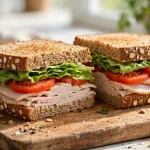
A flagel is a bagel that has been flattened before baking, and a typical plain bakery flagel has about 260 to 300 calories. If you have ever wondered what the difference really is, here is the short version: a flagel is not a new kind of bread. It is the same bagel dough, pressed flat, so it bakes up thinner, wider and crispier, with more crust in every bite. The calories are a little lower than a large regular bagel, but only because there is less dough in it — not because the dough itself is lighter.
All the numbers in this article are typical bakery values. Flagels are not a packaged product with one label, so the exact count moves with the shop, the size and the topping. Treat the ranges below as a realistic guide, not a factory specification.

What Is a Flagel?
The name says it all: flagel is short for “flat bagel.” A baker takes a regular bagel, presses it flat before it goes into the oven, and the result is a disc that looks a little like a thick pancake with a bagel’s chewy bite. The style became popular in New York delis, where customers wanted the bagel flavor without quite so much bread.
Flattening changes the eating experience more than the recipe. Because the flagel is thinner, a larger share of each bite is crust, which toasts up beautifully and crisps at the edges. The middle stays chewy, just with less of it. That is why a flagel feels lighter and eats more easily than a tall, dense bagel, even though the ingredients are the same: flour, water, yeast, malt and a little salt.
It also explains the calorie story honestly. A flagel is not a diet food in disguise. Per ounce, its calories are nearly identical to a regular bagel’s, because it is the same dough. The saving comes from portion: a pressed flagel simply weighs less than a big, puffy bagel from the same bakery. If a shop makes its flagels as heavy as its bagels, the calorie count will match too.
Flagel Calories by Type
Here are typical calories for one plain bakery flagel by common type. Use the middle of each range for a typical shop flagel, and the top of the range for a large one.
| Flagel type | Typical calories | Notes |
|---|---|---|
| Plain | 260-300 | The baseline; most shops land near 280 |
| Sesame | 270-310 | A sprinkle of seeds adds only a few calories |
| Everything | 275-315 | Seeds, garlic and salt add a little |
| Whole wheat | 250-290 | A touch more fiber, similar calories |
As with regular bagels, flavor barely moves the number at the same size. The seed toppings on a sesame or everything flagel add only a handful of calories. What matters far more is the size of the flagel and what you spread on it.
Flagel vs Regular Bagel
Put side by side, the difference is clear — and it is smaller than most people expect. A standard bagel from our own bagel guide runs about 277 calories at about 105 grams, while a large deli bagel runs about 340 to 360. A flagel sits just under the standard bagel, because the press removes some dough.
| Plain flagel | Regular bagel | |
|---|---|---|
| Shape | Thin, wide, crisp-edged | Tall, round, dense |
| Typical weight | About 85-95 g | About 105 g (standard); 130 g+ (large deli) |
| Calories | About 260-300 | About 277 (standard); 340-360 (large) |
| Carbs | About 45-55 g | About 55 g (standard) |
| Protein | About 9-11 g | About 11 g (standard) |
| Best use | Sandwiches, toasting | A thick schmear, eating plain |
The takeaway is simple: choosing a flagel over a standard bagel saves roughly nothing to about 20 calories, but choosing it over a large deli bagel can save 60 to 80. The real win is not the bread at all — it is how the flat shape changes the sandwich you build on it. A flagel holds fillings in a thinner stack, so a sandwich feels complete without a second mountain of bread, and the whole thing is easier to bite through and eat.
Toppings Math: Where the Calories Really Come From
As with any bagel, the spread can cost as much as the bread. A typical shop spread of regular cream cheese, 2 tablespoons, adds about 100 calories to a flagel, taking a plain 280-calorie flagel to about 380. A tablespoon of butter adds about 100 as well. Whipped cream cheese is a little lighter at about 35 calories per tablespoon, because it is beaten with air, so a light whipped schmear adds only about 70 for two tablespoons.
If you want the full spread-by-spread breakdown, our Bagel with Cream Cheese Calories guide walks through light, classic and deli-heavy builds, and the same numbers apply to a flagel of the same size. The rule of thumb is worth memorizing: measure the schmear with a tablespoon, because the difference between one tablespoon and three is about 100 calories of cream cheese you never really notice.
The same logic applies to sandwich fillings. Smoked salmon, egg, turkey and cheese all add real calories, but they also add protein that makes the meal last. The fillings that quietly push a flagel sandwich into heavy territory are the spreads: full-fat cream cheese, butter and mayonnaise, each around 90 to 100 calories per tablespoon.
How to Build a Lighter Flagel Sandwich
This is where the flat shape earns its reputation. Because a flagel is thinner, it makes a sandwich that is easier to hold, easier to bite and less dominated by bread. A lighter build can still feel like a real breakfast or lunch:
Start with a plain or whole wheat flagel, toasted until the edges crisp. Add egg whites or a whole egg, a few slices of turkey, and a pile of vegetables — tomato, cucumber, lettuce and red onion add crunch and freshness for almost no calories. Finish with a light schmear of whipped cream cheese instead of a thick regular spread, or swap the spread for mustard, which adds flavor for only a few calories.
The math works out kindly. A plain flagel at about 280 calories, plus turkey at about 60, egg whites at about 35 and vegetables at about 15, lands around 390 calories for a filling sandwich — and with a light whipped schmear at about 35 instead of a heavy regular one at about 100, you keep the creamy part without the extra 65. Compare that with a large deli bagel sandwich, where the bread alone can pass 340 before anything is added, and the flagel’s advantage becomes clear: it is not magic, it is simply a smaller bread platform for the same fillings.
Ordering tips help too. Ask for the flagel toasted well, which makes it sturdier for sandwiches, and ask for spreads on the light side or on the side, so you control the amount. At home, keep a tablespoon measure by the cream cheese for a week — most people are surprised how much they have been spreading.
So, is a flagel healthier than a bagel? Only slightly, and only because it is smaller. It is the same dough, with nearly the same calories per ounce, and it carries the same carbs. What it genuinely offers is a thinner, crispier, easier-to-eat version of a bagel — and for sandwiches, that smaller platform can be the difference between a meal that fits your day and one that quietly does not.
How many calories are in a flagel?
A typical plain bakery flagel has about 260 to 300 calories, with most shops landing near 280. Sesame, everything and whole wheat flagels are close, at about 250 to 315 depending on size.
Is a flagel healthier than a bagel?
Only slightly, and only because it is smaller. A flagel is the same dough as a bagel, so per ounce the calories are nearly the same. The saving comes from portion: a pressed flagel weighs less than a large, puffy bagel, so it can save 60 to 80 calories against a large deli bagel.
Why is it called a flagel?
Flagel is short for flat bagel. A baker presses a regular bagel flat before baking, so it comes out thinner, wider and crispier, with more crust per bite. The style became popular in New York delis.
How many carbs in a flagel?
A plain flagel has about 45 to 55 grams of carbs, close to a standard bagel at about 55 grams. The exact amount depends on the size of the flagel and the bakery.
Are flagels good for weight loss?
They can fit a weight-loss plan better than a large bagel, because the thinner bread makes a smaller platform for sandwiches. The toppings still decide the total, so a light spread and plenty of vegetables keep a flagel sandwich reasonable, while a heavy schmear can add 100 calories or more.