


If you are choosing between tempeh vs tofu, you are already choosing well. Both are made from soy, both are complete proteins, and both can anchor a filling, affordable meal. The real question is not which one is “good” and which one is “bad.” It is which one fits your goal, your appetite and the dish you are making tonight.
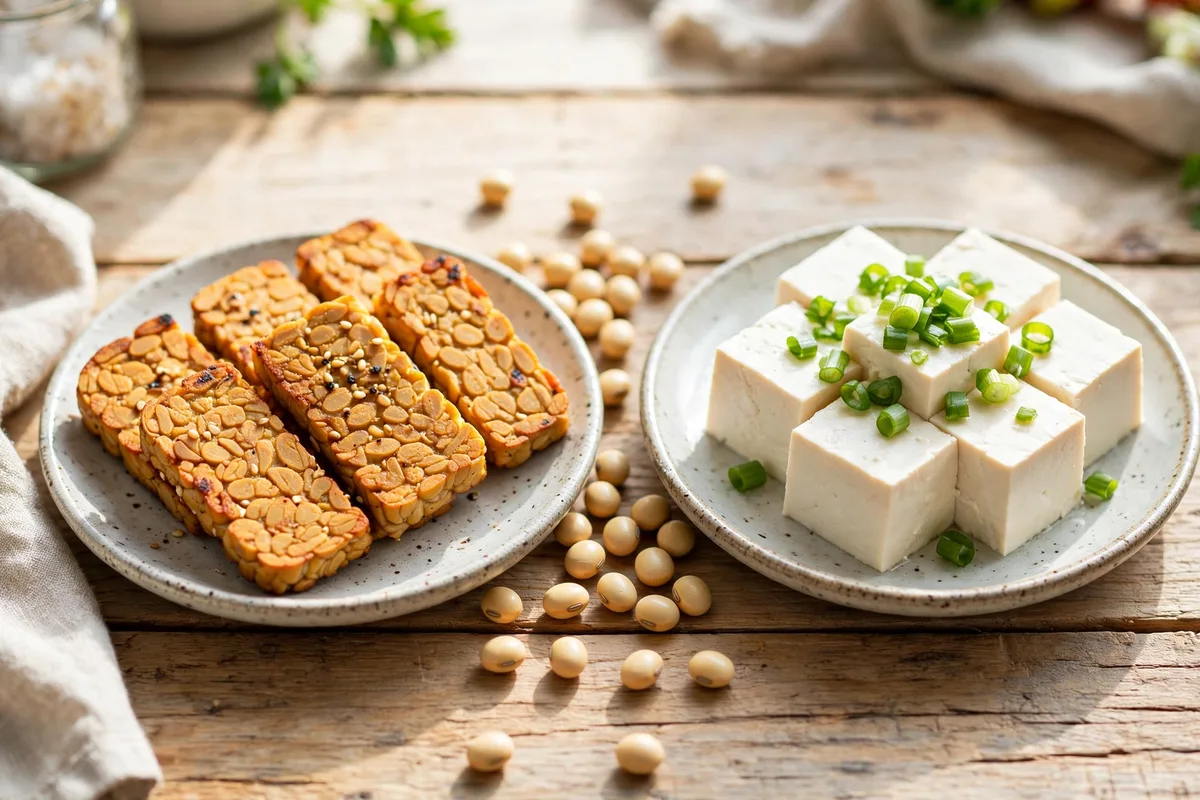
Quick verdict
Both are excellent. Tempeh wins on protein per bite, fiber and filling power. Tofu wins on lowest calories, price and versatility. If you want the biggest protein hit in a small portion, choose tempeh. If you want a light, budget-friendly base that takes on any flavour, choose tofu. If you like both, rotating them through the week is an easy way to get the best of each.
What is tofu?
Tofu is curdled soy milk pressed into blocks. It is smooth, mild and famously good at absorbing flavours, which is why the same block can become a scramble, a soup, a marinade-soaked stir-fry or a blended smoothie ingredient. Firm and extra-firm tofu hold their shape best for cooking, while silken tofu is softer and better for sauces, dressings and desserts. Because much of the bean’s fiber is removed during processing, tofu is lighter and lower in calories, but also lower in fiber than tempeh.
What is tempeh?
Tempeh is whole soybeans fermented into a firm cake. The beans stay largely intact, so tempeh is denser, nuttier and chewier than tofu, and it holds its shape well when sliced, grilled or crumbled. Fermentation also gives tempeh a deeper, earthier flavour that needs less seasoning to taste interesting. That whole-bean structure is the main reason tempeh packs more protein and fiber per bite: you are eating more of the bean, not just its curd.
Tempeh vs tofu: head-to-head nutrition per 100 g
Values below are approximate, USDA-style figures for plain products. Brands vary, especially for tofu, because firmness, water content and calcium setting change the numbers. Check the label on the pack you buy, but these ranges are a reliable guide.
| Per 100 g (approximate) | Tempeh | Firm tofu |
|---|---|---|
| Calories | ≈ 190 kcal | ≈ 80–120 kcal |
| Protein | ~20 g | ~9–14 g |
| Carbohydrates | ~8 g | ~2–3 g |
| Fiber | ~5 g | ~1–2 g |
| Fat | ~11 g | ~5 g |
Per serving, a typical 85 g (3 oz) serving works out to about 162 kcal, 17 g protein, 7 g carbohydrates, 4 g fiber and 9 g fat for tempeh, compared with roughly 68–102 kcal, 8–12 g protein, 2–3 g carbohydrates, 1–2 g fiber and 4 g fat for firm tofu. In plain terms, tempeh gives you roughly twice the protein in the same weight, but also roughly twice the calories.
Protein: per bite versus per calorie
Both tempeh and tofu are complete proteins, meaning they supply all nine essential amino acids. That matters, because many plant proteins do not. Where they differ is density. Per bite, tempeh is clearly ahead: about 20 g of protein per 100 g versus 9–14 g for firm tofu. If your plate is small, or you want a lot of protein without a large volume of food, tempeh is the stronger pick.
Per calorie, however, they are closer than the per-gram numbers suggest. Tempeh provides about 10.5 g of protein per 100 kcal (20 g divided by 190 kcal, multiplied by 100). Firm tofu, using the middle of its range at about 11 g of protein in 100 kcal, provides about 11 g of protein per 100 kcal. So if calories are your main constraint, tofu is not a poor protein choice at all — it simply delivers its protein in a lighter, larger-feeling portion. For more protein ideas that work alongside either food, see our guide to protein powder and our list of high-protein snacks.
Fiber and gut health
Tempeh clearly wins here. Because it is made from whole fermented soybeans, it keeps about 5 g of fiber per 100 g, roughly three to five times as much as firm tofu. Fiber slows digestion, feeds gut microbes and helps a meal feel satisfying for longer. Fermentation may also make tempeh easier for some people to digest, although that varies from person to person and is not a guarantee.
Tofu, by contrast, has little fiber — typically only 1–2 g per 100 g. That is not a flaw; it is a trade-off for its smooth texture and low calorie count. If you choose tofu, pairing it with vegetables, beans, whole grains or a salad easily makes up the fiber difference in the meal as a whole.
Calories and weight loss
Tofu is the lower-calorie pick, and that makes it especially useful when you want a generous portion without a large calorie total. A block of firm tofu can stretch across a stir-fry or soup and still leave room for noodles, rice or bread. Tempeh, at about 190 kcal per 100 g, is more calorie-dense, but its protein and fiber mean a smaller portion can keep you full for longer, which can reduce snacking later.
Either fits a weight-loss plan, and the better choice depends on the meal. Want volume and lightness? Choose tofu. Want staying power from a compact sandwich or bowl? Choose tempeh. To set the calorie target behind that choice, see how many calories you should eat to lose weight.
Micronutrients: calcium, iron and more
Calcium-set tofu is rich in calcium, because calcium salts are used to curdle the soy milk. That can make it a genuinely useful calcium source, especially for people who eat little dairy — just check the label, since not all tofu is calcium-set. Tempeh tends to have a bit more iron, magnesium and potassium, reflecting its whole-bean makeup. Both are low in sodium when plain, but flavoured, marinated or smoked versions can be much saltier, so read the label if sodium matters to you.
Taste, cooking and price
Taste and cooking are where personal preference takes over. Tofu is the chameleon: blend silken tofu into smoothies, scramble firm tofu with vegetables, simmer it in soups, or marinate cubes and bake or air-fry them until crisp at the edges. Its mild flavour is a strength if you like bold sauces, and a drawback if you eat it plain without seasoning.
Tempeh has more flavour on its own — nutty, earthy and a little mushroom-like — and a firm, chewy bite that suits grilling, sandwiches and stir-fries. Slice it thin, marinate briefly, then grill or pan-fry it, or crumble it as a hearty filling for tacos and bowls. On price and availability, tofu usually wins: it is generally cheaper and easier to find in most supermarkets, while tempeh can be pricier and is sometimes only in the chilled health-food section.
Is soy safe? The honest answer
Normal food amounts of soy are considered safe for most people, and soy foods have been eaten for centuries. The estrogen fear is overstated: soy isoflavones are plant compounds that are far weaker than human estrogen and do not act in the body in the same way. Eating tofu or tempeh a few times a week is very different from taking a concentrated supplement. People who take thyroid medication are usually told to keep soy intake consistent and separate from their dose timing, so follow your clinician’s guidance on that one practical point.
Verdict by goal
| Your goal | Best pick |
|---|---|
| Most protein per bite | Tempeh |
| Lowest calories | Tofu |
| Fiber and gut health | Tempeh |
| Budget and smoothies | Tofu |
| Meal-prep sandwiches and grilling | Tempeh |
The bottom line on tempeh vs tofu is refreshingly simple: there is no loser. Choose tempeh when you want maximum protein and fiber in a satisfying, meaty bite. Choose tofu when you want the lightest, cheapest and most versatile option. And if you are still deciding, cook both this week — your taste buds and your schedule will tell you which one earns a regular spot.
Which has more protein, tempeh or tofu?
Tempeh, per bite. It has about 20 g protein per 100 g, versus 9 to 14 g for firm tofu. Per calorie they are close, about 10.5 g per 100 kcal for tempeh and about 11 g for tofu.
Is tempeh healthier than tofu?
Neither is strictly healthier. Tempeh leads on protein and fiber, while tofu is lower in calories and richer in calcium when calcium-set. Pick by your goal.
Which is better for weight loss, tempeh or tofu?
Tofu is lower in calories, so it suits large, light portions. Tempeh is more filling, so a smaller portion can keep you full longer. Either can fit a weight-loss plan.
Is it safe to eat soy every day?
Normal food amounts of soy are considered safe for most people. Variety still helps: rotate soy foods with beans, lentils, dairy or eggs if you eat them.
Can you eat tempeh raw?
Tempeh is usually cooked before eating. Follow the pack guidance and cook it until heated through, as with most chilled fermented foods.

