Low sodium sandwich meat is hard to find on a deli menu, and that is exactly why it is worth a guide of its own. Deli meats are one of the biggest hidden sodium sources in an everyday lunch. A typical deli sandwich can hold 1,200 to 1,800 mg of sodium before you even reach for the condiments, which means one sandwich can use up most of a day’s sodium budget before dinner is even a thought.
The good news is that not all cold cuts are equally salty. The gap between the lightest and the heaviest options is enormous, and a few smart choices at the counter can cut hundreds of milligrams from your lunch without giving up sandwiches altogether. This guide ranks the common sandwich meats from lowest to highest in sodium, explains what the labels really mean, and shows how to build a sandwich that stays in bounds.
All of the numbers below are typical values from USDA data and brand labels, and they vary by brand. Always check your own package or the deli counter’s nutrition sheet, because two brands of the same meat can differ by hundreds of milligrams.
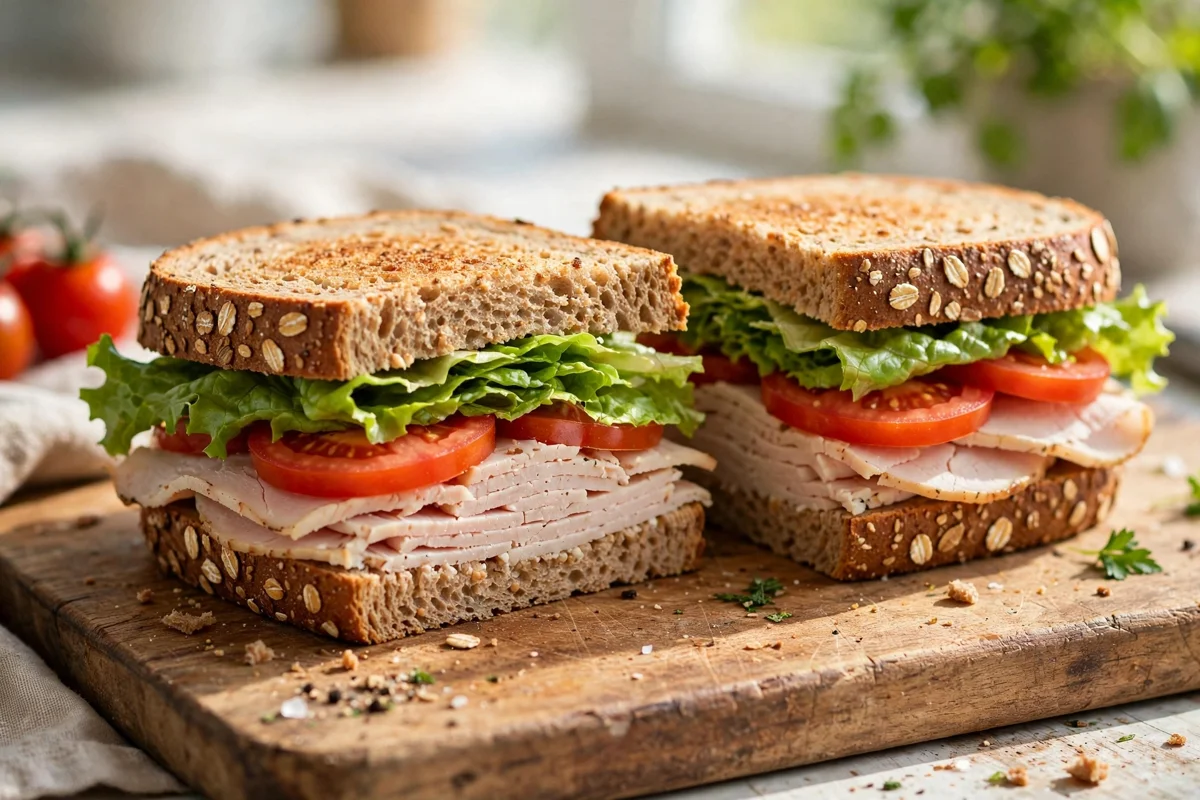
Low-Sodium Sandwich Meats, Ranked Lowest to Highest
Here is the ranking, measured per 2 oz serving, which is about 3 to 4 slices of most deli meats and a normal sandwich portion. The order runs from the lightest choice to the saltiest.
| Sandwich meat | Typical sodium per 2 oz | Notes |
|---|---|---|
| Fresh-cooked turkey or chicken breast, sliced at home | 100-200 mg | The lowest-sodium option by far; no brine, no curing |
| Low-sodium deli turkey breast | 200-360 mg | Look for lines labeled low sodium or no salt added |
| Deli roast beef | 300-500 mg | Usually less salty than cured pork products |
| Regular deli turkey breast | 450-600 mg | The standard deli default, and already salty |
| Deli ham | 550-800 mg | Cured pork runs salty even in lean slices |
| Salami and pepperoni | 700-1,000 mg | The saltiest cold cuts, plus more saturated fat |
The pattern is simple: the less processed the meat, the less sodium it carries. Fresh-cooked poultry sliced at home beats every packaged option, and cured, dried meats like salami sit at the other end of the scale. Roast beef lands in the middle because it is typically roasted and sliced rather than cured in a salty brine.
Cold Cuts With Low Sodium: What to Ask For at the Deli Counter
If you are asking for cold cuts with low sodium, the honest answer starts with a reality check: almost no sliced deli meat is truly low in sodium. Curing and brining are how deli meat is made, and salt is doing the preserving. That does not mean you are out of luck. It means the lowest-sodium cold cuts are the ones that use the least curing, and the best move at the counter is to ask for them by name.
Start with the lowest-sodium choices in the case: low-sodium turkey breast lines, fresh-roasted turkey or chicken that the store roasts in-house, and roast beef. Ask the person behind the counter whether they carry a no-salt-added or low-sodium turkey, and ask to see the nutrition sheet if one is posted. In many delis, the low-sodium line sits right next to the regular line and looks identical, so you have to ask for it specifically.
A few counter habits help too. Ask for thin slices, which make it easier to use less meat without a skimpy-looking sandwich. Ask for the meat sliced fresh rather than pre-packaged when that is an option, and skip the extra salty add-ons at the counter, like pepperoni or salami layered in for flavor. One slice of salami can add as much sodium as the rest of the meat combined.
Low-Sodium Turkey: the Family Favorite
Low sodium turkey is the option most families ask about, and for good reason. Turkey is lean, mild and widely available, so it is the easiest swap for households watching sodium. A regular deli turkey breast typically runs about 450 to 600 mg of sodium per 2 oz. A low-sodium turkey breast line typically runs about 200 to 360 mg per 2 oz, which is roughly a third to a half less. That single swap can save 200 to 300 mg per sandwich, every day, without changing anything else about lunch.
The very lowest-sodium turkey of all is the one you cook yourself. A turkey breast roasted at home with no brine, sliced thin for sandwiches, typically lands around 100 to 200 mg per 2 oz, because the only sodium is what is naturally in the meat plus whatever you add. If you roast a turkey breast on Sunday, you have low-sodium sandwich meat for the whole week, and it usually tastes better than the packaged version too.
Watch out for one trap: turkey labeled “natural” or “no nitrates added” is not automatically low in sodium. Those labels describe preservatives, not salt. A natural turkey can still carry 500 mg or more per serving. The number on the nutrition label is the only claim that counts.
Reading the Label: Low Sodium vs Reduced Sodium
This is where most shoppers get tripped up, because the words on the package sound alike but mean very different things. Under FDA rules, “low sodium” means 140 mg or less per serving. Almost no deli meat qualifies for that claim, which is why you rarely see it on a cold-cut package. If a deli meat truly carried the low-sodium label, it would be an unusual find worth grabbing.
“Reduced sodium” is the trap. It only means the product has 25 percent less sodium than the regular version of the same product. A ham that started at 800 mg and dropped to 600 mg can legally call itself reduced sodium, yet 600 mg per serving is still a lot. Reduced sodium is better than regular, but it is not low sodium, and it should not be read as a green light.
The label habit that actually works is comparing the milligrams per serving against the portion you really eat. Many deli packages list a 2 oz serving, but a generous sandwich uses 3 to 4 oz. If the label says 400 mg per 2 oz and you pile on 4 oz, your sandwich meat alone is 800 mg. Doubling the meat doubles the sodium, and that math surprises a lot of people.
How One Sandwich Uses Most of the Day
For context, the general daily limit for sodium is 2,300 mg, and the American Heart Association’s ideal target is 1,500 mg a day. Now add up a typical deli sandwich: two slices of bread at 120 to 230 mg each, 2 oz of regular deli turkey at 450 to 600 mg, a slice of cheese at 300 to 400 mg, and a spread of mayonnaise or mustard. Before any chips or pickles on the side, that sandwich can easily reach 1,200 to 1,800 mg, which is most of a 1,500 mg day in a single meal.
That is why the meat choice matters so much. Swapping regular turkey for a low-sodium turkey line saves 200 to 300 mg, and swapping to home-roasted turkey can save 300 to 400 mg. Those savings alone can be the difference between a sandwich that fits the day and one that blows past it.
Building a Lower-Sodium Sandwich
The meat is the biggest lever, but bread, cheese and sauces add up too. Bread contributes 120 to 230 mg per slice, so two slices can add nearly 500 mg before anything goes between them. Cheese adds 200 to 400 mg per slice, and processed cheese is the saltiest choice. Sauces vary wildly: mustard is usually light, mayonnaise is moderate, and soy-based or barbecue sauces can add hundreds of milligrams in a single spoonful.
A lower-sodium build looks like this: low-sodium turkey or home-roasted turkey, one slice of fresh mozzarella or Swiss instead of processed cheese, plenty of lettuce, tomato, cucumber and onion for crunch and flavor, and mustard or a light spread instead of a salty sauce. Load up the vegetables, because they add volume and flavor for almost no sodium. For a broader look at naturally low-sodium foods to build around, see our Low-Sodium Foods guide.
The bottom line is encouraging. You do not have to give up sandwiches to watch sodium. Pick the lowest-sodium meat you can find, check the label instead of trusting the front of the package, and let the fresh fillings do the flavor work. A sandwich built that way can taste like a sandwich and still leave room in the day for dinner.
What is the lowest sodium sandwich meat?
Fresh-cooked turkey or chicken breast sliced at home is the lowest, at about 100 to 200 mg of sodium per 2 oz. Among packaged deli meats, low-sodium turkey breast lines are the lowest, at about 200 to 360 mg per 2 oz.
Are low sodium cold cuts really low in sodium?
Not by the FDA definition. Low sodium means 140 mg or less per serving, and almost no deli meat qualifies. Low-sodium deli lines are lower than regular versions, typically 200 to 360 mg per 2 oz, but they are still a meaningful source of sodium.
How much sodium is in deli turkey?
Regular deli turkey breast typically runs about 450 to 600 mg per 2 oz. A low-sodium turkey breast line typically runs about 200 to 360 mg per 2 oz, and home-roasted turkey sliced at home runs about 100 to 200 mg per 2 oz.
Is ham the highest-sodium sandwich meat?
Ham is among the saltiest, at about 550 to 800 mg per 2 oz, but salami and pepperoni run higher, at about 700 to 1,000 mg per 2 oz. If you are cutting sodium, cured and dried meats like salami are the first to skip.
How can I lower sodium in my sandwich?
Pick a low-sodium turkey or home-roasted meat, use one slice of a milder cheese instead of processed cheese, load up on lettuce, tomato, cucumber and onion, and choose mustard over salty sauces. Checking the label per serving, and the portion you actually eat, is the habit that saves the most sodium.