


Most protein bars are candy bars in gym clothes. The wrapper shouts about protein while the ingredient list whispers a paragraph of syrups, isolates, and sweeteners you need a chemistry degree to decode. If you have ever turned a bar over, read the label, and put it straight back on the shelf, this guide is for you.
We read the official product pages — the actual brand labels, not marketing copy — for thirteen popular bars, and kept the seven that pass four transparent tests: a short ingredient list built from recognizable foods, at least 10 grams of protein per bar (with one honest exception we flag clearly), no artificial sweeteners, and sugar shown plainly in a table no matter what it is. There are no star ratings here, no sponsored winners, and no invented numbers. Every figure in this article comes from the brand’s own label.
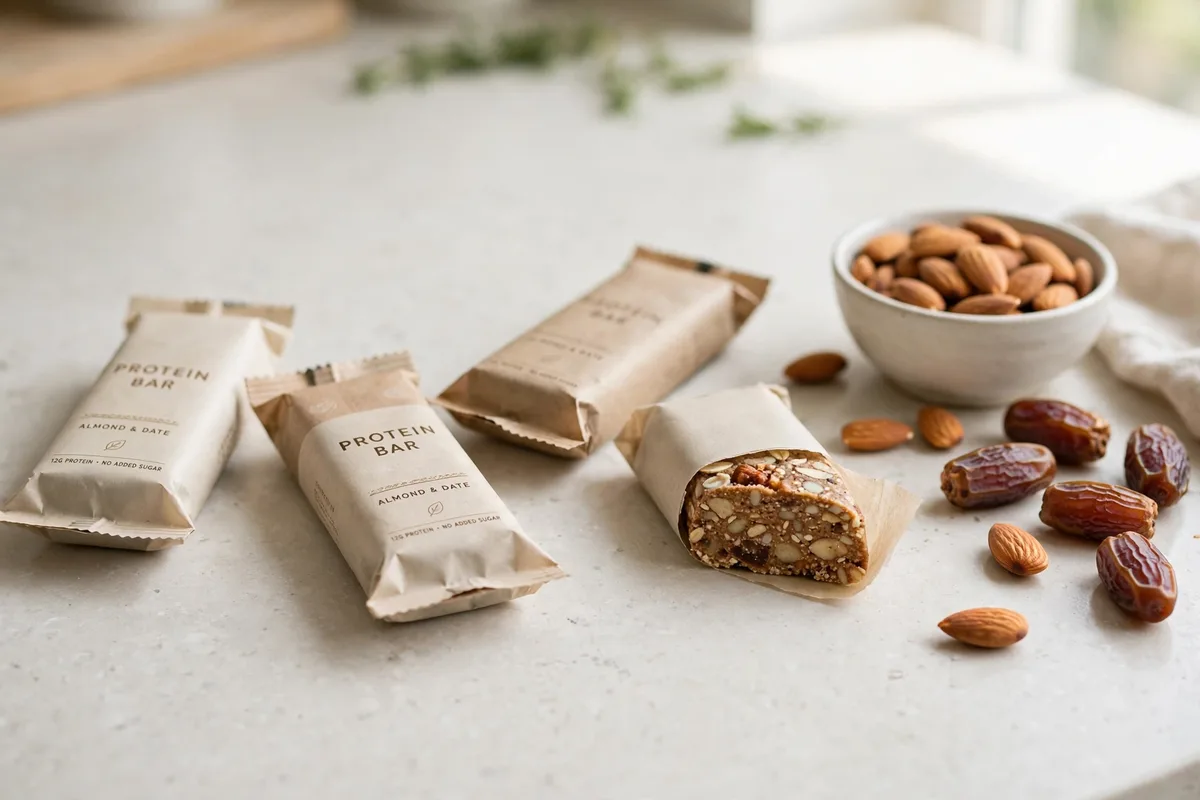
Use the comparison table to scan the numbers, then read the breakdowns for the ingredient story behind each bar.
What “clean” means here
First, an honest note: “clean” has no official definition. No regulator decides which protein bar counts as clean, so any list that uses the word is really grading against its own rules. We would rather show you ours than pretend the word means more than it does. A bar makes this list only if it passes all four of these tests, judged against the label on its official brand page:
- A short ingredient list built from recognizable foods. Nuts, dates, egg whites, cocoa, peanut butter — ingredients you could buy in a grocery store. A bar with twenty items, most of them syrups and isolates, fails here even if the protein number looks impressive.
- At least 10 grams of protein per bar. A “protein bar” should earn the name. We include one bar at 5 grams, flagged clearly, because its two-ingredient list is the simplest in the industry.
- No artificial sweeteners. No sucralose, no acesulfame K, no aspartame. Stevia and sugar alcohols like erythritol are not artificial sweeteners, so they do not fail a bar — but we still tell you when they are there.
- Sugar printed honestly, whatever it is. Dates and honey are still sugar. The table shows every bar’s total sugars straight from the label, high or low.
The 7 cleanest protein bars, compared
All figures are per bar, taken from the official brand product pages. Protein per 100 kcal is protein divided by calories, times 100 — a quick way to see how much of the bar is actually protein.
| Bar | Calories | Protein | Sugar | Protein per 100 kcal |
|---|---|---|---|---|
| No Cow Chocolate Chip Cookie Dough | 200 | 20 g | 1 g | 10.0 |
| IQBAR Chocolate Sea Salt | 180 | 12 g | 1 g | 6.7 |
| ALOHA Chocolate Pistachio | 240 | 14 g | 5 g | 5.8 |
| LÄRABAR Protein Peanut Butter Chocolate | 220 | 12 g | 11 g | 5.5 |
| KIND Protein Crunchy Peanut Butter | 250 | 12 g | 7 g | 4.8 |
| GoMacro MacroBar Peanut Butter Chocolate Chip | 290 | 11 g | 8 g | 3.8 |
| LÄRABAR Cashew Cookie | 220 | 5 g | 15 g | 2.3 |
1. No Cow Chocolate Chip Cookie Dough
One 60-gram bar: 200 calories, 20 grams of protein, 1 gram of total sugar, 5 grams of total fat, and 7 grams of sugar alcohols. That 10.0 grams of protein per 100 calories is the highest on this list by a clear margin.
The protein comes from a brown rice and pea protein blend, bulked out with soluble corn fiber and almonds. The chocolate chips are sweetened with erythritol and stevia leaf extract rather than sugar — neither is an artificial sweetener, so the bar passes test three. It is vegan, dairy-free, gluten-free, soy-free, and non-GMO.
This is the bar for a dairy-free eater who wants a genuine 20 grams of protein without the sugar load. The honest downside is the 7 grams of sugar alcohols: the label supports it, and for sensitive stomachs erythritol can cause the same fermentation discomfort as other sugar alcohols. If your gut is fussy, pick a date-sweetened bar instead.
2. IQBAR Chocolate Sea Salt
One 45-gram bar: 180 calories, 12 grams of protein, 1 gram of total sugar (0 grams added), 10 grams of total fat, and 9 grams of fiber. At 6.7 grams of protein per 100 calories it clears our 6-gram rule of thumb with room to spare, and it is the lowest-calorie bar on this list.
The base is almonds and pea protein (including pea protein crisps), held together with tapioca and vegetable fibers and sweetened with stevia plant extract. It is vegan and gluten-free. Stevia is plant-derived, not artificial, so the bar passes test three — though the list runs to fourteen items, longer than the recognizable-foods ideal.
Best for anyone who wants protein with almost no sugar and is comfortable with stevia. The honest downside: stevia has a mild aftertaste some people notice, and this is a nut bar through and through — it contains almonds and is made for nut lovers, not nut avoiders.
3. ALOHA Chocolate Pistachio
One 56-gram bar: 240 calories, 14 grams of protein, 5 grams of total sugar (3 grams added), 11 grams of total fat, and 10 grams of fiber.
The protein is a blend of brown rice and pumpkin seed proteins, mixed with almond butter, tapioca fiber, dark chocolate, and real pistachios. The brand states the bar is always free from soy, dairy, gluten, GMOs, stevia, and sugar alcohol sweeteners, and it is USDA Organic — one of the strictest free-from lists on this page.
A strong pick if you want an organic bar without stevia or sugar alcohols. The honest notes: the ingredient list is fourteen items long and includes “natural flavor,” so it passes our tests without being the simplest bar here; and it contains tree nuts (almonds and pistachios).
4. LÄRABAR Protein Peanut Butter Chocolate
One 45-gram bar: 220 calories, 12 grams of protein, 11 grams of total sugar (7 grams added), and 12 grams of total fat.
The list reads like a pantry shelf: roasted peanuts, dates, peanut flour, and semisweet chocolate, with tapioca syrup and soy protein isolate doing the structural and protein work. The brand’s page carries plant-based, gluten-free, vegan, and non-GMO badges and states no artificial sweeteners. It contains peanut, soy, and almond.
Good for anyone who wants a protein bar whose first ingredients are actual foods. The honest downside is right there in the table: 11 grams of sugar. Dates are still sugar, and tapioca syrup is still syrup — we print it because it counts. If you are watching sugar closely, the IQBAR or No Cow above give you similar protein for far less of it.
5. KIND Protein Crunchy Peanut Butter
One 50-gram bar: 250 calories, 12 grams of protein, 7 grams of total sugar (5 grams added), 18 grams of total fat, and 6 grams of fiber.
Peanuts lead the list, and the pack states no artificial sweeteners. But we are showing our working here: the full list runs to thirteen or fourteen ingredients and includes glucose syrup, palm kernel oil, cane sugar, milk powder, soy lecithin, and chicory root fiber alongside the soy protein isolate. That is the longest, most processed list on this page, and it only just squeezes through test one.
Consider it if you like the crunchy KIND texture and want a mainstream bar that still clears every test — barely. The honest downsides: it is not dairy-free (milk powder), it is not low in fat (18 grams, mostly from peanuts), and if you want a shorter list, every bar above it is a better answer.
6. GoMacro MacroBar Peanut Butter Chocolate Chip
One 69-gram (2.4 oz) bar: 290 calories, 11 grams of protein, 8 grams of total sugar (7 grams added), 10 grams of total fat, and 39 grams of carbohydrate.
Every ingredient is organic: brown rice syrup, peanut butter, a sprouted brown rice and pea protein blend, puffed brown rice, chocolate chips sweetened with coconut sugar, and peanuts. Six ingredient groups, all recognizable. It is vegan, gluten-free, non-GMO, kosher, and certified low FODMAP.
The clearest pass on ingredient quality in this list — and the heaviest bar. The honest downside is the 290 calories: this is nearly a small meal, and with 39 grams of carbohydrate (mostly from brown rice syrup) most of its energy is not protein. Fine as a meal replacement; too much as a casual snack.
7. LÄRABAR Cashew Cookie
One 48-gram bar: 220 calories, 5 grams of protein, 15 grams of total sugar (0 grams added), and 12 grams of total fat.
The entire ingredient list is two words long: cashews, dates. That is it. Vegan, plant-based, gluten-free, soy-free, dairy-free, and non-GMO, with nothing to decode and nothing to hide.
We include it with a flag, not a fudge: 5 grams of protein does not meet our 10-gram test, and we are not pretending otherwise. It is here as the honest answer for the reader who cares most about test one — the shortest, most readable ingredient list in the industry — and is happy to get their protein elsewhere. The 15 grams of sugar are all from dates; natural, but still sugar.
Popular Bars That Did Not Make the Clean List
Famous is not the same as clean. These bestsellers failed at least one of our four tests on their own official labels — which is exactly why the tests exist.
Quest Bar Cookies & Cream looks perfect on the macros: 190 calories, 21 grams of protein, and 1 gram of total sugar per 60-gram bar on the brand’s own page. It fails test three outright — sucralose is in the ingredient list — and the list itself runs to around seventeen items, including polydextrose, soluble corn fiber, palm kernel oil, and “natural flavors.” High protein cannot rescue a label we cannot read.
CLIF Builder’s Chocolatey Peanut Butter brings 20 grams of protein per 68-gram bar, but also 17 grams of total sugars — and its twenty-ingredient list opens with soy protein isolate, cane syrup, cane sugar, and brown rice syrup. That is three sweeteners before you reach the peanuts. It fails tests one and four together: too long a list, too much sugar, whatever the protein says.
Barebells Chocolate Dough is the trickiest near-miss: 200 calories, 20 grams of protein, and 1 gram of sugar per 55-gram bar. But the label lists sucralose and “natural and artificial flavors” among its eighteen ingredients, with 6 grams of sugar alcohols on top. A candy-bar taste with a candy-bar label is still a candy bar — it fails test three.
Bars vs Real Food
A final honest note: a protein bar is convenience, not magic. It is the thing that lives in your bag for the day everything else goes wrong — not a nutritional upgrade on real food.
The comparison is not close. Our Chicken Breast Calories guide shows 31 grams of protein per 100 grams of cooked chicken breast — more protein than any bar on this list, with more micronutrients and no wrapper. Two eggs or a pot of Greek yogurt do the same job. What the bar wins on is logistics: it needs no fridge, no cooking, and no planning.
So use bars the way they are meant to be used: as a backup, not a foundation. And if you want to know how much protein you actually need in a day, run your numbers through our Protein Calculator and build the rest of your meals around real food first.
Frequently Asked Questions
What makes a protein bar “clean”?
There is no official definition, so we use four tests: a short ingredient list of foods you recognise, at least 10 grams of protein, no artificial sweeteners, and the sugar printed where you can see it. A bar that passes all four is about as clean as packaged food gets.
How much protein should a protein bar have?
Look for at least 10 grams, and ideally 15 to 20 if the bar is replacing a snack with a job to do. Also check protein per 100 calories: a bar giving 6 or more grams of protein per 100 calories is earning its place.
Are clean protein bars good for weight loss?
They can help, because protein keeps you full — but a bar is still 190 to 250 calories, the same as a small meal. The cleanest bar eaten on top of your normal food helps nothing; swapped in for a pastry or chocolate bar, it is a genuinely better trade.
Why do some protein bars upset my stomach?
Usually the sugar alcohols (like erythritol, maltitol or xylitol) and chicory root fibre used to cut sugar. They are safe, but they ferment in the gut. Bars sweetened with dates or a little cane sugar skip this problem entirely.
Is a protein bar better than eggs or Greek yogurt?
On nutrients, no — two eggs or a pot of Greek yogurt give you similar protein with more micronutrients and no packaging. The bar wins on one thing only: it lives in your bag or desk drawer for the day everything else goes wrong.
That is the whole list: seven bars, every number from the brand’s own label, every ingredient list readable without a chemistry degree. If a bar you love did not make it, check its label against the four tests — and if it passes, tell us; we would rather be corrected than be wrong.



Pingback: 15 High-Protein Snacks for Weight Loss (With Protein & Calories)