


Quick answer: a cup of restaurant-style orange chicken runs about 490 calories. Think of it kindly as dessert-sauced fried chicken: crispy batter-fried pieces tossed in a sweet, sticky orange glaze. The chicken itself is not the problem — it is the batter, which soaks up frying oil, plus the sugary glaze that coats every piece.
All the numbers in this article are typical values for the battered, fried, sauced restaurant style of orange chicken. There is no single official label for this dish, since every restaurant and home cook makes it a little differently, so treat these as the usual restaurant numbers, not one brand’s label.
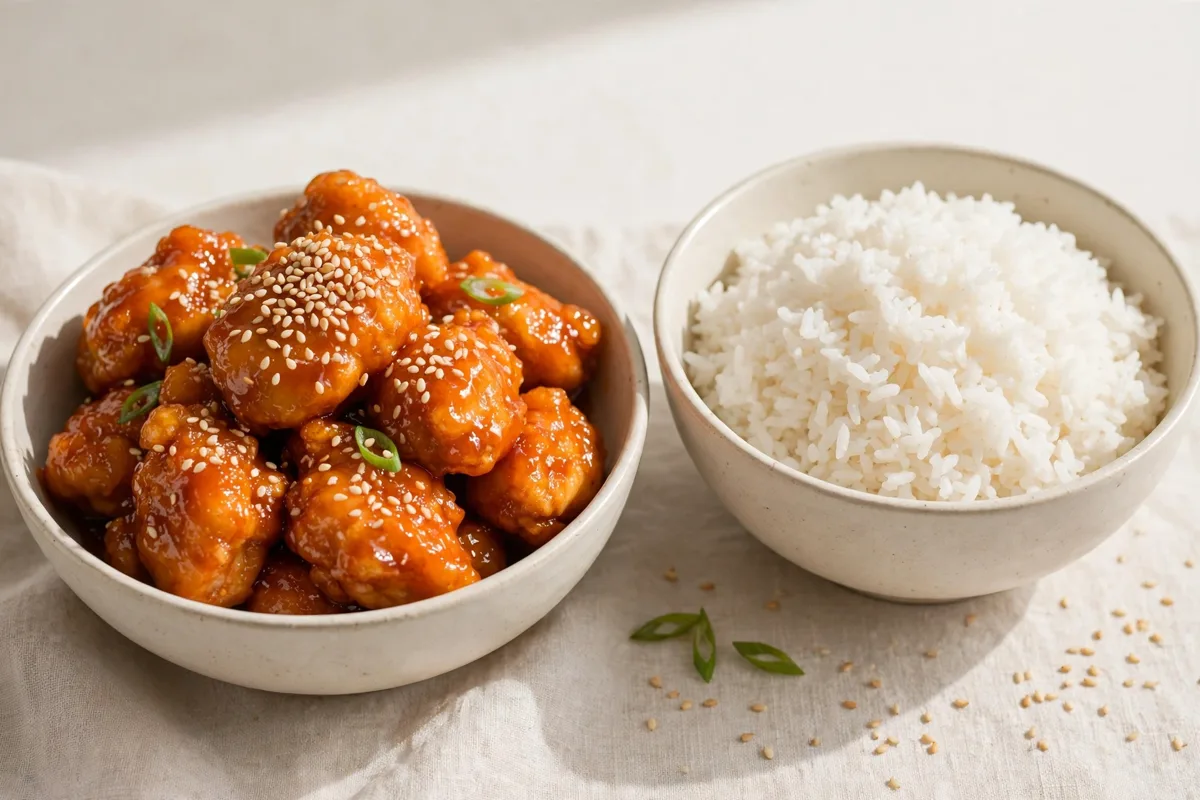
Orange Chicken Calories by Amount
Orange chicken is usually served by the cup at takeout counters, so the cup is the natural unit. Here are the typical numbers, with the plates worked out below:
| Amount (typical values) | Calories |
|---|---|
| Half cup, restaurant style | About 245 |
| 1 cup, restaurant style | About 490 |
| Restaurant plate: 1 cup orange chicken + 1 cup fried rice | About 1,010 |
| Restaurant plate: 1 cup orange chicken + 1 cup steamed rice | About 690 |
| 1 cup, lighter homemade version (baked or air-fried) | About 350 (estimate) |
Per cup, the restaurant style also carries about 25 g of protein, 23 g of fat, 45 g of carbs and about 19 g of sugar, with sodium around 800–900 mg (label estimate). The protein is real — this is still chicken — but the fat and sugar are doing most of the calorie work.
A typical chain-style serving is about a cup, so it lands near that 490 figure. If you are building a whole takeout plate and want the full total with sides and a drink, our Panda Express calorie calculator adds the whole meal up for you.
Why Orange Chicken Runs High
Two things drive the number, and neither is the chicken. First, the batter: a thick, crispy coating absorbs frying oil, and oil is pure fat at about 9 calories a gram. Second, the glaze: orange sauce is mostly sugar — about 19 g of sugar per cup of finished dish, and the sauce alone runs about 90–100 calories per quarter cup (estimate). Put fried batter and sweet glaze together and you get a dish where a large share of the calories comes from fat and much of the rest from sugar.
The gap is easy to see against plain grilled chicken, which runs about 165 calories per 100 g with no batter and no glaze. Orange chicken is not a different animal — it is chicken plus a fried coating plus a sweet sauce, and those two extras roughly triple the per-bite calories. Sodium is the other catch: about 800–900 mg per cup (label estimate), mostly from the sauce and the batter seasoning.
Make It Lighter at Home
The homemade version keeps the flavor and drops about 140 calories a cup, landing near 350 (estimate). Bake or air-fry the chicken instead of deep-frying it, use a lighter coating, and go easy on the glaze — half the usual glaze, or a lighter sauce made with fresh orange juice, a little honey and rice vinegar instead of a thick sugar syrup, keeps the orange flavor without the full sugar load.
The rice swap matters just as much. The restaurant plate with fried rice is about 1,010 calories, but the same cup of orange chicken with steamed rice is about 690 — a 320-calorie difference from the side alone. Pair the lighter homemade cup (about 350) with steamed rice (about 200) and the whole plate is about 550, nearly half the fried-rice restaurant plate.
The Bottom Line on Orange Chicken Calories
Orange chicken is a treat food, not an everyday staple: about 490 calories a cup in the restaurant style, with the batter and the sugary glaze doing most of the damage. Enjoy the cup, watch the rice underneath it, and when you make it at home, bake it and lighten the glaze — the lighter plate lands near 550 with steamed rice, and still tastes like orange chicken.
What Counts as a Cup?
A cup is not a formal restaurant measure — it is a kitchen measure, about 240 ml, roughly a rounded takeout scoop. Restaurant servings vary, which is exactly why this article works in cups: if your serving looks like a heaped scoop, call it a cup (about 490); a small side portion is closer to half a cup (about 245). If you want to be exact at home, measure the cooked chicken after saucing — a cup of sauced pieces is heavier than a cup of plain chicken because the glaze adds weight as well as sugar.
That variability is also why the chain-style answer is framed as typical. A chain serving is usually built to be about a cup of entree, so about 490 is a fair planning number, but a generous scoop can push past it and a light scoop can come in under it. When in doubt, count the cup you actually ate, not the cup on the menu board.
Ordering Smarter at the Takeout Counter
You do not have to give orange chicken up to eat lighter — you just have to change what travels with it. Four moves make the biggest difference, all using numbers from the table above. First, pick steamed rice instead of fried rice: the plate drops from about 1,010 to about 690, a 320-calorie saving before you touch the chicken. Second, ask for the sauce on the side when the counter allows it and dip instead of drowning — the sauce alone is about 90–100 calories per quarter cup (estimate), so every spoonful you leave behind counts. Third, order a half portion of orange chicken (about 245) alongside vegetables instead of a full cup. Fourth, share: split a cup between two people and each person gets about 245 calories of chicken to build a plate around.
None of these moves changes what orange chicken is — battered, fried, glazed chicken, and proud of it. They just decide how much of it lands on your plate, and the plate is where the calories actually live. Water with the meal instead of a sugary drink helps too, since the glaze already supplies all the sweetness the plate needs.
The Sugar in the Glaze, in Plain Terms
About 19 g of sugar per cup is the number to remember. Most of the dish’s 45 g of carbs is that sugar, and it comes almost entirely from the glaze rather than the chicken or the batter. That is why orange chicken tastes the way it does — sweet first, savory second — and why a lighter sauce changes the dish more than a lighter batter does. Cut the glaze in half and you cut most of the sugar with it, while the chicken underneath stays exactly the same.
Frequently Asked Questions
How many calories in orange chicken?
About 490 per cup for the fried restaurant style. That is the typical value for batter-fried chicken in a sweet orange glaze, not one brand’s official label.
How many calories in a Panda Express style serving?
A typical chain serving is about one cup, so about 490 calories. That is framed as the typical serving, not an official label claim.
Is orange chicken healthy?
It has real protein, but the fried batter and sugary glaze make it a treat food rather than an everyday healthy choice. The baked homemade version at about 350 per cup is the lighter way to enjoy it.
How much sugar is in orange chicken?
About 19 g of sugar per cup, mostly from the glaze. The sauce alone runs about 90-100 calories per quarter cup (estimate).
What is a lighter alternative?
The homemade baked or air-fried version at about 350 per cup (estimate). With steamed rice instead of fried rice, the whole plate is about 550 calories.



Pingback: Panda Express Dietary Information: Calories, Allergens & Healthiest Picks