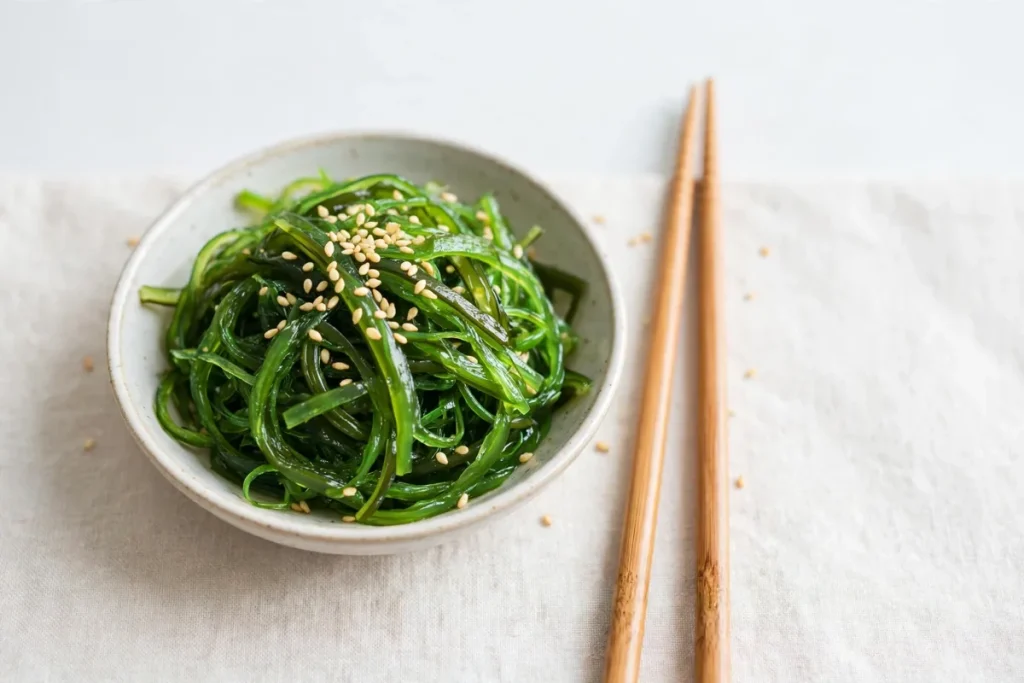

Quick answer: a cup of dressed, restaurant-style seaweed salad runs about 100 calories. It is the bright green wakame salad you meet beside sushi and in poke bowls, tossed with sesame seeds in a sweet, savory dressing. All the numbers in this article are typical values, because seaweed salad has no single official label — and the most important thing to know is that the sesame dressing, not the seaweed, decides most of the calories and the sodium.
The plain seaweed alone is only about 45 calories per 100 g. That is remarkably light. What lifts a restaurant cup to about 100 is the dressing: sesame oil, sugar, soy sauce and rice vinegar coating every strand. So this is a tale of two foods in one bowl — feather-light seaweed wearing a richer coat — and understanding that split is the whole trick to enjoying it.
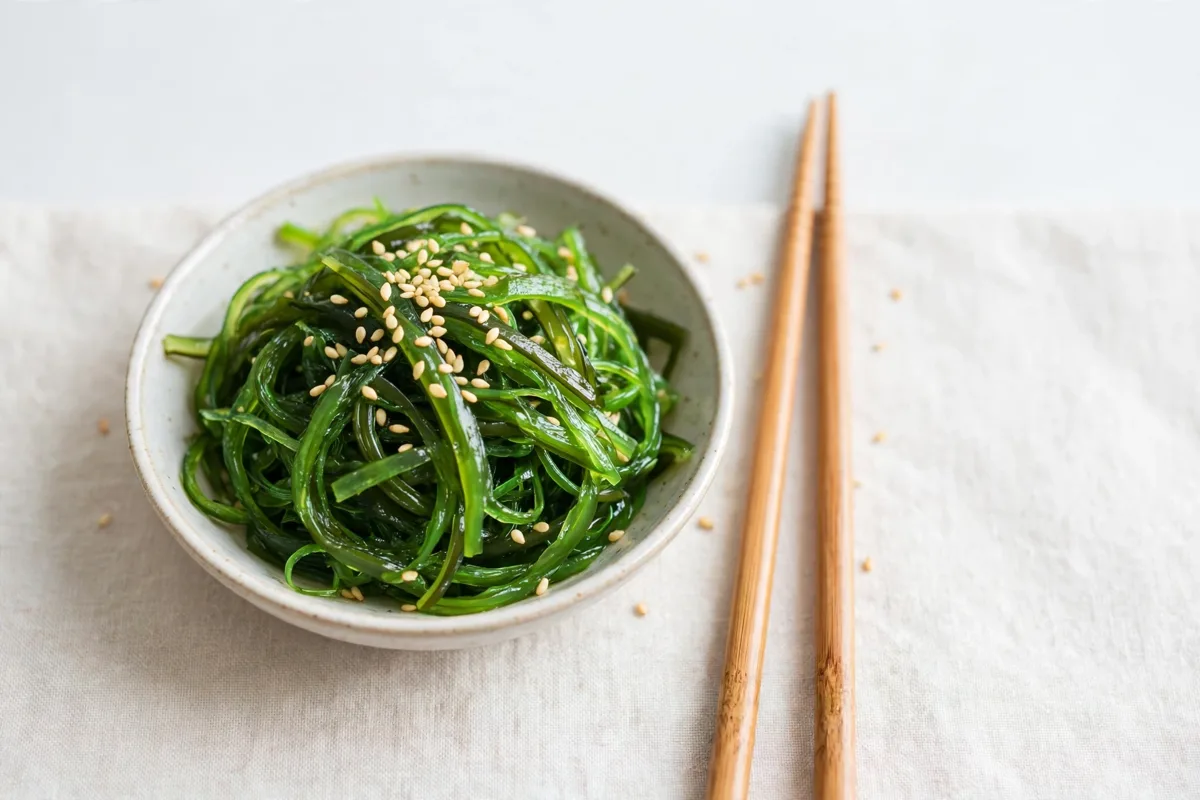
Seaweed Salad Calories by Amount
Seaweed salad is usually served by the cup or as a small side portion, so those are the units that matter. The table below uses typical values throughout, with the dressing-dependent figures given as ranges because every restaurant’s dressing is a little different.
| Amount (typical values) | Calories |
|---|---|
| Half cup, dressed restaurant style | About 50 |
| 1 cup, dressed restaurant style | About 100 |
| Restaurant side portion (about 85 g / 3 oz), dressed | About 90-100 |
| Per 100 g, dressed restaurant style | About 110-120 |
| Plain wakame seaweed, per 100 g (no dressing) | About 45 |
Per cup, the dressed style also carries about 2-3 g of protein, about 8-10 g of sugar (from the dressing — estimate) and a hefty roughly 800-1,000 mg of sodium (estimate). It does bring iodine and some minerals along with the seaweed, but keep expectations general: this is a light side dish, not a nutrition powerhouse, and the dressing is doing most of the talking.
It Is the Dressing, Not the Seaweed
Look at the two per-100 g figures side by side and the story is obvious: plain wakame is about 45 calories per 100 g, while the dressed restaurant version is about 110-120 per 100 g. The seaweed more than doubles in calories once it is dressed — and the seaweed itself did not change at all. The dressing did it.
A typical restaurant dressing is built on sesame oil and sugar, with soy sauce and rice vinegar for the savory-sour balance. Sesame oil is pure fat, so it is calorie-dense by nature, and the sugar adds the sweetness that makes the salad so easy to keep eating. Neither is a villain in a small side portion, but together they explain why a food that starts at 45 per 100 g lands at 110-120 once dressed. The sesame seeds on top add a little more, plus crunch, but they are a garnish — the oil and sugar are the main event.
Then there is the sodium, which is the honest catch of this dish. A dressed cup carries roughly 800-1,000 mg of sodium (estimate), mostly from the soy sauce in the dressing and the salt used when the wakame is prepared. That is a lot for a small side, and it is worth knowing if you watch your salt. At home you can pull both numbers down: rinse and soak dried wakame well before dressing it, use a lighter hand with the oil, cut the sugar, and choose a low-sodium soy sauce. You keep the bright, slippery, sesame flavor and lose a good share of the salt and calories with it.
Seaweed Salad vs Other Light Sides
How does seaweed salad stack up against the other light sides on the table? In typical-value terms, a cucumber salad runs about 15-45 calories per cup, and a plain green side salad runs about 30-60 before dressing. A dressed seaweed salad at about 100 per cup sits above both — but that comparison is a little unfair, because the cucumber and green salads are quoted undressed, while the seaweed salad figure already includes its dressing. Dress a green salad and it climbs into the same territory fast.
What seaweed salad offers that the others do not is volume with character: a full cup of glossy, salty-sweet strands feels like a real course, not a garnish, for about 100 calories. It also brings iodine and some minerals from the seaweed itself, which ordinary lettuce does not. If your goal is the lightest possible side, undressed greens still win. If you want something with more flavor and bite that stays near 100 calories, the dressed seaweed salad earns its place — just count the dressing, not just the seaweed.
Enjoying It Without the Sodium Surprise
The practical rule is simple: treat seaweed salad as a side, not a main, and treat the dressing as part of the food. A typical restaurant side portion of about 85 g (3 oz) lands at about 90-100 calories, which is an easy fit next to sushi or a poke bowl. Pair it with lower-sodium mains where you can, since the salad itself already brings roughly 800-1,000 mg of sodium per cup (estimate). At home, dress lightly and taste before adding more — the wakame is already seasoned, and a little dressing goes a long way on slippery strands.
The bottom line is a happy one: seaweed salad is a light, flavorful side at about 100 calories a cup, built on seaweed that is only about 45 per 100 g on its own. The dressing adds the calories, the sugar and the salt — so enjoy the bowl, and if you want it lighter, lighten the dressing.
A Quick Note on Iodine and Minerals
Seaweed is often talked about for its iodine, and wakame does contain iodine along with some other minerals. How much depends on the type of seaweed and the portion, and a small side of salad is a modest serving, not a large one. That is worth knowing in general terms, but it is not a reason to eat seaweed salad by the bowlful: the dressing’s sugar and sodium would rise with every extra spoonful, and the calories would follow. Think of the minerals as a small bonus on top of a light, tasty side — not the main reason to order it.
Frequently Asked Questions
How many calories in seaweed salad?
About 100 per cup for the dressed restaurant style. A typical small restaurant side portion of about 85 g (3 oz) runs about 90-100 calories.
Is seaweed salad healthy?
It is light and mineral-rich, but the sweet sesame dressing adds sugar and the sodium runs high at roughly 800-1,000 mg per cup (estimate). Enjoy it as a side and lighten the dressing at home for the best balance.
How many calories in plain seaweed?
About 45 per 100 g for plain wakame with no dressing. The seaweed itself is very light — most of the dressed salad’s calories come from the sesame oil and sugar in the dressing.
Does seaweed salad have a lot of sodium?
Yes — roughly 800-1,000 mg per cup in the dressed restaurant style (estimate), mostly from the soy sauce in the dressing. Rinsing and soaking the wakame and using a lighter, lower-sodium dressing at home brings it down.
Is seaweed salad good for weight loss?
It is light per cup and filling for its calories, which helps — but watch the sugary dressing, since it more than doubles the calories of the plain seaweed. A lightly dressed portion is the weight-loss-friendly way to enjoy it.