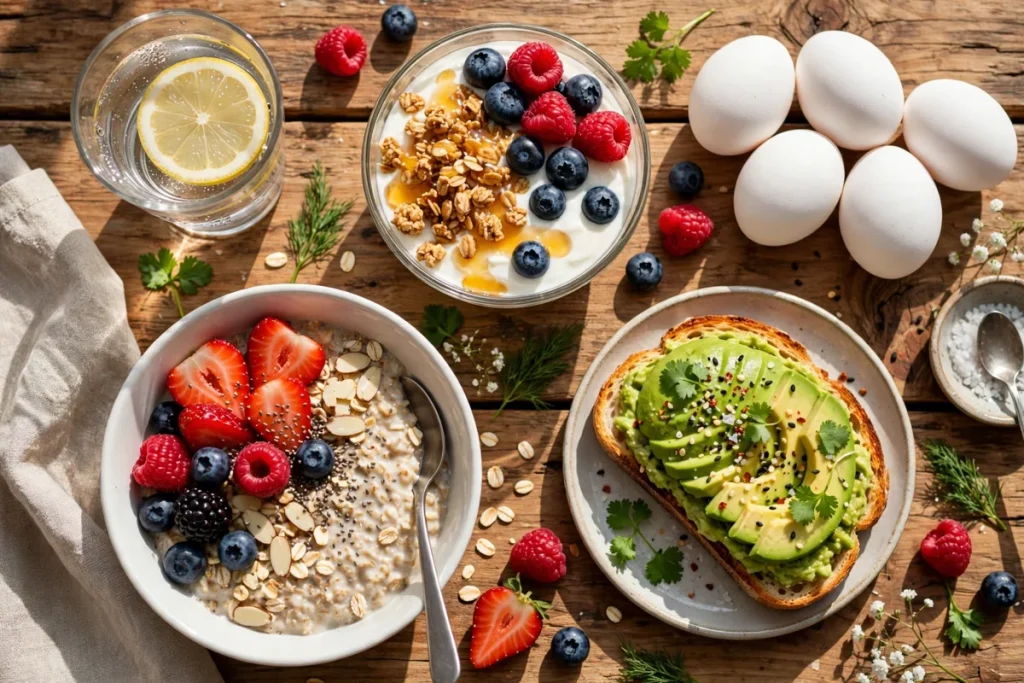

Breakfast has a reputation problem. Some people swear by it, others skip it entirely, and both camps can point to a study that backs them up. The truth is simpler: a great healthy breakfast is not one magic food. It is a combination of foods that keeps you full, steady, and satisfied until lunch. Get the combination right, and the exact menu hardly matters.
Quick answer: what is a great healthy breakfast? A great healthy breakfast combines 20-30 g of protein, fibre-rich carbohydrates, and healthy fats, plus a fruit or vegetable, at roughly 400-600 calories for most adults. Built this way, breakfast should keep you full for 3-4 hours, without a mid-morning crash.
The formula for a great healthy breakfast
Think of breakfast as a formula, not a recipe. Four parts, and every part earns its place:
- Protein (20-30 g). Protein is the main reason breakfast keeps you full. It digests slowly, steadies your appetite, and helps maintain muscle. Eggs, Greek yogurt, cottage cheese, tofu, and protein powder are all easy morning sources.
- Fibre-rich carbohydrates. Oats, whole-grain bread, and fruit release energy slowly, so your blood sugar stays steadier than it does after refined carbs alone. Fibre also adds bulk, which helps you feel full on fewer calories.
- Healthy fats. A little fat, such as nuts, seeds, avocado, olive oil, or nut butter, slows digestion further and helps your body absorb vitamins from fruit and vegetables. Fat is also what makes a healthy breakfast actually taste good, which is why you will stick with it.
- A fruit or vegetable. Berries, a banana, tomato, spinach, or cucumber add vitamins, fibre, and volume for very few calories. They also make the plate feel like a real meal rather than a snack.
Why 20-30 g of protein? Less than that, and many people are hungry again within an hour or two. Much more is fine, but for most adults 20-30 g is the sweet spot where fullness rises sharply without turning breakfast into a second dinner. Two to three eggs, a cup of Greek yogurt, or a scoop of protein powder all land in this range.
8 example breakfasts (with calories and protein)
Here are eight breakfasts that follow the formula. All figures are standard reference values, labelled as estimates, because brands and portion sizes vary. Protein is rounded to the nearest gram.
| Breakfast | What is in it | Calories (estimate) | Protein (estimate) |
|---|---|---|---|
| Eggs and oats | 2 eggs, 40 g oats cooked with milk, berries | ~420 | ~22 g |
| Greek yogurt with berries and granola | 250 g Greek yogurt, 40 g granola, berries | ~380 | ~25 g |
| Avocado toast with egg | 2 slices whole-grain toast, half an avocado, 2 eggs | ~450 | ~21 g |
| Oatmeal with peanut butter and banana | 60 g oats cooked with milk, 1 tbsp peanut butter, 1 banana | ~520 | ~20 g |
| Smoked salmon on toast | 2 slices whole-grain toast, 80 g smoked salmon, 30 g cream cheese, cucumber | ~380 | ~25 g |
| Tofu scramble with vegetables and toast | 150 g tofu, mixed vegetables, 1 slice whole-grain toast, 1 tbsp seeds | ~430 | ~24 g |
| Overnight oats with chia and yogurt | 50 g oats, 150 g Greek yogurt, 1 tbsp chia seeds, berries, a splash of milk | ~450 | ~24 g |
| Protein smoothie | 1 scoop protein powder, 250 ml milk, 1 banana, spinach, 20 g oats | ~420 | ~30 g |
Two examples, worked out. Eggs and oats: 2 eggs (about 140 calories, 12 g protein) + 40 g oats cooked with milk (about 220 calories, 10 g protein) + berries (about 60 calories) = roughly 420 calories and 22 g protein. Oatmeal with peanut butter and banana: 60 g oats (about 225 calories) + 250 ml milk (about 115 calories) + 1 tablespoon peanut butter (about 95 calories) + 1 banana (about 90 calories) = roughly 525 calories, rounded to about 520, with about 20 g protein. Swap the milk for water and you save roughly 100 calories; add a second tablespoon of peanut butter and you add roughly 95.
Build your own with the same method: pick one protein, one fibre-rich carb, one healthy fat, and one fruit or vegetable, then check the total lands near your target. If breakfast regularly lands under 300 calories, you will probably be hungry by 10 a.m.; if it regularly passes 700, it may be eating into the rest of your day. Eggs are the easiest protein to start with: see how many calories are in an egg, boiled, scrambled, or fried.
What to avoid
A breakfast can be low in calories and still be a poor start to the day. The common thread in the breakfasts below is fast sugar with almost no protein or fibre: you feel full for an hour, then hungry and foggy.
- Sugary cereal alone. Most sugary cereals are refined grains plus added sugar, with 1-2 g of protein per bowl. Blood sugar rises fast, then falls, and hunger returns quickly. If you love cereal, pair it with milk or yogurt and add nuts or seeds for protein and fat.
- Pastries alone. A croissant or Danish is mostly refined flour, sugar, and butter: tasty, but short on protein and fibre, so it rarely keeps you full for long. As an occasional treat it is fine; as a daily breakfast it is a weak start.
- Juice instead of whole fruit. A glass of orange juice holds the sugar of three or four oranges but almost none of the fibre, and it is far less filling than eating the fruit. Whole fruit, or a smoothie that keeps the pulp and adds protein, is the better choice.
The pattern to watch for is simple: if breakfast is mostly sugar and refined starch, with little protein and no fibre, expect hunger to return fast.
Adjusting the formula for your goal
For weight loss
Keep the same formula, but lean it out: choose lean protein such as eggs, Greek yogurt, or cottage cheese, load up on fibre from oats, fruit, and vegetables, and hold breakfast to roughly 350-450 calories. A Greek yogurt bowl with berries, or eggs with vegetables and one slice of toast, both fit. Watch the calorie-dense extras: a second tablespoon of peanut butter or a large handful of granola can quietly add 100-200 calories.
For muscle gain
Keep the same formula and scale it up: bigger portions, roughly 600-700 calories. Add an extra egg, cook oats with milk instead of water, use a larger scoop of peanut butter, or add a glass of milk on the side. If gaining weight is your main goal, our High Calorie Breakfast guide has eight ideas from 600 to 1,000 calories.
What about coffee and drinks?
Water is the obvious default, and black coffee or tea add almost no calories. The trap is sweetened drinks: a flavoured latte or a large juice can add 150-250 calories without adding fullness. If you drink coffee, enjoy it, but count the milk and sugar honestly, and keep juice as an occasional drink rather than a fruit replacement.
The bottom line
A great healthy breakfast is a formula, not a single food: 20-30 g of protein, fibre-rich carbs, healthy fats, and a fruit or vegetable, at roughly 400-600 calories for most adults. Hit those four parts and you will stay full for 3-4 hours, whether the plate holds eggs and oats, yogurt and granola, or avocado toast. Start with one of the examples above, adjust the portion to your goal, and breakfast takes care of itself.
Frequently Asked Questions
What is a great healthy breakfast?
A breakfast that combines 20-30 g of protein, fibre-rich carbohydrates, healthy fats, and a fruit or vegetable, at roughly 400-600 calories for most adults. Built this way, it should keep you full for 3-4 hours.
How much protein should breakfast have?
Aim for 20-30 g. That is about 3 eggs, 250 g of Greek yogurt, or a scoop of protein powder with milk. Less protein usually means hunger returns sooner.
Is oatmeal a healthy breakfast?
Yes, especially when you add protein and healthy fat. Oats on their own are mostly carbohydrate, so stir in milk, peanut butter, nuts, or yogurt to make the meal filling and balanced.
What should I eat for breakfast to lose weight?
Lean protein and high fibre at roughly 350-450 calories, for example Greek yogurt with berries, or eggs with vegetables. Avoid sugary cereal and pastries alone, which leave you hungry again quickly.
Can I skip breakfast?
Yes, if it suits you. Skipping breakfast is not unhealthy on its own, as long as your total daily calories and protein are adequate. But a protein-rich breakfast helps many people avoid mid-morning hunger and overeating later in the day.
One last tip: build tomorrow’s breakfast tonight. Overnight oats take two minutes to assemble in the evening, and boiled eggs keep in the fridge for days, so a great healthy breakfast is ready even on a rushed morning. Pick one example from the table above, try it for a week, and adjust the portion until it keeps you full for 3-4 hours. That is the whole method: protein, fibre, healthy fats, and something fresh, every morning.