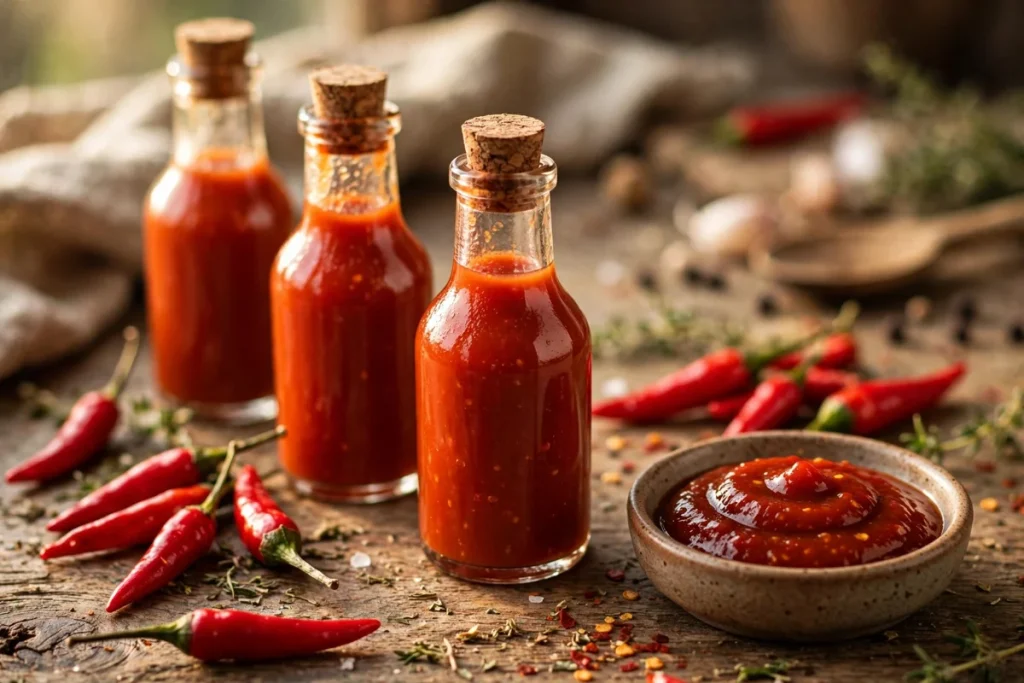

A few shakes of hot sauce can rescue a bland meal, and because it is almost all vinegar and chillies, it feels like it should be a free pass. In most ways it is. But the bottle hides one real catch, and it is not the heat. Here is what the labels actually say, what capsaicin can and cannot do, and when to go easy.
Quick answer: is hot sauce healthy? Yes, mostly. Classic vinegar-and-chilli hot sauce runs about 0-5 calories per teaspoon, with no sugar and no fat, so it adds flavour almost free. The catch is sodium – roughly 150-190 mg per teaspoon for most brands – and stomach irritation for some people.
What is in hot sauce? The numbers per teaspoon
Classic hot sauce is a short ingredient list: chillies, vinegar and salt, sometimes with garlic or spices. That is why the calories are so low – there is no oil, no sugar and nothing much else to count. The two big brands below were read from their current official product pages during this build, and the gap between them is the whole story: calories barely differ, sodium differs a lot.
| Sauce | Calories per tsp | Sugar | Sodium per tsp | Source |
|---|---|---|---|---|
| TABASCO Original | 0 | 0 g | 35 mg | TABASCO official panel |
| Frank’s RedHot Original | 0 | 0 g | 190 mg | Frank’s official label |
| Classic vinegar hot sauce (typical) | 0-5 | 0 g | 150-190 mg | Standard reference value |
Two things stand out. First, both named brands are officially zero calories per teaspoon, so the 0-5 range for a typical vinegar sauce is generous. Second, TABASCO is the low-sodium exception at 35 mg per teaspoon, while Frank’s sits right at the top of the typical range at 190 mg. If sodium matters to you, the brand on the label matters far more than the calories, which are near zero either way.
Hot sauce vs the other sauces
Hot sauce wins the sauce comparison on calories by a wide margin, because most sauces are built on oil, sugar or both. The table below uses one tablespoon so the sauces can be compared fairly – remember that a tablespoon is three teaspoons, so hot sauce still costs almost nothing even at that size.
| Sauce | Calories per tablespoon | Note |
|---|---|---|
| Classic hot sauce | 0-15 | 0 g sugar; watch the sodium |
| Ketchup | 19 | Per the site’s ketchup post, per tablespoon |
| Regular ranch | 65 | 130 calories per 2 tablespoons in the site’s salad dressings guide |
| Sweet chilli sauce | 30-50 | Sugar-loaded; standard reference estimate, not a vinegar hot sauce |
The swap maths make the point plainly. Two tablespoons of regular ranch cost 130 calories; two tablespoons of hot sauce cost 0-30 calories, so switching the drizzle saves roughly 100-130 calories before you change anything else on the plate. That is also why hot sauce works so well on salads and grain bowls – it brings the big flavour that dressings usually provide without the oil bill. For the full dressing ranking, see our salad dressings guide, where regular ranch and its lighter alternatives are compared on the same 2-tablespoon serving.
Capsaicin: the honest story
Capsaicin is the compound that makes chillies hot, and it is the source of most of the health claims made for hot sauce. Here is the measured version. Capsaicin can slightly raise calorie burn in studies, because it nudges thermogenesis – the body producing a little extra heat. But the effect is small, tens of calories at most across a day, and it depends on dose and tolerance. A few shakes of hot sauce will not melt fat, will not meaningfully boost your metabolism, and is no substitute for eating less or moving more. Any article that tells you otherwise is selling something.
The appetite story is similar: mixed evidence, stated plainly. Some small studies found that capsaicin slightly reduced appetite or food intake at the next meal; others found no clear effect, and regular chilli eaters seem to build tolerance to both the burn and any appetite effect. If hot sauce helps you enjoy plain foods like eggs, beans or vegetables instead of reaching for a creamy sauce, that practical benefit is worth more than any thermogenic claim. And one more honesty note: chillies do contain vitamin C and other plant compounds, but at a teaspoon at a time the amounts are trivial. Do not count hot sauce as a source of nutrition – count it as a source of flavour.
The catches: sodium and sensitive stomachs
Sodium is the real catch, and it is a portion problem. One teaspoon of Frank’s is 190 mg, so one tablespoon (3 teaspoons) is 570 mg, and a heavy two-tablespoon pour is 1,140 mg – about half of the commonly used 2,300 mg daily reference value, from sauce alone. A typical vinegar sauce at 150-190 mg per teaspoon lands in the same place: a tablespoon runs roughly 450-570 mg. TABASCO is far gentler at 35 mg per teaspoon, or 105 mg per tablespoon, which is why brand choice matters if you shake freely. The fix is simple: measure your usual pour once, pick a lower-sodium brand if you use a lot, and remember that the sodium in the rest of the meal still counts.
The second catch is your stomach. Very spicy sauce can trigger heartburn or reflux in sensitive people, and capsaicin can irritate an already unhappy stomach lining. This is not damage in a healthy gut – it is discomfort, and it is personal: some people eat the hottest sauces daily with no trouble, others feel one shake. If you are sensitive, eat hot sauce with food rather than on an empty stomach, build up heat gradually instead of jumping to the hottest bottle, and skip it on days your stomach is already unsettled. Also, do not confuse sweet chilli sauce with hot sauce: sweet chilli is a sugar-loaded dipping sauce at roughly 30-50 calories per tablespoon (estimate), a different product with a different verdict.
Who should go easy
Two groups should treat hot sauce as a measured condiment rather than a free pour. First, anyone watching blood pressure or sodium: at 190 mg per teaspoon, Frank’s adds up fast, so either measure your shakes or switch to a lower-sodium brand like TABASCO at 35 mg per teaspoon. Second, reflux sufferers and anyone with a sensitive stomach: heat is a known trigger, and no calorie saving is worth an evening of heartburn. Everyone else can relax – a few shakes a day on real food is one of the lightest flavour upgrades in the kitchen.
The bottom line
So, is hot sauce healthy? Yes, mostly. Classic vinegar hot sauce is about 0-5 calories per teaspoon with no sugar and no fat, which makes it the lightest common sauce by a clear margin. Its downsides are narrow and manageable: sodium that adds up by the tablespoon, and heat that bothers sensitive stomachs. It will not burn fat for you, and it is not a health food – but as a way to make plain, healthy food taste exciting, it is hard to beat.
Frequently Asked Questions
Is hot sauce healthy?
Yes, mostly. Classic vinegar-and-chilli hot sauce runs about 0-5 calories per teaspoon with no sugar and no fat, so it adds flavour almost free. The catches are sodium, roughly 150-190 mg per teaspoon for most brands, and stomach irritation for some people.
How many calories are in hot sauce?
Classic vinegar hot sauce has about 0-5 calories per teaspoon. TABASCO Original and Frank’s RedHot Original are both officially 0 calories per teaspoon. Sweet chilli sauce is different, at roughly 30-50 calories per tablespoon (estimate).
Does hot sauce burn fat?
Not in any meaningful way. Capsaicin may slightly raise calorie burn in studies, but the effect is small, tens of calories at most. It does not melt fat or meaningfully boost metabolism, and appetite effects in studies are mixed.
Is hot sauce bad for your stomach?
It can be for sensitive people. Very spicy sauce can trigger heartburn or reflux, and capsaicin can irritate an unsettled stomach. Eating hot sauce with food rather than on an empty stomach, and building up heat gradually, helps most people.
Which hot sauce has the least sodium?
Of the two big brands checked here, TABASCO Original is far lower at 35 mg of sodium per teaspoon on its official panel, against 190 mg per teaspoon for Frank’s RedHot Original. Brands vary widely on sodium, so check the label if you shake freely.
One last tip: if you love heat, keep the bottle on the table and the creamy sauces in the fridge door. Swapping ranch or mayo for hot sauce is one of the easiest calorie saves in cooking, as long as you keep an eye on the sodium and your stomach agrees.