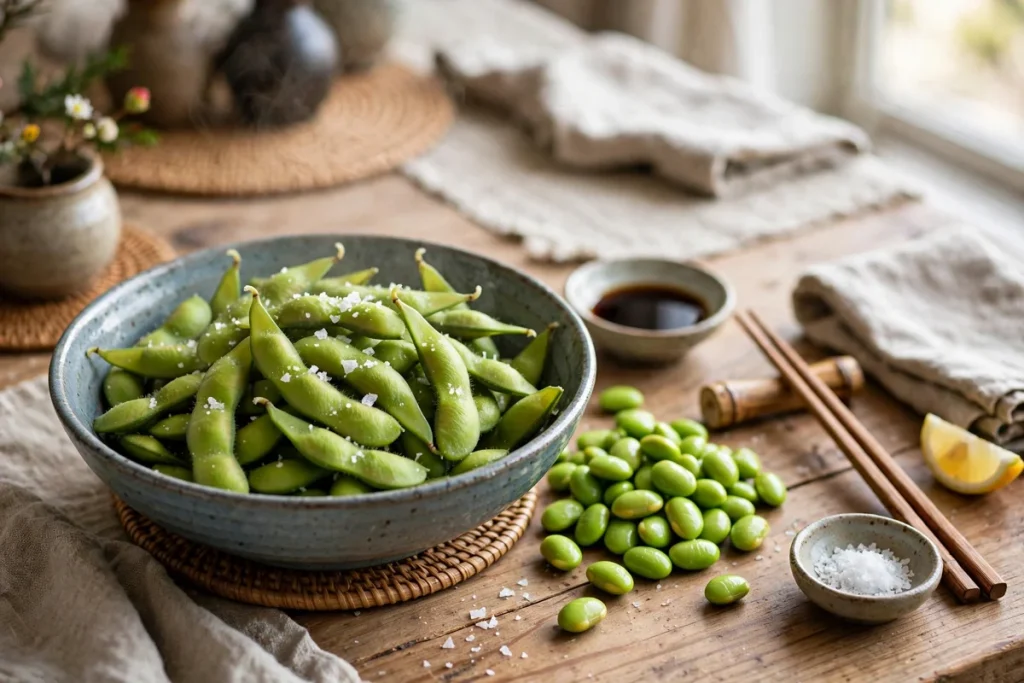

Edamame beans in pods are one of those foods that look simple and are easy to get wrong on calories. A bowl of pods at a restaurant feels light, and it mostly is – but the number on a nutrition label usually describes the beans inside, not the bowl of pods in front of you. Once you know how much of a pod serving you actually eat, the maths is easy.
Quick answer: One cup of shelled edamame (about 155 g) has about 188 calories and 17 g of protein. But a cup of edamame in pods yields only about half a cup of beans, so a typical pod serving you actually eat is roughly 90-100 calories. The pods themselves are not eaten, so roughly half the weight in your bowl never reaches your stomach.
What edamame actually is
Edamame are young soybeans, picked while still green and soft, before the bean hardens and dries into the mature soybean used for tofu, soy milk and tempeh. They are sold two ways: in the pod, usually boiled or steamed and sprinkled with salt, and shelled, loose in a bag, ready to tip into salads, stir-fries and grain bowls.
The pod is a tough, fibrous shell. You squeeze or bite the beans out and leave the pod behind – restaurants even provide a separate bowl for the empties. That is the key to the whole calorie question: the weight of the pods is not the weight of the food you eat.
Edamame nutrition per cup shelled
All figures below are standard reference values for cooked, unsalted shelled edamame, per cup (about 155 g). Brands and cooking methods vary slightly, but this is the panel most labels are built on.
| Nutrient | Per cup shelled (about 155 g) |
| Calories | about 188 |
| Protein | about 17 g |
| Fibre | about 8 g |
| Fat | about 8 g |
| Carbohydrate | about 14 g |
| Sodium (unsalted) | about 9-15 mg |
That is a strong profile for a plant food: high protein, high fibre, moderate fat, and almost no sodium before salt is added. The fat is mostly unsaturated, and there is no cholesterol, as with all plant foods.
The pod maths: how much you actually eat
Here is where most people overestimate edamame calories. Pods are about half the weight of the serving. Roughly speaking, 100 g of pods gives only about 50-60 g of beans. The rest is shell, and it goes back in the bowl.
The rate to use is simple: 188 calories per 155 g of shelled beans works out at about 121 calories per 100 g of shelled beans (188 divided by 155, times 100). Multiply the beans you actually eat by about 1.21 calories per gram.
| Pod serving | Pods | Beans you actually eat | Calories (estimate) |
| Small bowl | about 100 g | about 50-60 g | about 60-75 |
| Restaurant starter | about 150 g | about 75-85 g | about 95-110 |
| Large bowl | about 200 g | about 100-120 g | about 120-145 |
So a restaurant starter of edamame in pods is roughly a 100-calorie snack, not a 188-calorie one. The 188-calorie figure belongs to a full cup of shelled beans – about double what a pod starter gives you. If you eat the shelled beans straight from a bag, on the other hand, the cup figure is the one to use, because there are no pods to discard. Eating from pods is also slower, which gives fullness a chance to catch up.
Why edamame is such a good protein choice
Edamame is a complete plant protein, meaning it provides all nine essential amino acids in useful amounts. That is rare for a plant food: most plant proteins are low in at least one essential amino acid, which is why vegetarians are often told to combine foods. With edamame, you do not need to.
At about 17 g of protein per cup shelled, it sits comfortably above most other vegetables and legumes per serving, and the 8 g of fibre helps keep you full. Beyond protein and fibre, edamame provides folate, iron and vitamin K, plus magnesium and potassium – a useful package for a snack that is also low in calories. Protein and fibre are the two nutrients most linked to staying full, which is why a 100-calorie pod starter can feel more satisfying than a 100-calorie bag of crisps.
The salt warning: unsalted vs salted pods
Unsalted edamame is very low in sodium, at about 9-15 mg per cup shelled. Salted restaurant pods are a different story. The salt sits on the outside of the pod, and some of it ends up on your lips and fingers as you eat – and some in your mouth. A salted restaurant serving can easily add several hundred milligrams of sodium, roughly 300-600 mg as a rough estimate, depending on how heavily it is salted.
If you watch your blood pressure or sodium intake, order them unsalted, or make them at home and go light on the salt. A squeeze of lemon, a little chilli or garlic gives flavour without the sodium load.
Frozen vs fresh
Most edamame you buy is frozen, and that is no disadvantage. The beans are frozen at harvest, which locks in their nutrients, and they cook in 3-5 minutes in boiling water or the microwave. Fresh edamame in pods appears in season in some grocery stores and farmers markets, but it is harder to find and goes off quickly. Nutritionally, frozen and fresh are near-identical once cooked.
Shelled frozen edamame is the convenient option for cooking: tip it straight into stir-fries, fried rice, grain bowls, salads and soups. In-pod frozen edamame is the one to buy for snacking.
How to eat edamame in pods
Boil or steam the pods for 3-5 minutes until the beans are tender, drain, and sprinkle with salt only if you want it. To eat, hold a pod at one end, put the other end between your teeth, and squeeze or bite gently – the beans pop out into your mouth. Do not eat the pod itself: it is too tough and fibrous to chew comfortably, and your stomach will not thank you for it. Keep a spare bowl handy for the empty pods.
Edamame and the rest of the soy family
Edamame is the whole, young form of the soybean, so it is less processed than most soy foods. Tofu, tempeh and soy milk are all made from mature soybeans, and each trades some fibre for convenience or a different texture. If you like the soy family, our Silk Soy Milk Unsweetened post looks at the drink side of the family – 90 calories and 8 g of protein per cup, with no added sugar.
The bottom line
Edamame beans in pods are a genuinely good snack: about 100 calories for a restaurant starter, about 17 g of protein per cup shelled, plenty of fibre, and a complete amino acid profile. Just remember the pod maths – you eat roughly half the weight in the bowl – and go easy on the salt. Buy them frozen, cook for a few minutes, and squeeze the beans out. The pods go in the spare bowl, not in you.
Frequently Asked Questions
How many calories are in edamame beans in pods?
A typical restaurant starter, about 150 g of pods, gives you roughly 75-85 g of beans, about 95-110 calories. A full cup of shelled edamame, about 155 g, has about 188 calories, but you only get that much if you eat the shelled beans rather than the pods.
How much protein is in edamame?
About 17 g per cup of shelled edamame (about 155 g). Edamame is a complete protein, providing all nine essential amino acids. A restaurant pod starter gives you roughly 8-9 g of protein, since you eat about 75-85 g of beans.
Can you eat edamame pods?
No, not really. The pods are too tough and fibrous to chew and digest comfortably. Squeeze or bite the beans out and discard the pods – restaurants provide a spare bowl for them.
Is edamame good for weight loss?
Yes, it is a strong choice. A pod starter is about 100 calories with good protein and fibre, and eating from pods slows you down, which helps fullness catch up. Just watch the salt on restaurant pods if sodium matters to you.
Is frozen edamame as healthy as fresh?
Yes, near-identical once cooked. Frozen edamame is frozen at harvest, which locks in nutrients, and it cooks in 3-5 minutes. Fresh pods are harder to find and go off quickly, with no real nutritional advantage.
One last tip: keep a bag of frozen edamame in pods in the freezer. Five minutes in boiling water, a squeeze of lemon, and you have a high-protein snack for about 100 calories.