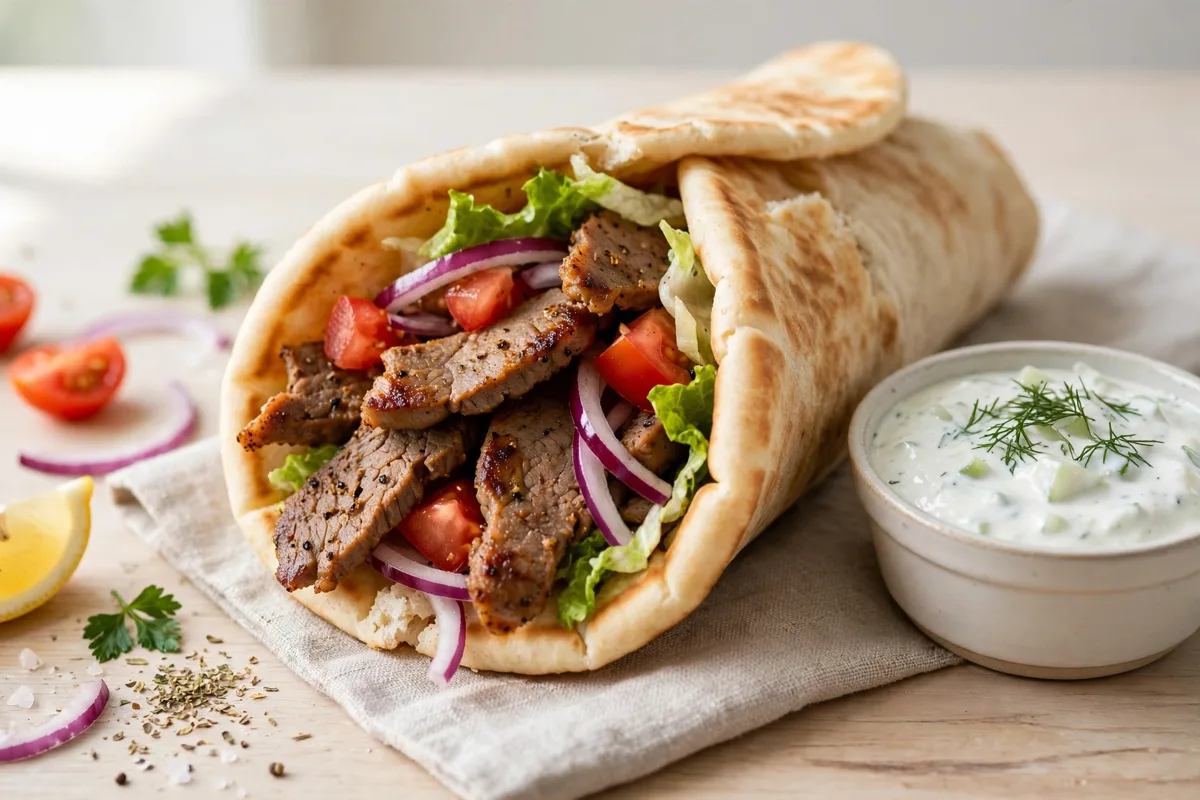
A classic gyro comes in at about 700 calories, and most of that is the meat. A lamb and beef gyro wrapped in a big pita with tzatziki and fresh vegetables is a substantial meal, not a light snack, but it is also a meal with real protein and fresh vegetables doing honest work inside the wrap. The trick to understanding it is to count it part by part, because the parts are wildly different: the meat carries more than half the calories, while the sauce and the vegetables barely register.
One honest note before the numbers: a gyro is a restaurant dish, not a packaged product, so there is no single official label for it. Every figure in this article is a typical value for a standard restaurant gyro, labeled as typical throughout. Your gyro will vary with the size of the pita, how generously the meat is sliced, and whether fries are tucked inside, but the typical values below are a solid guide for ordering.
Gyro Calories, Part by Part
The table below breaks a gyro into its pieces, using the same typical values all the way through. The classic sandwich is built from a large pita, about five ounces of gyro meat, a few tablespoons of tzatziki, and a handful of tomato, onion and lettuce. The chicken gyro swaps the lamb and beef blend for chicken, and the fries row is an add-on for the Greek-American style shops that tuck fries inside the wrap.
| Part or sandwich | Calories (typical) |
|---|---|
| Classic lamb/beef gyro (whole sandwich) | About 700 (typical range 600-800 by size) |
| Chicken gyro (whole sandwich) | About 580 |
| Large pita | About 230 |
| Gyro meat, about 5 oz | About 390 |
| Gyro meat, per 100 g | About 230 |
| Tzatziki, about 3 tbsp | About 50 |
| Tomato, onion and lettuce | About 15 |
| Fries tucked inside (add-on) | Add about 100-150 |
The parts add up almost exactly: pita 230 plus meat 390 plus tzatziki 50 plus vegetables 15 comes to 685, which is why we say about 700 for the finished sandwich. A classic gyro also carries about 30 grams of protein, about 45 grams of carbohydrates, about 40 grams of fat and about 1,100 milligrams of sodium. The chicken gyro, at about 580, saves roughly 120 calories against the classic, mostly because chicken is leaner than the lamb and beef blend.
The Meat Is the Story
If you want to understand gyro calories, look at the spit. Traditional gyro meat is a seasoned blend of lamb and beef, pressed into a loaf and cooked on a vertical rotisserie, where it bastes in its own fat as it turns. That fat is not an accident: it is what keeps the meat juicy and what gives a gyro its rich, savory flavor. It is also why the meat runs about 230 calories per 100 grams, and why a typical five-ounce serving lands at about 390 calories, more than half of the whole sandwich.
To put that in context, gyro meat is denser than plain grilled chicken or turkey, which usually sit closer to 165 calories per 100 grams, because those meats are lean and cooked without the same fat. The trade-off is protein: a classic gyro still delivers about 30 grams of protein, which is a genuinely filling amount and a big part of why a gyro keeps you full for hours. The meat is also where most of the sandwich’s sodium sits, since the blend is seasoned before it ever meets the spit, and the finished classic gyro carries about 1,100 milligrams of sodium in total.
Size is the other variable. Shops slice the meat by eye, not by scale, so a generous hand can push a gyro toward the top of the typical 600 to 800 range, while a lighter hand lands near the bottom. If your gyro arrives with a thick, overflowing pile of meat, you are probably eating more than the five ounces in the table. That is not a reason to avoid the classic, but it is the reason the classic total is a range rather than a single number.
Tzatziki: the Light Part
Here is the good news: the sauce is the lightest part of the sandwich. Tzatziki, made from yogurt, cucumber, garlic and lemon, is about 50 calories for three tablespoons, which is a generous spread. Compared with mayonnaise-based sauces, which can run 100 calories a tablespoon, tzatziki is a bargain, and it brings freshness and tang that the rich meat needs.
That makes tzatziki the one part of the gyro you can be generous with. Asking for extra tzatziki adds flavor and creaminess for very few calories, and it is a far better use of calories than the fries some shops tuck inside the wrap. The vegetables are even lighter: tomato, onion and lettuce together are about 15 calories, and they add crunch, freshness and bulk that make the sandwich feel bigger without changing the total in any meaningful way. When you build a gyro, the vegetables and the tzatziki are working for you, not against you.
A Lighter Gyro Build
The simplest lighter gyro is the chicken gyro. At about 580 calories, it keeps everything you like about the sandwich — the warm pita, the cool tzatziki, the fresh vegetables — while swapping the fatty lamb and beef blend for leaner chicken. That single change saves roughly 120 calories against the classic, and it is the easiest order you can make, since nearly every gyro shop offers chicken alongside the classic.
The second move is about what goes inside the wrap. Skip the fries tucked inside, which add about 100 to 150 calories of mostly starch and frying oil, and ask for extra tzatziki instead. You still get the creamy, tangy satisfaction, but for about 50 calories per three tablespoons rather than a triple-digit add-on. Load up the tomato, onion and lettuce too: at about 15 calories combined, they are essentially free, and they make the wrap feel fuller and fresher.
The third move is to go platter style. Ordering the meat, vegetables and tzatziki over salad or rice without the full pita lands at about 450 to 500 calories, labeled as an estimate, because you drop the 230-calorie pita while keeping the protein and the sauce. It is a good choice when you want the gyro flavors as a lighter lunch, or when you are saving room for a side. And if you do want the classic, the best strategy is simply to enjoy it as it is, once in a while, and skip the fries on the side — a gyro with fries inside and fries alongside is two portions of fried potatoes in one meal.
Ordering smart is mostly about knowing which parts cost what. The meat and the pita are the two big-ticket items, the fries are a hidden add-on, and the tzatziki and vegetables are the bargains. Choose the chicken, keep the sauce, pile on the vegetables, and leave the fries out, and you have a gyro that still tastes like a gyro for hundreds of calories less than the fully loaded classic.
Frequently Asked Questions
How many calories in a gyro?
About 700 calories for a classic lamb and beef gyro, with a typical range of 600 to 800 depending on the size of the pita and how generously the meat is sliced.
How many calories in a chicken gyro?
About 580 calories for a chicken gyro, roughly 120 fewer than the classic, because chicken is leaner than the lamb and beef blend.
What part of a gyro has the most calories?
The meat. About 390 of the classic gyro’s 700 calories come from about five ounces of gyro meat, which runs about 230 calories per 100 grams.
Is a gyro healthy?
It is a solid occasional meal: real protein at about 30 grams, fresh vegetables and a light yogurt sauce, but also fatty meat and a big pita. The chicken build is the lighter regular choice.
How many calories in gyro meat alone?
About 230 calories per 100 grams for the seasoned lamb and beef blend, or about 390 calories for a typical five-ounce serving.
The bottom line is simple: a classic gyro is about 700 calories, a chicken gyro is about 580, and the difference between the two is almost entirely the meat. Keep the tzatziki, load the vegetables, skip the fries inside, and you can enjoy one of the most satisfying sandwiches around without it quietly becoming the biggest meal of your day.