
Zucchini calories are just 17 per 100 g raw, which makes zucchini one of the lightest vegetables you can put on a plate. A whole medium zucchini, about 196 g, comes to about 33 calories, and a cup of sliced zucchini is about 19. That is the headline number, and it holds up: zucchini is mostly water, so it fills a plate without filling a calorie budget.
The catch, if you can call it one, is that zucchini rarely arrives at the table alone. What you cook it in, coat it in, or bake it into decides the final number far more than the vegetable itself. Boiled or steamed with nothing added, it stays at about 15 calories per 100 g. Breaded and fried, the same vegetable runs about 210 per 100 g. This article gives you every version, so you can tell which zucchini you are actually eating.
All of the values below are typical USDA-based values for zucchini, and they are rounded to the nearest whole calorie. Sizes vary, so treat the per-zucchini numbers as honest averages rather than laboratory measurements.
Zucchini Calories by Serving
Start with the plain numbers, because everything else in this article is a variation on them.
| Serving | Calories |
|---|---|
| Per 100 g, raw | 17 |
| 1 cup of slices (about 113 g) | About 19 |
| 1 medium zucchini (about 196 g) | About 33 |
| Cooked, boiled or steamed with no fat, per 100 g | About 15 |
Two things jump out of that table. First, the whole zucchini is barely a snack: 33 calories is less than a single rice cake. Second, cooking alone does not add calories at all. The cooked figure is actually a touch lower per 100 g, because the zucchini gives up a little water and the portion weighs slightly less once drained. The pan is where the number moves, and that is the next section’s story.
Size is the only real variable. A small zucchini of about 120 g is about 20 calories, and a large one of about 300 g is about 51. If you are counting closely, weighing once teaches your eye what a medium zucchini looks like, and after that the estimate is close enough for any meal plan.
Why Zucchini Is So Low in Calories
The reason is almost boringly simple: zucchini is about 95% water. The remaining 5% is a little fiber (about 1 g per 100 g), a little natural sugar, and a trace of protein and minerals. There is almost nothing in it that the body can turn into energy, which is exactly why it scores so low.
That water content is also what makes zucchini a genuine volume food. You can eat a plate-sized pile of it and still be under 100 calories, which is the whole idea behind high volume low calorie meals: foods that let you eat a lot without the calorie bill to match. Zucchini belongs in that group alongside cucumber and lettuce, and it has one advantage over both: it cooks into real dishes instead of staying a salad ingredient.
Nutritionally, zucchini is modest rather than spectacular: it brings some vitamin C and potassium, a little manganese and folate, and about 1 g of fiber per 100 g. Nobody eats zucchini for its vitamin content. Its real nutritional job is displacement. It takes up plate space that might otherwise go to something far more calorie-dense, and it does it while tasting like something you actually want to eat.
For context, here is where zucchini sits among other familiar vegetables, all raw and per 100 g:
| Vegetable | Calories per 100 g |
|---|---|
| Zucchini | 17 |
| Cucumber | About 15 |
| Yellow squash | About 16 |
| Eggplant | About 25 |
| Potato | About 77 |
Cucumber and yellow squash are the only common vegetables lighter than zucchini, and only by a couple of calories. Eggplant runs a little higher, and potato, the vegetable most people compare it with, is more than four times as calorie-dense. If your goal is a big plate for few calories, zucchini is one of the best tools in the produce aisle.
Zoodles: the Pasta Swap, Counted
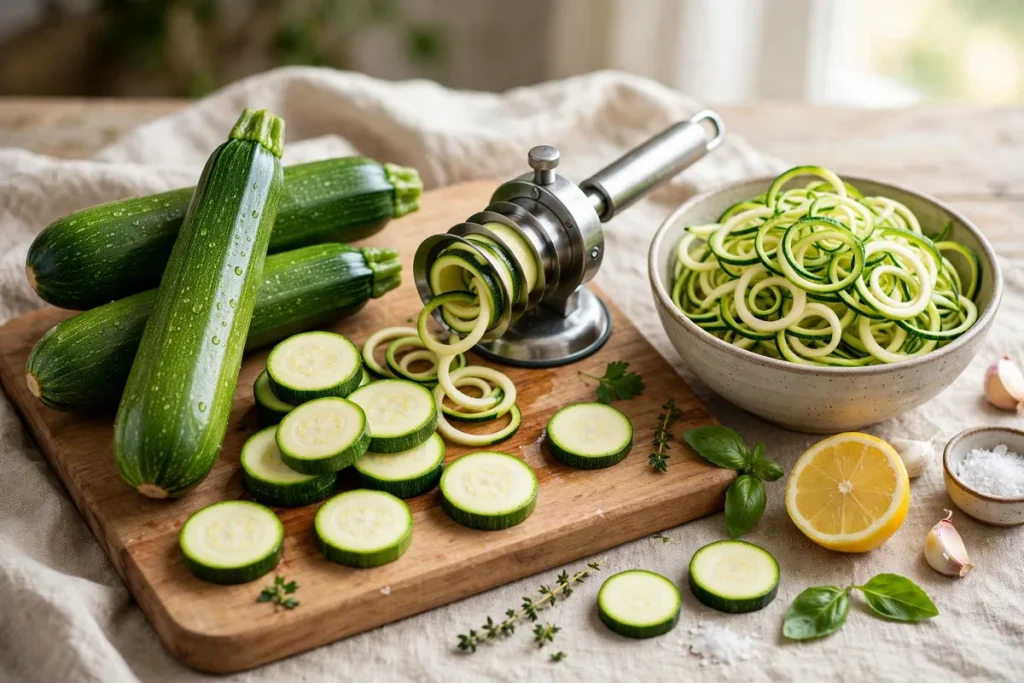
Zucchini noodles, or zoodles, are just raw zucchini cut into noodle shapes, so their calories are the same as raw zucchini: about 17 per 100 g, and a generous cup comes to about 20. That is the number that makes the swap interesting, because a cup of cooked spaghetti runs about 220 calories. Swapping the pasta for zoodles saves about 200 calories per cup, before anything else goes on the plate.
The honest caveat is the sauce. A zoodle plate with a ladle of creamy sauce and a glug of olive oil can easily climb back past the spaghetti it replaced, because one tablespoon of oil alone adds about 119 calories to the pan. Zoodles win when the sauce stays light: tomato, garlic, lemon, herbs, and oil that is measured rather than poured. The swap saves calories; the sauce decides whether you keep them.
Texture is the other honest note. Zoodles are softer and wetter than pasta, so they suit saucy dishes better than dry ones, and they are best cooked briefly, a minute or two in a hot pan, so they stay noodle-like instead of turning to mush. Half pasta and half zoodles is a fair compromise if you are not ready for the full swap: you still save about 100 calories per cup.
Shop-bought zoodles are the same vegetable, just pre-cut, and their calories match homemade ones. The only thing to check on the packet is whether they are sold with a sauce or oil already added. Plain zoodles are the 17-per-100-g version, and anything dressed is a different food. At home, a spiralizer or a julienne peeler turns one zucchini into a generous plate in under a minute.
When Zucchini Stops Being Light
Everything above assumes the zucchini is left more or less alone. Two popular preparations undo the advantage completely, and both are worth knowing by name.
Breaded and fried zucchini runs about 210 calories per 100 g, a typical estimate, which is more than twelve times the raw figure. The breading soaks up frying oil, and oil is about 119 calories per tablespoon, so a breaded coating plus a hot fryer turns a water vegetable into a fat delivery system. A restaurant side of fried zucchini sticks lands around 320 calories, also an estimate, which is more than a small meal’s worth of the raw vegetable.
Zucchini bread tells the same story from the baking side. A slice runs about 210 calories, a typical estimate, and the zucchini in the name does almost none of the work: sugar and oil do. The grated zucchini adds moisture and a little fiber, but it cannot cancel out the sugar and fat around it. Zucchini bread is cake with a vegetable in it, and it should be counted like cake.
An air fryer sits between the two worlds: it uses far less oil than a deep fryer, so air-fried zucchini lands well below the breaded-and-fried figure, but a heavy breading still adds calories that plain zucchini never had. A light coating and a measured spray of oil keep it much closer to the raw number than a restaurant fryer ever will.
The rule that ties all of this together is simple: zucchini itself is almost free, and everything added to it costs. Steamed, grilled, roasted with a measured teaspoon of oil, or spiralized, it stays light. Breaded, fried, or baked into sweet bread, it is the coating and the batter you are counting, not the zucchini. Keep the additions honest and zucchini stays one of the easiest calorie wins there is.
If you want the lightest cooked version, steaming and grilling are the safest bets: no added fat, and the zucchini keeps its shape. Roasting is nearly as light as long as the oil is measured. A teaspoon brushed over a whole tray beats a free pour from the bottle, and the difference over a week of cooking is real.
Frequently Asked Questions
How many calories are in zucchini?
About 17 calories per 100 g raw, one of the lowest figures of any vegetable.
How many calories are in a whole zucchini?
About 33 calories for a medium zucchini of about 196 g.
Do cooked zucchini have more calories than raw?
No, not on their own: boiled or steamed zucchini with no added fat runs about 15 calories per 100 g. The calories rise only when oil, butter, or breading is added.
Are zucchini noodles low in calories?
Yes: zoodles are about 17 calories per 100 g, and a generous cup is about 20, versus about 220 for a cup of cooked spaghetti.
How many calories are in fried zucchini?
Breaded and fried zucchini runs about 210 calories per 100 g, and a restaurant side of fried zucchini sticks is about 320. Both are typical estimates, and frying is what erases the advantage.
The short version: raw zucchini is 17 calories per 100 g, a whole one is about 33, and cooking it plain changes almost nothing. The only way zucchini gets expensive is the way most foods do, by frying it, breading it, or baking it into something sweet. Eat it plain, spiralized, or lightly cooked, and it is about as close to free calories as a vegetable gets.