How many calories in a green bell pepper? About 25 for a whole medium pepper, and about 20 per 100 g. That is the short answer, and it is a wonderfully boring one: a green bell pepper is, calorie-wise, barely there at all. You could eat a whole one as a snack and barely move the day’s total — said kindly, a whole pepper is a rounding error in a day’s eating.
These are standard raw values for green bell peppers, not one brand’s label — peppers are produce, and the numbers below are the standard figures for the raw vegetable. A raw green pepper also brings about 1 g of protein and about 2 g of fiber per 100 g, and it is high in vitamin C, at about 80 mg per 100 g — a full day’s worth class of food, kept modest: it is a genuinely vitamin-C-rich vegetable, not a supplement.
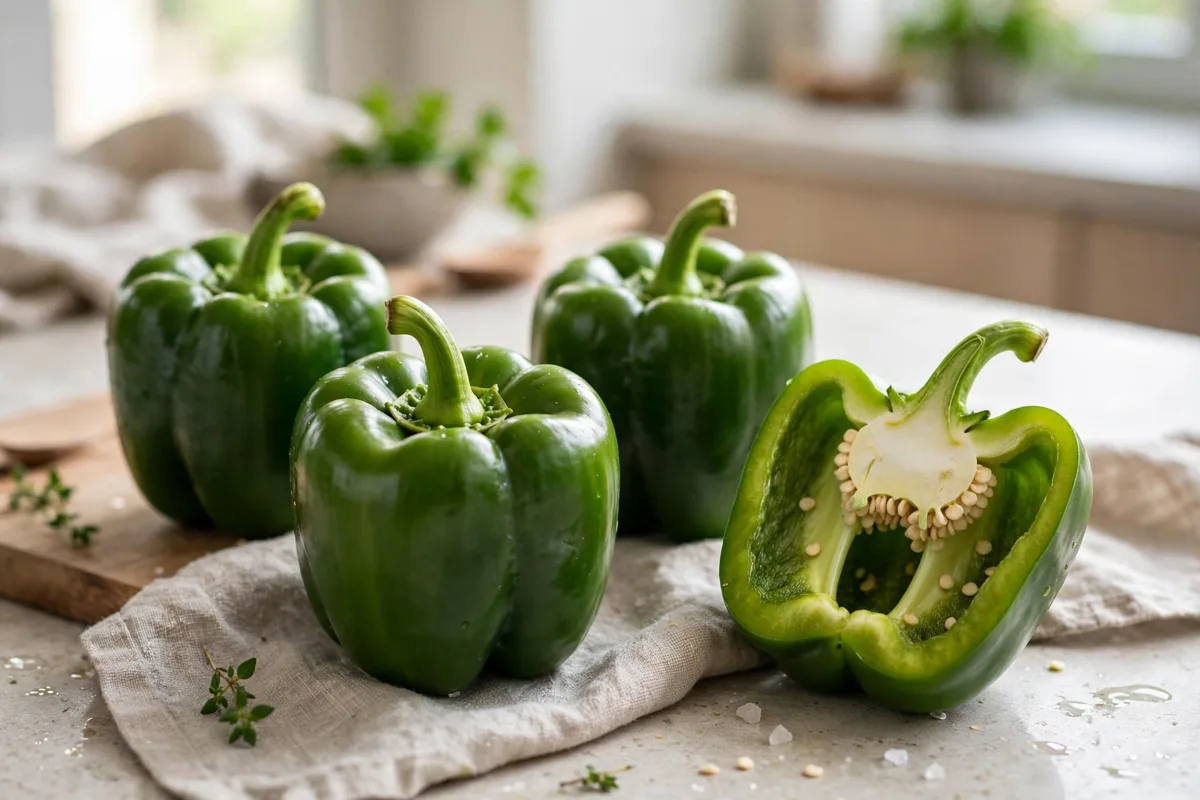
Green Bell Pepper Calories by Amount
Because a pepper is mostly water and crunch, the only thing that really moves the number is how much of it you eat. Here are the standard raw figures:
| Amount | Weight | Calories |
|---|---|---|
| Per 100 g | 100 g | About 20 |
| 1 medium pepper | About 120 g | About 25 |
| 1 large pepper | About 165 g | About 33 |
| 1 cup chopped | About 150 g | About 30 |
| 1 ring or slice | — | About 2-3 |
| A few rings (for a salad or sandwich) | — | About 5 |
The math checks itself: 100 g at 20 calories scales to 150 g at 30 for the chopped cup, and to about 25 for a 120 g medium pepper. So whether you weigh it, count it, or chop it, you land in the same place — somewhere in the twenties or low thirties.
Green vs Red vs Yellow Peppers
Here is the part most people get backwards: green, yellow, orange, and red bell peppers are not different vegetables. They are the same pepper at different stages of ripeness. Green is the unripe version, picked early, which is why it tastes a little grassy and slightly bitter rather than sweet. Left on the plant, it turns yellow, then orange, then red — and as it ripens, it builds up natural sugars.
That sugar is exactly why the calories climb with the color. A raw green bell pepper runs about 20 calories per 100 g, yellow and orange peppers sit between at about 27-31 per 100 g, and a fully ripe red pepper lands at about 31 per 100 g. So green is the least sweet and the least caloric of the bunch — but the gap is small. Swapping a green pepper for a red one of the same size adds roughly 11 calories per 100 g, which is not a difference worth stressing over. Pick the color you like the taste of: green for a sharper, savory bite in fajitas and stir-fries, red when you want sweetness, as in a roasted pepper salad or a raw snack.
One more honest note: the vitamin C story runs the other way. Green peppers are already high in vitamin C at about 80 mg per 100 g, and ripening does not take that away. So whichever color you reach for, you are getting a light, crunchy, vitamin-C-rich vegetable — green just happens to be the lightest of them.
The Only Way Peppers Gain Calories
A green bell pepper, left to itself, is almost impossible to make fattening. The calories arrive from what you put on it or cook it in — and the biggest culprit is cooking oil. Sautéed peppers with no oil added come out at about the same per weight, roughly 20-25 per 100 g, because heat alone does not add energy; it just softens the pepper and cooks off a little water. The honest note is the oil: one tablespoon of oil is about 120 calories, which is nearly five times the calories of a whole medium pepper.
Run the worked example and the point lands hard. A medium pepper on its own is about 25 calories. Sauté that same pepper in one tablespoon of oil and the pan holds about 145 calories — 25 from the pepper, 120 from the oil. Nothing about the pepper changed; the oil did all of it. This is not a reason to fear oil — a little fat helps you absorb the pepper’s nutrients and makes it taste far better — but it is the reason a pepper dish can quietly stop being a light dish. If you want the pepper to stay light, use a measured spoon of oil rather than a free pour, or cook the peppers in a nonstick pan with a spray and a splash of water.
Dips work the same way, and they are the sneakier trap because nothing is cooked at all. Raw pepper sticks are a classic light snack — a cup of strips is roughly the chopped cup at about 30 calories — but the moment they become a vehicle for a heavy dip, the dip adds the calories, not the pepper. Scoop pepper sticks through a rich, creamy dip a few times and the dip can easily contribute several times what the peppers themselves contain. That does not make pepper sticks a bad snack; it makes them an honest one only if you count the dip too. Pair them with something light — a yogurt-based dip, salsa, or hummus in a measured portion — and the snack stays what it looks like: mostly pepper, mostly crunch, very few calories.
So the rule is simple: peppers do not gain calories; company does. Keep the oil measured and the dip in view, and a green bell pepper stays one of the lightest foods in the kitchen.
How many calories in a green bell pepper?
About 25 for a whole medium pepper (about 120 g); a large one runs about 33.
How many calories in 100 g of green pepper?
About 20 calories per 100 g of raw green bell pepper.
Are green peppers good for weight loss?
Yes, in a plain sense: they are very light at about 20 calories per 100 g, with fiber and water and crunch, so they add bulk to a meal without adding many calories.
Green or red pepper — which has fewer calories?
Green, at about 20 calories per 100 g versus about 31 for red — the ripe red pepper holds more natural sugar.
Do cooked peppers have more calories?
The pepper itself barely changes — sautéed with no oil added it stays roughly 20-25 per 100 g. Cooking oil adds the calories: one tablespoon is about 120.
The Bottom Line on Green Bell Peppers
So, how many calories in a green bell pepper? About 25 for a medium one, about 33 for a large one, about 30 for a chopped cup, and about 20 per 100 g. It is the least caloric of the bell peppers — red runs about 31 per 100 g — but the gap is small enough that taste should decide the color, not the calorie count.
And the pepper itself is almost never the problem. Raw or cooked without oil, it stays in the twenties. It is the tablespoon of oil at about 120, or the heavy dip you scoop it through, that changes the picture. Keep those in view, and a green bell pepper stays exactly what it looks like: crunch, color, vitamin C, and barely any calories at all.