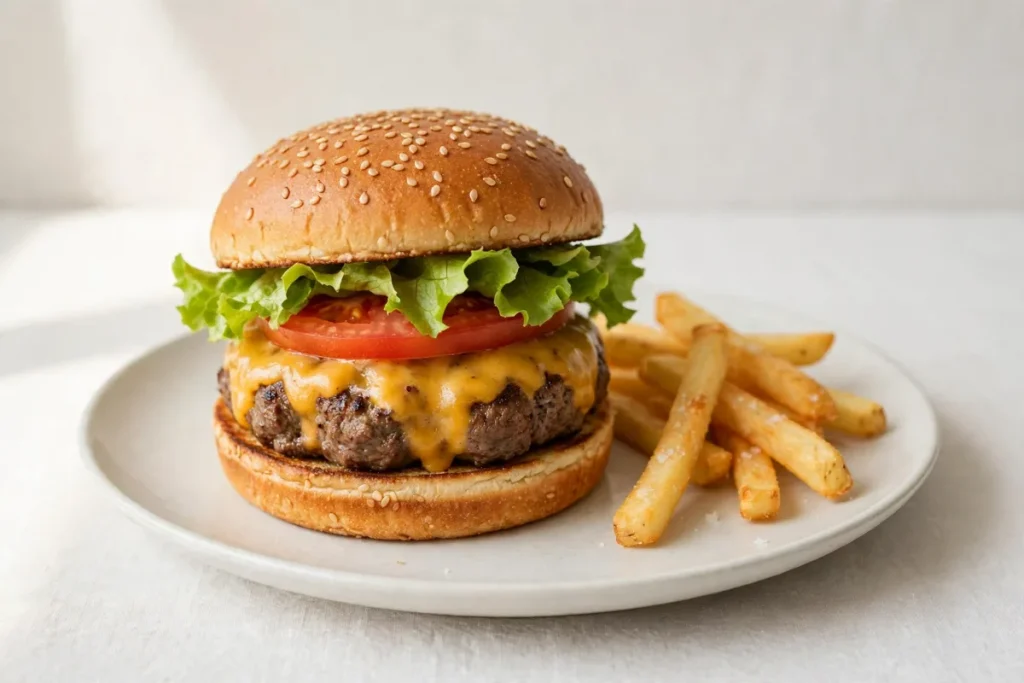

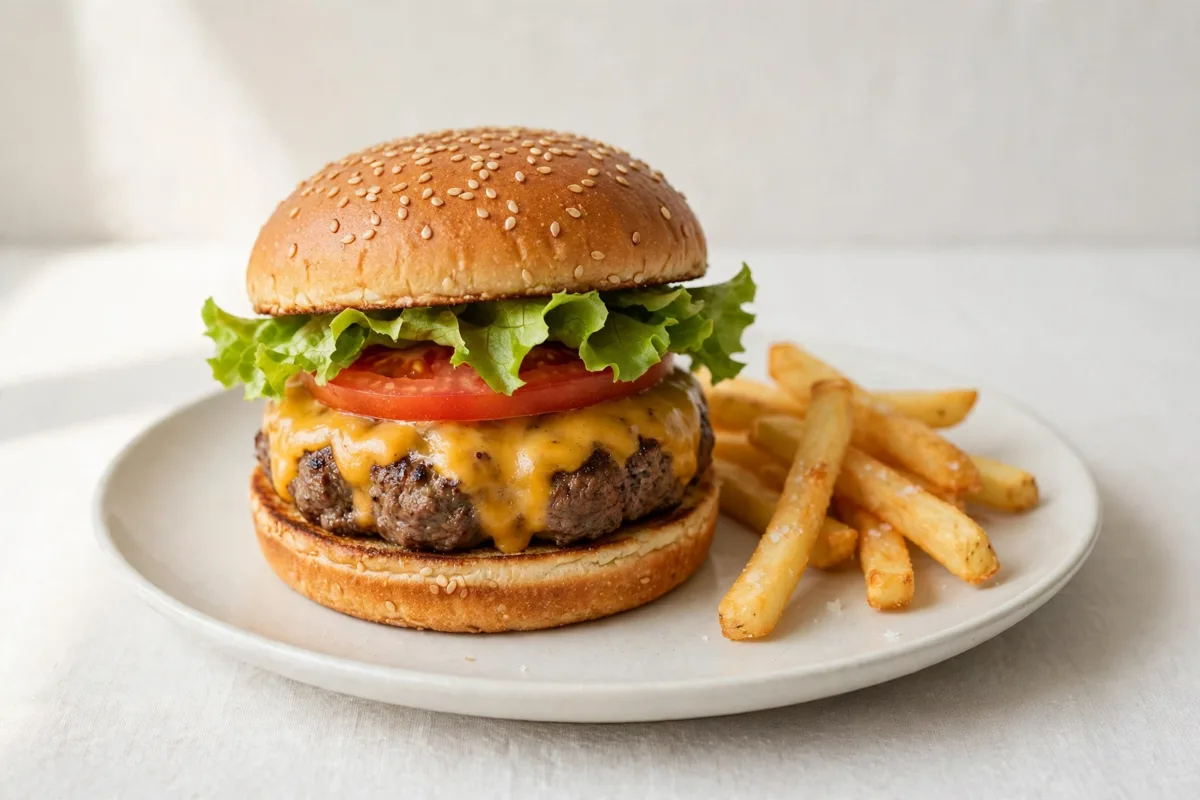
How many calories in a burger? For a standard single-patty burger — a quarter-pound beef patty, a white bun, ketchup and mayo, lettuce, tomato and onion — burger calories land at about 550. That is the short answer, and it is a useful one, because it covers the burger most people actually eat, whether it comes off a home grill or a fast-food counter.
But a burger is really three foods stacked on top of each other — the patty, the bun, and everything else — and each one carries its own price. The numbers in this guide are typical values for a standard homemade and fast-food style burger, not one restaurant’s official label. Once you see the three parts separately, the cheeseburger, the double, and the lighter homemade version all make sense.
Burger Calories by Type
Here is the range in one place, from the bare patty to the double. The standard single is the anchor; everything else adds or swaps from there.
| Burger | Calories | Notes |
|---|---|---|
| Beef patty alone (quarter-pound, cooked) | About 300 | The core of every burger here |
| White bun alone | About 140 | Typical range 130-150 |
| Standard single burger | About 550 | Patty, bun, ketchup/mayo, lettuce, tomato, onion; protein about 28-30 g |
| Cheeseburger (single, one cheese slice) | About 640 | Typical range 620-660; the cheese slice adds about 60-110 |
| Double burger (two patties) | About 850 | Estimate range 800-900 |
| Homemade leaner burger | About 475 | Estimate range 450-500; 90% lean beef or turkey, lighter sauce |
| Per 100 g of a typical assembled burger | About 250 | Estimate — a burger is a dense food |
Check the parts against the whole: patty 300 plus bun 140 is 440, and the sauces and extras bring the standard single to about 550. The math holds together, and it shows where the room to save actually is.
Where a Burger’s Calories Sit
The patty is the biggest single part, at about 300 for a quarter-pound of cooked beef. That is mostly protein and fat together — which is also why a single burger still delivers about 28-30 g of protein. A leaner grind or a turkey patty trims the fat share, but the patty will always be the main cost of the burger, and that is fine: it is also the main food in it.
The bun is the second part, and the most underestimated. A standard white bun runs about 130-150 calories — roughly a quarter of the whole burger — for what is basically refined bread. It adds almost no protein and little fiber, so it is the easiest place to save without changing what the burger tastes like. A whole-wheat bun costs about the same in calories but adds fiber; the real saving comes from eating less bun, not a different one.
Then there are the extras, and here mayo is the quiet adder. Mayonnaise runs about 90-100 calories per tablespoon, so a generous spread on both bun halves can add nearly 200 calories before you notice — more than the cheese. Ketchup, by contrast, is about 15-20 per tablespoon, and mustard is lower still. Lettuce, tomato, and onion add crunch and freshness for almost nothing, which is why they are the best deal on the whole burger. Cheese sits in the middle: one slice adds about 60-110 depending on the cheese, which is why a cheeseburger lands at about 620-660 rather than jumping by hundreds.
The double burger shows what happens when you scale the biggest part. A second patty adds roughly another 300, which is why the double lands at about 800-900 (estimate). Nothing else about the burger changed — the bun and sauces stayed the same — but the total jumped by more than half. If you want a bigger burger without the jump, add the vegetables and a second slice of tomato, not a second patty.
A Lighter Burger That Still Eats Like One
A lighter burger does not have to be a sad burger. The trick is to change the parts that cost the most calories while keeping the parts that make it taste like a burger: a hot patty, a soft bun, and something sharp and fresh on top.
Start with the patty. A 90% lean beef patty or a turkey patty carries less fat than standard ground beef, and that is the main reason the homemade leaner burger in the table lands at about 450-500 (estimate) instead of 550. Season it well and cook it hot so it still gets a good crust — a dry, under-seasoned lean patty is what gives lighter burgers their bad reputation, and it is entirely avoidable.
Next, look at the cheese. You do not have to give it up: a half-slice still gives you the melted-cheese flavor for about half the 60-110 a full slice adds, saving roughly 30-55. Or keep the full slice and change the sauce instead — that is usually the better trade, because sauce is where the hidden calories live.
The sauce swap is the single best deal in this article. Swapping a tablespoon of mayo (about 90-100) for ketchup (about 15-20) or mustard saves roughly 75-85 calories, and the burger still tastes bright and tangy. A lighter sauce — mustard plus a little ketchup, or a yogurt-based spread — gets you most of the way there too, which is why the homemade leaner burger specifies a lighter sauce alongside the leaner patty.
Then there is the open-face trick: eat the burger with only the bottom bun half and a knife and fork, or just the top half if you prefer holding it. That saves about half the bun, roughly 70 calories, and you still get the full patty, cheese, and toppings. It is the easiest saving of all, because nothing about the flavor changes — you simply leave half the bread on the plate.
Finally, load the vegetables. Extra lettuce, tomato, onion, and pickles add crunch, juiciness, and bulk for almost no calories, which makes a smaller or leaner burger feel like a full one. Put two of these swaps together — say, the sauce swap and the open-face bun — and a 550-calorie standard burger drops toward 400 by simple subtraction. Build all of them in from the start, with the leaner patty and lighter sauce, and you have the homemade leaner burger at about 450-500: still unmistakably a burger, just one that leaves room for the rest of the meal.
How many calories in a burger?
About 550 for a standard single-patty burger with a quarter-pound beef patty, a white bun, ketchup and mayo, lettuce, tomato and onion.
How many calories in a cheeseburger?
About 620-660 for a single cheeseburger — one cheese slice adds about 60-110 calories to the standard 550.
How many calories in a double burger?
About 800-900 (estimate) — the second patty adds roughly another 300 calories.
How many calories in just the patty?
About 300 for a cooked quarter-pound beef patty on its own, before the bun and toppings.
Is a homemade burger healthier?
Usually lighter — you control the beef, the bun and the sauce. A homemade leaner burger with a 90% lean beef or turkey patty and a lighter sauce lands at about 450-500 (estimate).
The Bottom Line on Burgers
So, how many calories in a burger? About 550 for the standard single, about 620-660 with cheese, about 800-900 for a double, and about 450-500 for a homemade leaner version. The patty alone is about 300, the bun about 140, and the sauces — mayo above all — decide how far the total drifts from the parts.
That breakdown is the useful part. A burger is not a mystery number; it is a stack of choices, and most of the choices that save calories — mustard instead of mayo, half the bun, a leaner patty, more vegetables — leave the burger tasting like a burger. Keep the patty hot, the toppings fresh, and the sauce honest, and the burger earns its place on the plate.