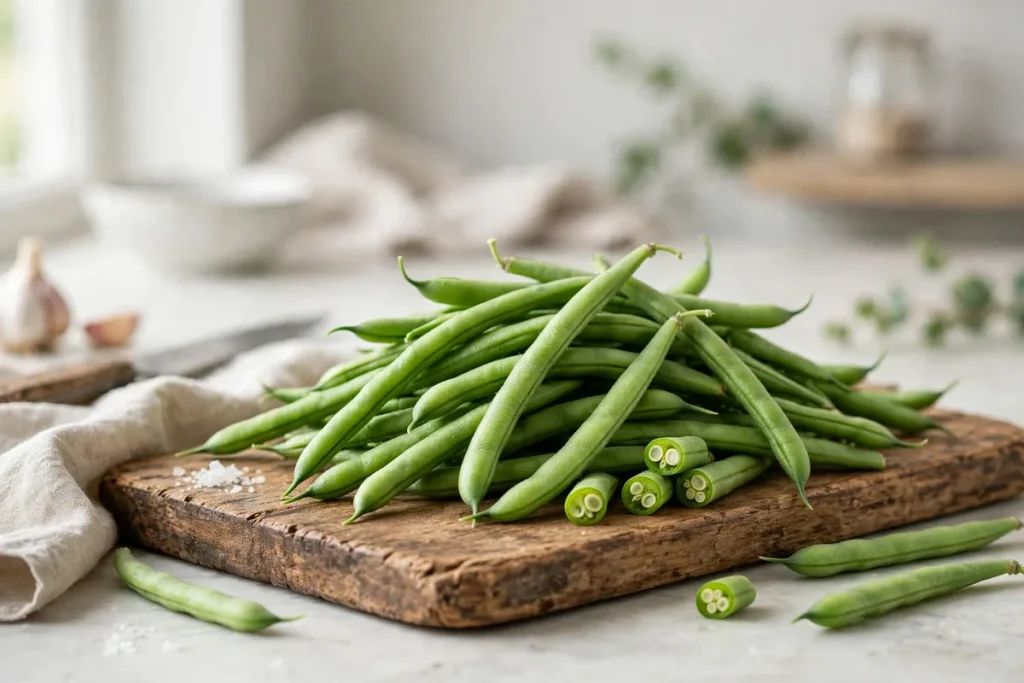

French beans nutrition comes down to one friendly number: just 31 calories per 100 g raw. That makes French beans one of the lightest vegetables you can put on a plate, lighter than potatoes, carrots, and even sweet corn, while still giving you fiber, vitamin C, and folate in every handful.
If you have ever wondered whether the slim green beans sold as haricot verts are worth the slightly higher price, or how they stack up against ordinary green beans, this guide answers it all. Below you will find the full nutrition numbers, raw versus boiled values, what each cooking method does to the calories, and why French beans are such an easy win for weight loss.
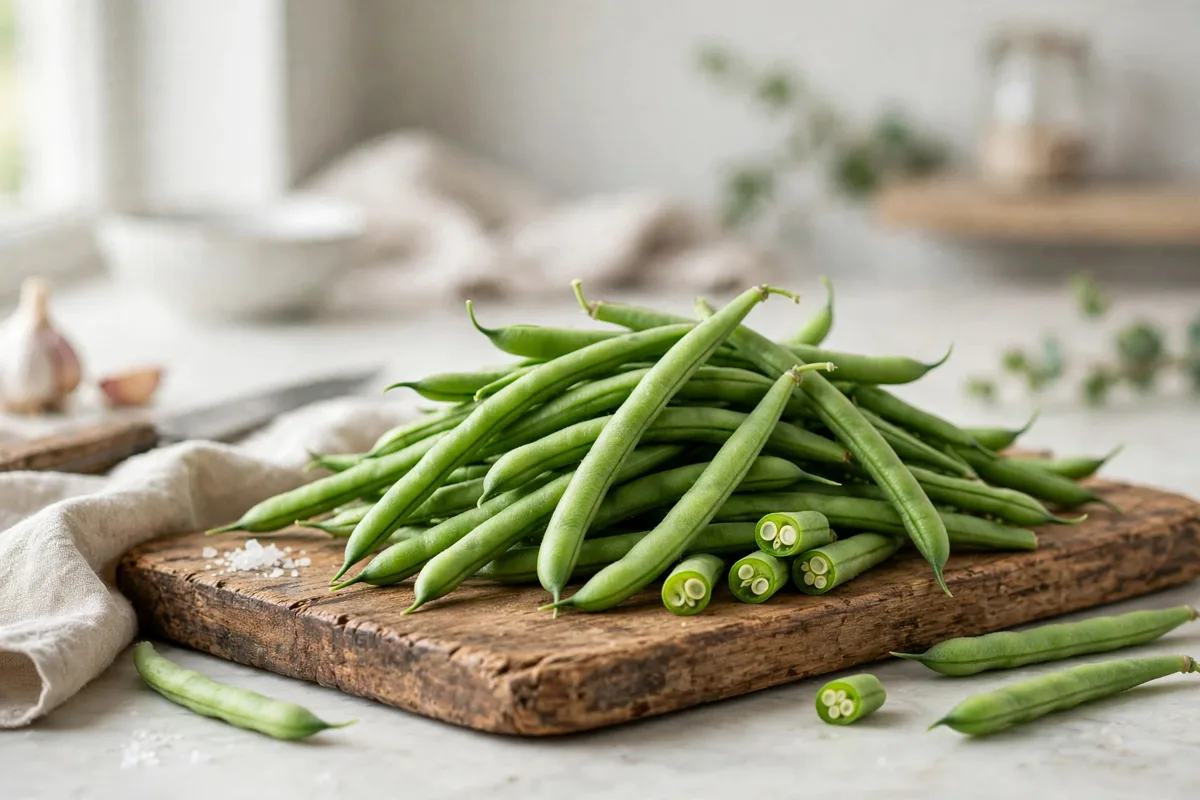
All of the values in this article are USDA standard values for green beans, the vegetable family French beans belong to. Cooking methods change the numbers a little, but as you will see, no honest way of cooking French beans turns them into a high-calorie food.
French Beans Nutrition per 100 g
Here is the headline table, raw against boiled, so you can see exactly what changes when the beans hit the pot.
| Per 100 g | Raw | Boiled |
|---|---|---|
| Calories | 31 | about 35 |
| Protein | 1.8 g | about the same |
| Carbohydrates | 7 g | about the same |
| Fiber | 2.7 g | about the same |
| Sugar | 3.3 g | about the same |
Boiling barely moves anything except the calories, and even that shift is small: about 35 per 100 g instead of 31. The reason is simple water loss. As beans cook, some water leaves, so the same nutrients sit in slightly less weight. Nothing is added, and no nutrient appears from nowhere.
By the cup, the numbers stay just as friendly. A cup of raw French beans weighs about 100 g, so it lands at about 31 calories. A cup of boiled beans weighs a little more, about 125 g, and comes in at about 44 calories. Either way, a full cup costs less than a single small cookie, and it brings fiber and crunch that a cookie never will.
Beyond the headline numbers, raw French beans also supply vitamin C at about 12 mg per 100 g, plus vitamin K and folate. Those are the quiet benefits: the beans are not just low in calories, they actually contribute something useful to the day.
French Beans vs Green Beans
Here is the question every shopper asks at the produce shelf: are French beans and green beans the same thing? The honest answer is that they belong to the same vegetable family, and nutritionally they are essentially the same. French beans, sold under the French name haricot verts, are simply a thinner, longer, more tender cut of green bean, picked younger so the pods stay delicate and nearly stringless.
That difference in shape changes the cooking more than the nutrition. French beans cook in just a few minutes, stay bright green, and keep a gentle snap even when fully tender. Thicker green beans need a little longer and turn a touch softer. If a recipe calls for one and you only have the other, swap them freely and just watch the cooking time: a minute or two less for French beans, a minute or two more for thick green beans.
Price is the one real difference. French beans often cost more because the slender pods are fiddlier to pick and pack. Nutritionally, you are not paying for better numbers, you are paying for tenderness and a shorter cooking time. For everyday meals, ordinary green beans are just as good a choice, and this article’s numbers apply to both.
Calories by Cooking Method
French beans are forgiving in the kitchen, but the cooking method still decides the final number. Water-based methods barely move it, the can changes the sodium story, and oil is the only thing that truly raises the calories.
| Method | Calories per 100 g | Notes |
|---|---|---|
| Raw | 31 | the baseline |
| Steamed or boiled | about 35 | water loss concentrates slightly |
| Canned, drained | about 20-25 | rinsing cuts the added sodium |
| Stir-fried in 1 tsp oil | about 70-75 (estimate) | the oil adds the calories, not the beans |
Canned beans deserve a plain explanation. They read lower, about 20 to 25 calories per 100 g, because they sit in water and absorb some of it, which dilutes the calories per bite. The catch is sodium: canned beans are packed in salty liquid, so drain them and give them a quick rinse, which washes away a good share of the surface salt. If you watch sodium, that rinse matters more than the small calorie difference.
Stir-frying is where the number jumps, and it is worth understanding why. One teaspoon of oil carries about 40 calories, so a 100 g portion of beans tossed in that teaspoon lands at about 70 to 75 calories in total. That figure is an estimate, because it depends on how much oil actually stays in the pan and how much coats the beans, but the principle is exact: the beans are still light, the oil is doing the adding. Even so, a stir-fried portion at 70-odd calories is still a light side dish by any standard.
Vitamins and Benefits
French beans earn their place on the plate for more than their low calorie count. Vitamin C, at about 12 mg per 100 g raw, supports normal immune function and helps the body absorb iron from plant foods, which is a handy bonus when beans share a plate with lentils or leafy greens. Vitamin K plays a role in blood clotting and bone health, and folate matters for cell growth and repair, which is why green vegetables show up so often in balanced eating patterns.
Then there is the fiber: 2.7 g per 100 g raw. That is not a record-breaking amount, but it is real, and it works together with the beans’ high water content to make a serving feel substantial. Fiber also feeds the gut and slows digestion slightly, which is part of why a plate with beans keeps you satisfied longer than the same calories from a refined side dish. For a broader look at fiber-rich choices, see our guide to high fiber foods.
One more honest benefit: French beans are easy to like. They need almost no preparation, just a rinse and a trim of the stem ends, and they cook in minutes. A vegetable that is quick, tasty, and nearly impossible to overeat is a vegetable that actually gets eaten, which is worth more than any single nutrient on a label.
Are French Beans Good for Weight Loss?
Yes, and the reason is volume. Weight loss comes down to eating fewer calories than you burn while still feeling fed, and French beans are built for that trade. A full cup of raw beans is about 31 calories, which is roughly what a single bite of many snack foods costs. You can fill half a plate with beans, get the crunch and the color, and barely move the day’s total.
The high water content is doing most of the work here. Fresh beans are mostly water, so they take up space in the stomach and slow you down at the table, while the fiber stretches that fullness out a little longer. Pair them with a protein, grilled chicken, fish, or tofu, and you have a plate that satisfies for hours at a very modest calorie cost.
There is one trap to avoid, and it is the same trap as the stir-fry table above: the toppings. Beans tossed in butter, creamy sauces, or a heavy cheese topping stop being a light side very quickly. Keep the dressing simple, lemon, garlic, a little olive oil measured with a spoon rather than poured freehand, and the beans stay on your side. If you are building a plate around vegetables more generally, our guide to how many servings of vegetables per day helps with portions, and zucchini calories shows another vegetable that plays the same volume game.
Finally, keep expectations honest. No single food causes weight loss on its own, and French beans are no exception. What they do is make a lower-calorie way of eating easier and more pleasant, which is exactly what a lasting plan needs.
Frequently Asked Questions
How many calories in 100 g of French beans?
31 calories raw, and about 35 boiled. A cup of raw beans is also about 31 calories, since a cup weighs about 100 g.
Are French beans and green beans the same?
They are the same vegetable family. French beans, or haricot verts, are a thinner, longer, more tender cut, and their nutrition is essentially the same as ordinary green beans.
Do French beans have protein?
Yes, a modest amount: 1.8 g per 100 g raw. Beans are a useful side source of protein, but pair them with a main protein food for a full meal.
Raw or cooked — which is better?
Both are light choices. Cooked beans read slightly higher per 100 g, about 35 instead of 31, because water leaves during cooking. Raw beans keep a little more vitamin C, while cooked beans are gentler on digestion.
Are French beans good for weight loss?
Yes. They give you fiber and a full plate of food for very few calories, about 31 per 100 g raw, which makes staying in a calorie deficit easier.
French beans are proof that the simplest vegetables are often the best value: 31 calories, real fiber, and vitamins, in a side dish that takes minutes. Keep the cooking simple, watch the oil, and they will earn their place on your plate all year.