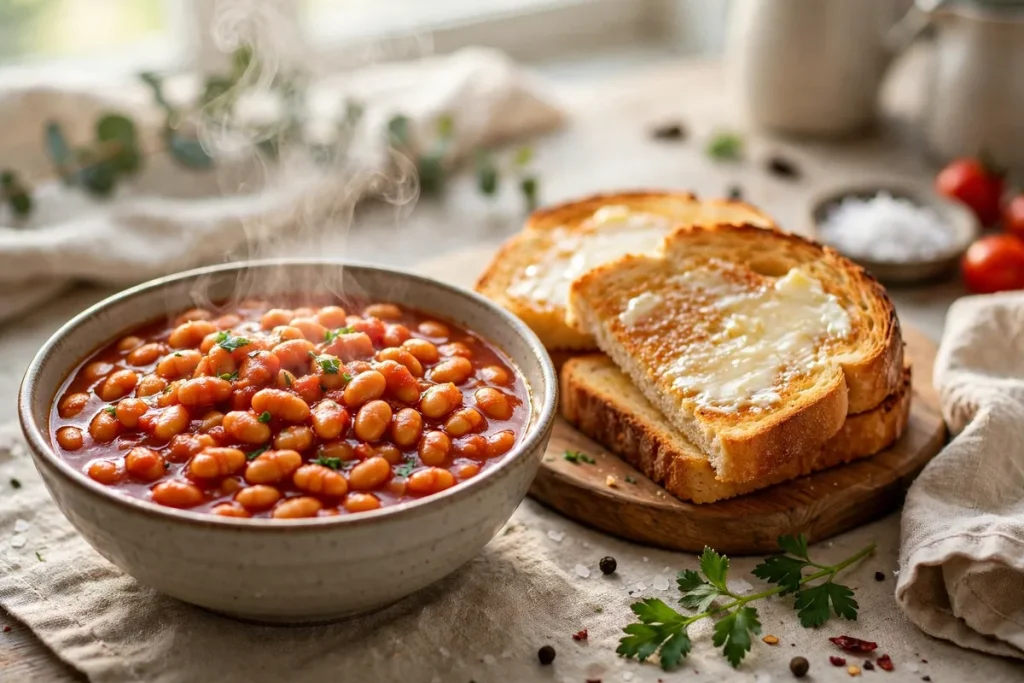

Baked beans calories are about 150 for a half cup of the sweet American style — the kind most cans in the United States hold — and about 125 for the same half cup of the plainer tomato style. That half cup is the serving most labels use, and it is also the portion most people actually spoon onto a plate, which makes it the number worth remembering. Everything else in this article follows from that one split: the style of the sauce changes the calories, the sugar and the sodium far more than the beans themselves do.
That matters because baked beans wear a health halo they only half deserve. Beans themselves are genuinely good food — high in fiber, decent in protein, and filling for very few calories. But a can of baked beans is not just beans. It is beans swimming in a sauce, and the sauce is where the sugar, the salt and a surprising share of the calories live. Once you know which style you are eating, the numbers stop being confusing.
All the figures in this article are typical values, because brands differ. One maker’s sweet style may run a little higher in sugar and another’s a little lower, and a homemade pot depends on how heavy a hand you have with the molasses. Treat these as the honest middle of the range, not a laboratory measurement of your exact can. Check your own label when it matters — the serving line on the back of the can is the final word for that can.
Baked Beans Calories by Style
Start with the three styles you will actually meet. The sweet American style is the brown-sugar and molasses version sold in most US supermarkets. The tomato or vegetarian style is the plainer, UK-style version, where tomato does most of the work and sugar plays a smaller part. The homemade Boston-style pot is the traditional slow-baked version with molasses and salt pork, and it is the richest of the three.
| Style | Per 100 g | Per 1/2 cup (about 130 g) | Per cup (about 260 g) |
| Sweet American style (brown sugar and molasses) | About 115 | About 150 | About 300 |
| Tomato / vegetarian style (UK-style) | About 95 | About 125 | About 250 |
| Homemade Boston-style (molasses and salt pork) | About 150 (estimate) | About 195 | About 390 |
The pattern is easy to read. Moving from the sweet style to the tomato style saves about 25 calories per half cup, and moving to the homemade Boston pot costs about 45 more per half cup than the sweet style. None of those gaps is dramatic on its own, but baked beans are rarely eaten in a single careful half cup — they are ladled generously, and they are often eaten alongside toast, eggs or a full breakfast, where every spoonful counts twice.
The can matters too. A whole standard can of about 415 g of the sweet style works out to about 480 calories, computed from the per-100 g figure. That is not a warning — a whole can is a lot of beans, and it is meant to feed more than one person or more than one meal. But it explains why a can that looks like a single serving can quietly cover a third of a day’s calories if it is eaten in one sitting.
The Sauce Is the Story
Here is the comparison that makes the whole article click. Plain cooked navy beans — the bean underneath all three styles — run about 140 calories per 100 g, with about 6 g of fiber and no added sugar at all. Baked beans in sauce run about 5 g of fiber and about 5 g of protein per 100 g, so the bean part of the bargain survives the canning process. What changes is everything the sauce brings with it.
Sugar is the first change. The sweet American style carries about 10 g of sugar per 100 g, which is about 12 g per half cup — roughly three teaspoons of sugar folded into a serving of beans. The tomato style carries about 5 g per 100 g, half as much, which is the main reason it lands 20 calories lower per 100 g. Neither number is scandalous on its own, but sugar is exactly the ingredient people do not expect to find in beans, which is why it catches them out.
Sodium is the second change, and it is the bigger one for many readers. The sweet style carries about 500 mg of sodium per half cup — more than a fifth of the commonly used 2,300 mg daily reference — before anything else on the plate is counted. That is the real catch of canned baked beans: the calories are moderate, but the salt is not. If you watch sodium, the label’s sodium line matters more than its calorie line, and rinsing helps only a little, because much of the salt is in the sauce that clings to every bean.
Put together, the honest verdict is that the beans are innocent and the sauce is not. You are getting real fiber and real protein, plus the slow, steady fullness that makes beans such a useful food for weight control. You are also getting added sugar and a serious dose of salt, and the sweeter the style, the more of both. That is not a reason to give baked beans up. It is a reason to pick your style on purpose.
Beans on Toast, Counted
Beans on toast is the classic baked bean meal, and it is worth counting properly because it is so easy to underestimate. Two slices of white toast run about 160 calories. Add a half cup of sweet-style beans at about 150, and the plate lands at about 310 calories. That is a genuinely reasonable breakfast or lunch — filling, cheap, and built on a food with real fiber — and it deserves more respect than it usually gets.
Butter changes the picture, as butter always does. Spread a teaspoon of butter on each slice — about 35 calories per teaspoon — and the buttered version lands at about 380 calories, computed from the same figures. That is still not a heavy meal, but it is a useful reminder that the toast’s toppings, not the beans, decide whether the plate stays light. A thin scrape of butter, or none at all, keeps the honest 310.
The toast itself matters too. Swapping white toast for wholemeal adds fiber and keeps you full longer, even though the calories barely move. And the portion of beans matters most of all: a generous ladle can easily be a full cup rather than a half cup, which doubles the bean half of the plate from 150 to 300 and takes the unbuttered plate to about 460. Beans on toast is a good meal — it just rewards the same honesty about portions as everything else.
Making Baked Beans Lighter
The simplest lighter move is to buy a low-sugar version. Low-sugar brands typically run about 30 to 40 percent fewer calories than the sweet style, which takes a half cup from about 150 down toward 90 to 105 — a real saving for a straight swap that tastes close enough that most people stop noticing after the first can. Read the label rather than trusting the front of the can: low-sugar, reduced-sugar and no-added-sugar are different claims, and the sugar line on the back is the one that counts.
Rinsing is the second move, and it is worth doing with realistic expectations. Tipping canned beans into a colander and rinsing them washes off some of the surface sauce, which trims a little sugar and a little sodium, but it cannot turn sweet-style beans into plain beans — the sauce has soaked into every bean. Think of rinsing as a small discount, not a transformation.
The third move is the homemade pot, done with a lighter hand. A traditional Boston-style pot is the richest version at about 150 per 100 g, but a homemade pot is also the only version where you control the sugar. Cut the molasses back, skip the salt pork, and let tomato and mustard do more of the work, and you land closer to the tomato style — with beans that still taste like baked beans. And if fiber is what drew you to beans in the first place, the site’s list of high fiber foods shows where baked beans sit among the other fiber heavyweights.
Frequently Asked Questions
How many calories are in baked beans?
About 150 per half cup for the sweet American style and about 125 for the tomato style, with about 115 and 95 per 100 g respectively. Brands differ, so check the label on your can.
How many calories are in a cup of baked beans?
About 300 for a cup of the sweet style and about 250 for a cup of the tomato style. A whole standard can of about 415 g of sweet-style beans is about 480, computed from the per-100 g figure.
Are baked beans healthy?
Partly. The beans bring about 5 g of fiber and 5 g of protein per 100 g, but canned styles also bring added sugar and about 500 mg of sodium per half cup in the sweet style. The tomato style and low-sugar versions are the better everyday picks.
How many calories are in beans on toast?
About 310 for two slices of white toast with a half cup of sweet-style beans, or about 380 with butter spread on the toast, computed from the same figures.
Which baked beans have the fewest calories?
The tomato or vegetarian style, at about 95 per 100 g and about 125 per half cup, and low-sugar brands, which typically run about 30 to 40 percent fewer calories than the sweet style.
So the short answer stays short: about 150 per half cup sweet style, about 125 tomato style. The sauce is the difference.