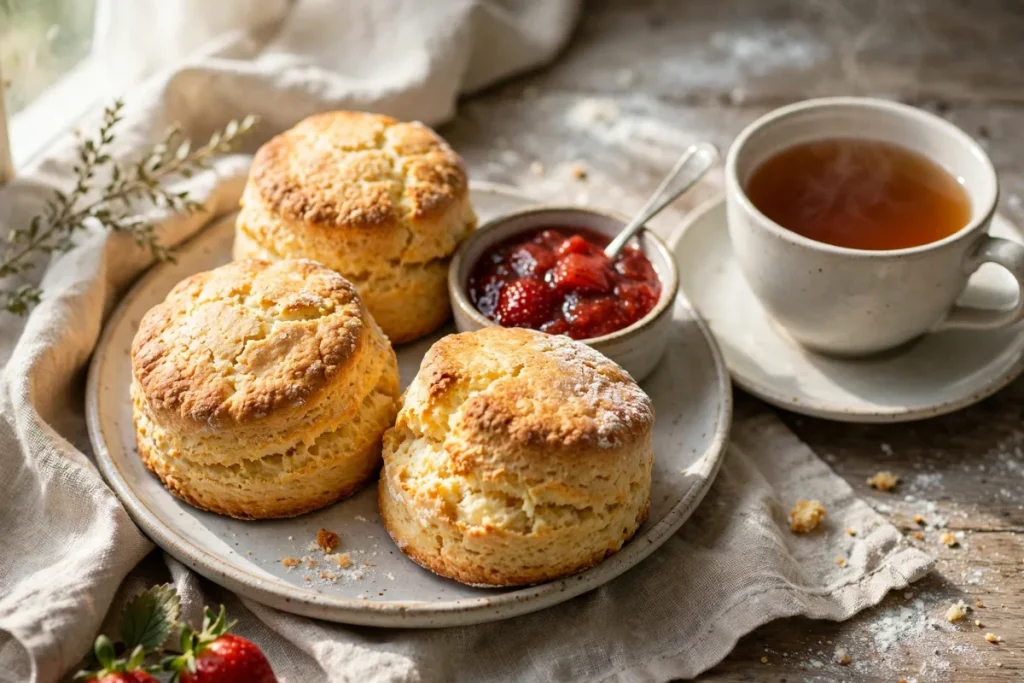

A scone is one of those foods that looks innocent on the plate and then quietly adds up. The short answer: a typical plain scone has about 221 kcal (calories). That is the official figure for one Tesco All Butter Plain Scone (60 g), taken from Tesco’s own product page. But scones vary a lot by size and recipe, so the honest range for a single scone runs from about 210 kcal for a standard fruit scone to about 440 kcal for a large glazed coffee-shop scone.
In this guide, “kcal” and “calories” mean the same thing: 1 kcal = 1 calorie as printed on food labels. Every figure below is worked out the same way: kcal per 100 g multiplied by the scone’s weight, divided by 100. Rows marked “Tesco official” come from Tesco’s product pages, read on 27 October 2026; every other row is a standard reference estimate, labelled as such. Quick answer: a plain scone is typically about 300 to 450 kcal (calories) at coffee-shop sizes, depending on size and type, while a standard supermarket plain scone is lower at about 221 kcal.
Scones kcal by type
| Type | Weight | Kcal per 100 g | Kcal per scone | Source |
|---|---|---|---|---|
| Plain (Tesco All Butter) | 60 g | 369 kcal | 221 kcal | Tesco official |
| Fruit, raisin/sultana (Tesco Sultana) | 60 g | 351 kcal | 210 kcal | Tesco official |
| Cheese | 65 g | about 400 kcal | about 260 kcal | Reference estimate |
| Chocolate chip | 65 g | about 420 kcal | about 275 kcal | Reference estimate |
| Blueberry | 65 g | about 380 kcal | about 245 kcal | Reference estimate |
| Glazed coffee-shop style | 110 g | about 400 kcal | about 440 kcal | Reference estimate |
Two things stand out. First, the fruit scone is not automatically heavier than the plain one: Tesco’s sultana scone (351 kcal per 100 g, 210 kcal per scone) actually sits slightly below its plain scone (369 kcal per 100 g, 221 kcal per scone). Dried fruit adds sugar, but the recipe as a whole matters more than any single ingredient. Second, size beats type: the large glazed scone costs twice the calories of a plain one mostly because it weighs nearly twice as much.
What changes the number
Size
Size is the biggest lever. On the plain-scone basis of 369 kcal per 100 g, a 60 g scone is 221 kcal, while a 110 g coffee-shop scone is 369 x 1.10 = 406 kcal before any glaze is added. If your scone looks twice the size of a supermarket one, it probably carries twice the calories.
Butter
Butter is dense: about 717 kcal per 100 g, so one tablespoon (14 g) adds about 100 kcal. A plain scone (221 kcal) spread with a tablespoon of butter becomes about 321 kcal.
Sugar and glaze
Extra sugar in the dough and a sweet glaze on top push the number up without adding much weight. Two teaspoons of sugar add about 30 kcal, and a sugary glaze drizzle adds roughly 40 kcal. That is part of why the glazed coffee-shop scone in the table reaches about 440 kcal.
Fillings: the cream tea maths
The traditional cream tea serving is where a scone really grows. Clotted cream runs about 586 kcal per 100 g, so one tablespoon (15 g) adds about 90 kcal; strawberry jam runs about 260 kcal per 100 g, so one tablespoon (20 g) adds about 50 kcal. Together, the classic topping adds about 140 kcal, turning a 221 kcal plain scone into a 361 kcal snack. Add a tablespoon of butter as well and you are at about 461 kcal.
Scone vs croissant vs muffin
How does a scone compare with the other bakery-case regulars? A plain croissant (about 65 g, reference estimate) comes in at about 230 kcal, very close to a plain scone, while a blueberry muffin (about 110 g, reference estimate) lands at about 380 kcal. The muffin is not dramatically denser per 100 g (about 345 kcal per 100 g against the scone’s 369); it simply weighs nearly twice as much as a standard scone. For the full croissant breakdown, see our chocolate croissant calories guide, which also covers plain and almond croissants.
| Bake | Typical serving | Kcal | Kcal per 100 g |
|---|---|---|---|
| Plain scone | 60 g | 221 kcal | 369 kcal |
| Plain croissant | 65 g | about 230 kcal | about 354 kcal |
| Blueberry muffin | 110 g | about 380 kcal | about 345 kcal |
Lighter choices
- Go mini. A 30 g mini scone on the plain basis is 369 x 0.30 = about 110 kcal, saving about 110 kcal against the standard 60 g scone.
- Pick fruit over cheese or chocolate. A fruit scone (210 kcal) saves about 50 kcal against a cheese scone (260 kcal) and about 65 kcal against a chocolate chip scone (275 kcal).
- Jam instead of cream and butter. Jam alone adds about 50 kcal, against about 140 kcal for clotted cream plus jam, and about 100 kcal for a tablespoon of butter. A plain scone with jam only is 221 + 50 = 271 kcal; the fully loaded version with butter, cream and jam is about 461 kcal, a saving of about 190 kcal.
- Skip the glaze. Choosing an unglazed scone over a glazed coffee-shop one saves roughly 40 kcal from the glaze alone, and far more if the glazed scone is also the larger one.
Can scones fit a calorie deficit?
Yes, if you budget for them. One plain scone (221 kcal) or one mini scone (about 110 kcal) fits comfortably into most calorie targets as an occasional snack, especially with jam rather than cream and butter. Two large glazed scones (about 880 kcal combined) are a different story and will swallow a big share of most daily targets. If you are working out your own target, see our guide to how many calories you should eat to lose weight. A practical way to estimate an unlabeled scone is to weigh it if you can, then multiply its weight in grams by about 3.7 kcal per gram for a plain scone, by about 4.0 kcal per gram for a cheese or chocolate-chip scone, and by about 3.8 kcal per gram for a blueberry scone, since those are the per-100 g reference values in the table divided by 100. For example, an 80 g plain scone is about 80 x 3.69 = 295 kcal (calories), before toppings. If you cannot weigh it, compare it with a supermarket scone: a scone that looks about half as large again is likely to carry about half as many calories again, so budgeting 300 to 450 kcal (calories) for a large coffee-shop plain scone is a sensible starting point.
Sources: Tesco All Butter Plain Scones 6 Pack and Tesco Sultana Scones 6 Pack product pages on tesco.com, read 27 October 2026 (per-scone and per-100 g figures as printed). All other figures are standard reference estimates computed as per-100 g values multiplied by the stated weight.
How many kcal are in a scone?
A typical plain scone has about 221 kcal (calories) — the official figure for one 60 g Tesco All Butter Plain Scone, at 369 kcal per 100 g. Across types and sizes, one scone ranges from about 210 kcal for a standard fruit scone to about 440 kcal for a large glazed coffee-shop scone.
How many kcal is a scone vs a muffin?
A plain scone (60 g) has about 221 kcal, while a blueberry muffin (110 g) has about 380 kcal. The muffin is higher mainly because it is bigger: per 100 g the two are close, about 369 kcal for the scone against about 345 kcal for the muffin.
Are scones high in calories?
They sit in the middle. At 210 to 440 kcal per scone they are lighter than most muffins and filled pastries, but heavier than a slice of toast. The toppings decide the final total: butter, clotted cream and jam can add 100 to 240 kcal.
How many calories are in a cheese scone?
A cheese scone of about 65 g has about 260 kcal, based on a reference estimate of about 400 kcal per 100 g. Cheese adds fat, which is why it sits above a plain scone of the same weight.
Can scones fit a calorie deficit?
Yes. One plain scone (221 kcal) or one mini scone (about 110 kcal) fits most calorie targets as an occasional snack. Keep the toppings light — jam instead of butter and clotted cream saves about 190 kcal — and skip a second large glazed scone.