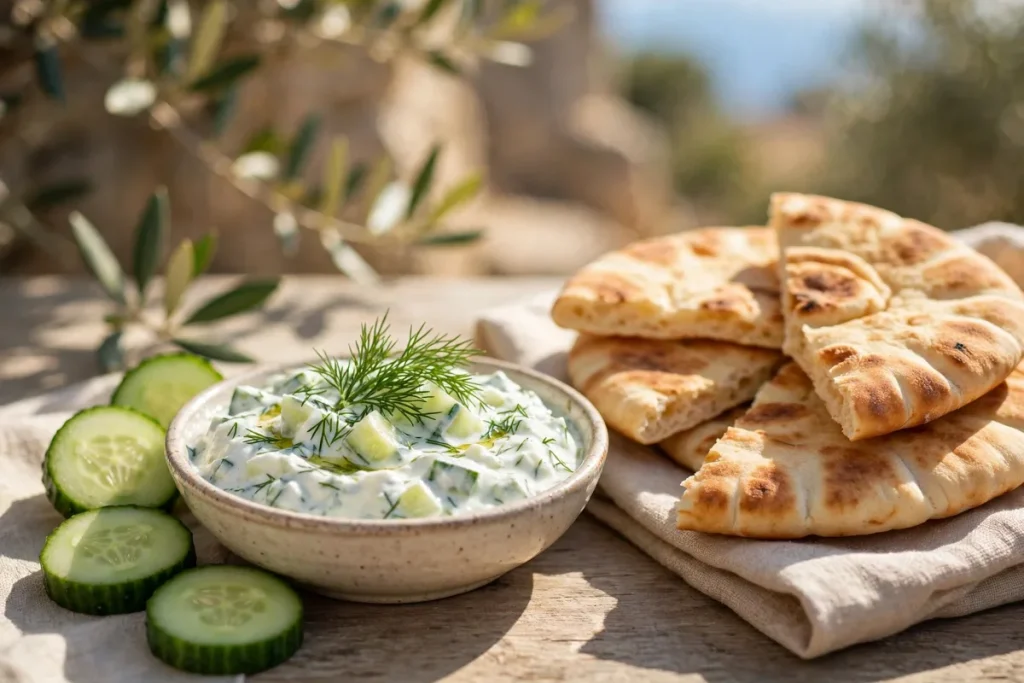

Tzatziki calories are refreshingly small: about 18 calories per tablespoon, or about 70 calories for a quarter cup, when it is made the traditional way with full-fat Greek yogurt. That makes tzatziki one of the lightest sauces there is, and a rare dip that actually adds something good to the plate. The catch, if you can call it one, is that the yogurt type is the whole story. Swap the yogurt and the numbers move a lot, while the cucumber, garlic and lemon barely change anything at all.
Traditional tzatziki is a simple mix: strained cucumber, Greek yogurt, garlic, lemon juice and a little olive oil, plus herbs such as dill. It is the yogurt that carries almost all of the calories, and it is also where the small amount of protein comes from, roughly 1 to 2 grams per quarter cup. The values in this article are typical values for traditional tzatziki, not one brand’s label, because recipes and store-bought tubs vary a little.
Tzatziki Calories by Serving
This table uses the full-fat Greek yogurt version, the classic recipe, as its anchor. One tablespoon is about 18 calories, and the numbers scale cleanly from there, which makes it easy to count whatever you actually spoon onto your plate.
| Serving (full-fat Greek yogurt version) | Calories (typical) |
|---|---|
| 1 tablespoon | About 18 |
| 2 tablespoons | About 35 |
| 1/4 cup (4 tablespoons) | About 70 |
| 1/2 cup | About 140 |
| 1 cup | About 280 |
It helps to picture what those amounts look like in real life. A tablespoon is a modest dollop beside a gyro or a grilled chicken breast. Two tablespoons is a generous smear on a sandwich or a good dip for a handful of vegetables. A quarter cup is the small side bowl that comes with a platter, and a full cup is a lot of tzatziki, more than most people eat in one sitting. Even at a full cup, though, 280 calories is less than many single servings of richer dips.
The Yogurt Decides the Calories
Here is why tzatziki varies so much from recipe to recipe. Full-fat Greek yogurt, the classic base, runs about 230 to 240 calories per cup on its own. That is what gives the rich version its numbers. But the cucumber, garlic, lemon and herbs add almost nothing, and the small drizzle of olive oil adds only a little, spread across the whole bowl. So when you change the yogurt, you change the sauce.
| Yogurt base | Calories per 1/4 cup of tzatziki (typical) | What changes |
|---|---|---|
| Full-fat Greek yogurt | About 70 | The classic, richest version |
| Low-fat Greek yogurt | About 45 | Lighter, still creamy |
| Nonfat Greek yogurt | About 30 | The lightest version, a little tangier |
The protein story runs the other way, which is good news. Nonfat Greek yogurt is higher in protein per calorie than the full-fat version, so the lightest tzatziki is not a watered-down compromise. It is still thick, still garlicky and still tastes like tzatziki, especially once the cucumber has been drained well and the garlic and lemon have had an hour to settle in. If you are making it at home and want the lightest version without losing the character, nonfat Greek yogurt is the single swap that matters most.
Store-bought tubs usually land near the full-fat homemade numbers, about 60 to 80 calories per quarter cup, because most brands build their tzatziki on a full-fat or part-skim yogurt base. Check the label if you want to be sure, since a tub that leans heavily on oil will run higher. Restaurant versions can run higher still, and that is almost always the olive oil. A generous drizzle on top looks beautiful, but each extra teaspoon of oil adds about 40 calories across the bowl, and a restaurant that pours freely can quietly double the oil in the recipe.
Tzatziki vs Other Dips and Sauces
This is where tzatziki really shines. Put two tablespoons of each side by side and the gap is hard to ignore. These are typical values, kept as approximations because brands vary, but the order never changes: tzatziki is the lightest of the common dips by a wide margin.
| Dip or sauce (2 tablespoons) | Calories (typical) |
|---|---|
| Tzatziki | About 35 |
| Hummus | About 70 |
| Ranch dressing | About 140 |
| Mayonnaise | About 190 |
That comparison explains why tzatziki is such a useful swap. Trading ranch for tzatziki on a salad or a plate of vegetables saves roughly 105 calories per two tablespoons, and trading mayonnaise for tzatziki on a sandwich saves roughly 155. Hummus is a respectable middle ground, about double the tzatziki, because it is built on chickpeas and tahini rather than yogurt. None of this makes ranch or mayonnaise villains, but it does make tzatziki the dip to reach for when you want the creamy, garlicky satisfaction without the heavy calorie load.
Keeping Tzatziki Light at Home
Homemade tzatziki is already one of the easiest sauces to keep light, because the recipe is so simple that nothing hides in it. Three habits make the biggest difference, and none of them ask you to give up flavor.
First, pick your yogurt on purpose. Nonfat Greek yogurt takes a quarter cup from about 70 calories down to about 30, and low-fat lands in the middle at about 45. If the tang of nonfat yogurt feels too sharp on its own, try a half-and-half mix of nonfat and full-fat, which lands around 50 per quarter cup and keeps most of the richness.
Second, drain the cucumber well. Grate it, salt it lightly, let it sit for ten minutes, then squeeze it dry in a clean towel. Watery cucumber is the reason homemade tzatziki sometimes turns thin and bland, and a thin sauce tempts you to add more oil to fix it. A properly drained cucumber gives a thick sauce that needs no rescue.
Third, measure the oil instead of pouring it. The classic recipe needs only a small amount, and the difference between a measured teaspoon and a free pour is about 40 calories per teaspoon across the bowl. Drizzle it, stir it in, and taste before adding more. The same rule applies at a restaurant table: if the bowl arrives with a visible pool of oil on top, stir it in and enjoy it, but know that the bowl is running higher than the homemade numbers in the tables above.
One more honest note for anyone counting carefully: the calories in tzatziki almost never come from the tzatziki alone. They come from what it is scooped with. Pita bread, fried chips and battered foods add far more than the dip itself. Pair tzatziki with grilled chicken, vegetables, salad or a whole-grain pita, and the sauce stays what it is, a light, fresh, protein-boosted bonus rather than a hidden cost.
So the short answer stands: about 18 calories a tablespoon, about 70 a quarter cup, and a sauce that earns its place on the table. Choose nonfat yogurt and a measured drizzle, and you can eat it generously without thinking twice.
How many calories in tzatziki?
About 18 calories per tablespoon and about 70 calories per quarter cup, for traditional tzatziki made with full-fat Greek yogurt.
How many calories in a cup of tzatziki?
About 280 calories for a full cup of the full-fat Greek yogurt version. The nonfat version runs much lower, about 120 calories per cup.
Is tzatziki good for weight loss?
Yes, tzatziki is one of the lowest-calorie sauces there is, with a little protein from the yogurt. At about 35 calories for two tablespoons, it is an easy swap for ranch or mayonnaise.
How many calories in store-bought tzatziki?
Usually close to homemade full-fat tzatziki, about 60 to 80 calories per quarter cup. Check the label, since tubs that lean heavily on oil run higher.
What makes restaurant tzatziki higher?
Extra olive oil drizzled on top. Each extra teaspoon of oil adds about 40 calories across the bowl, and a freely poured drizzle can quietly push the count well above the homemade numbers.