
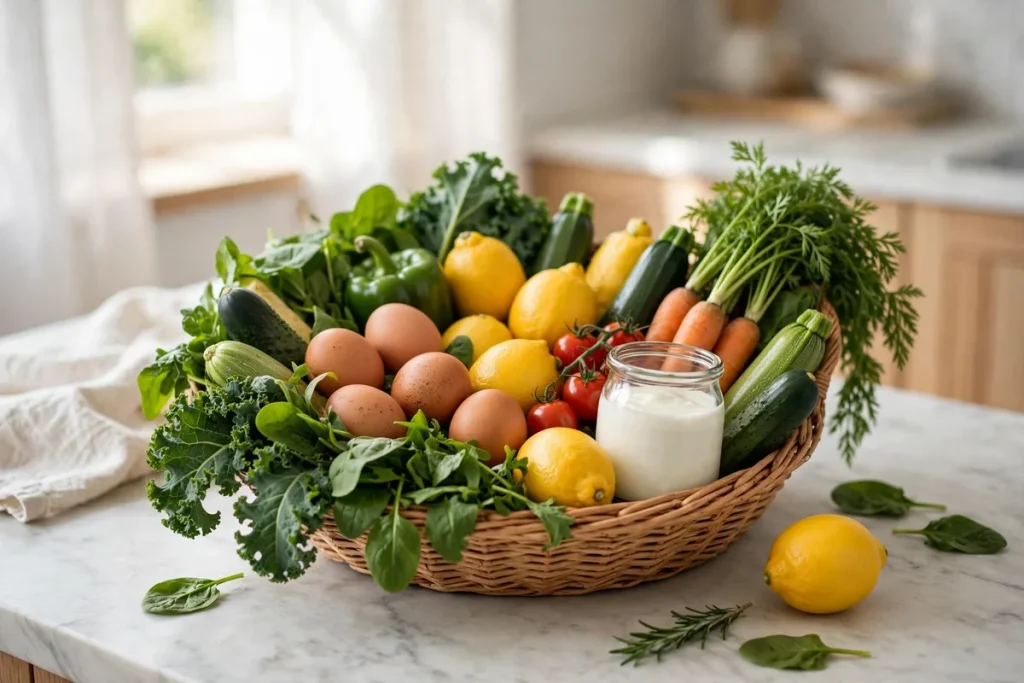

Quick answer: this sugar free grocery list is about no added sugar — not no sugar at all. Whole fruit and plain dairy contain natural sugars that arrive with fiber and protein attached, and they stay on the list. What leaves the cart is the sugar a manufacturer poured in during processing.
The strategy is simple: shop the perimeter first (produce, meat and fish, dairy), buy mostly single-ingredient foods, and let the nutrition panel — never the front-of-package claims — have the final word on anything boxed, bottled or jarred.
How to Read a Label in 10 Seconds
Everything you need is on the back of the package, and it takes about ten seconds. On a US nutrition label, find the Added Sugars line (it sits under Total Sugars). That number — the grams a manufacturer actually added — is the only sugar figure that matters for this list. If it reads 0 g, the product passes the sugar test, whatever its front claims.
Step two: scan the ingredient list for sugar’s aliases. Anything ending in -ose (dextrose, maltose, fructose, sucrose, glucose), syrups of any kind, cane juice or cane sugar, agave nectar, honey, fruit juice concentrates and maltodextrin are all sugar wearing a costume. Seeing two or three of them in one ingredient list means a single product is padded with sugar from several directions at once.
Step three: distrust the front of the package. Sugar-free on a label legally means under 0.5 g per serving — the product can still be sweetened with juice concentrate or sugar alcohols. And here is a conversion that makes any label instantly visual: one teaspoon of sugar is about 4 grams, so dividing a label’s sugar grams by four shows you how many teaspoons you are actually holding.
One more label habit that pays for itself: check the serving size before celebrating a number. A sauce that brags about 3 g of sugar per tablespoon quietly becomes 9 g at the half-cup most people actually use. The panel never lies — but it does assume you read the fine print.
What about stevia, monk fruit and sugar alcohols? They are not sugar — they add sweetness without the sugar grams. This list does not ban them, but it does not need them either. Think of sweeteners as a bridge: useful while your taste adjusts away from very sweet foods, not a permanent resident of the cart. The goal is food that tastes like itself.
The List, Aisle by Aisle
Here is the cart itself, organized the way stores are laid out. The working rule: if it is a single-ingredient whole food, it is almost certainly on the list. If it comes in a box with a mascot, the panel decides. Start at the perimeter of the store — produce, meat, dairy — and treat the center aisles as a place to buy staples, not to browse.
Produce
This is the safest aisle in the store. No vegetable carries added sugar, and every sugar in whole fruit is natural. Load up freely: leafy greens (spinach, kale, arugula, romaine), broccoli, cauliflower, zucchini, peppers, cucumbers, tomatoes, green beans and mushrooms. Avocados belong here too — creamy, filling and essentially sugar-free. Lemons and limes earn their place for the flavor they add to water, salads and fish without a gram of anything added.
For fruit, the lowest-sugar picks are berries (strawberries, blueberries, raspberries), grapefruit and green apples — but all whole fruit is naturally fine, including bananas and grapes. The only produce-aisle traps are the value-added ones: fruit in syrup, candied nuts and pre-dressed salad kits. Fresh or frozen without added sauce or syrup is the rule; frozen berries are often cheaper than fresh and just as good stirred into yogurt or oats.
Shopping tip: fill half your cart here before you go anywhere else. A cart that starts with vegetables and fruit ends with less room — physically and mentally — for the sweetened stuff. Produce also sets the week’s cooking: when the fridge holds greens, peppers and berries, meals assemble themselves around them instead of around a box.
Protein & Deli
Meat, fish and eggs contain no sugar naturally, so this aisle is straightforward: eggs, chicken, turkey, beef, fish, shrimp, canned tuna in water, tofu and tempeh are all automatic yeses. Plain cheese is naturally around 0-1 g of sugar per serving, so it stays on the list too — cheese is fat and protein, not sugar.
The catch is flavoring. Glazed, teriyaki, honey-mustard and BBQ-flavored meats can carry 5-10 g of added sugar per serving, and plenty of ordinary deli slices list sugar or dextrose in the ingredients. Rotisserie chickens are often injected with a sweetened brine as well. Plain cuts plus your own spices win every time — and usually cost less per pound than the pre-seasoned versions.
Watch the processed edges of the case. Most sausages, bacon and hot dogs contain a gram or two of added sugar per serving from curing — small enough that many people keep them as condiment foods. But buy the plain versions and read the panel, because honey-cured or maple-flavored varieties can triple the number without tasting noticeably sweeter.
Do not skip the freezer case on the way past. Frozen fish fillets, shrimp and chicken breasts are typically flash-frozen with nothing added, cost less than fresh, and remove the weeknight excuse to order in. Just confirm the bag’s ingredient list is one item long — breaded or sauced frozen proteins are a different product.
Dairy & Eggs
The rule here is one word: plain. PLAIN Greek yogurt and plain cottage cheese are stars — check that the ingredient list is just milk and cultures. Milk itself carries about 12 g of natural lactose per cup; that is not added sugar, and the label says so plainly in the Added Sugars line, which will read 0 g. Nothing to fix.
Plant milks split in two. The unsweetened versions (almond, soy, oat) are fine staples. The sweetened and so-called original versions — often the default facing on the shelf — can hide 7-10 g of added sugar per cup. Always grab the carton that actually says unsweetened and confirm it on the panel once. Flavored milks, drinkable yogurts and coffee creamers are in the surprise-sugar table below for a reason.
Eggs, of course, are the dairy case’s easiest win: zero sugar, complete protein, endlessly versatile. Stock them generously — they turn leftover vegetables into dinner and make the week’s cheapest high-protein breakfast.
Pantry
The staples aisle is where label-reading pays off, because it mixes perfect picks with padded ones. Safe bets: oats, rice, quinoa, lentils, dry beans, canned beans without sauce, nuts and seeds, olive oil, vinegar, mustard, hot sauce, spices and dried herbs, canned tomatoes with no added sugar, and salsa — though some salsa brands sweeten the jar, so check the label before it goes in the cart.
Nut butters deserve a pause in the aisle. The good jar has ONE ingredient — peanuts (a little salt is fine). Most big-brand peanut butters add sugar and palm oil, which is why the pure ones taste nuttier at about the same price. For the full breakdown of what is actually in the jar, our peanut butter calories guide walks through the label math.
Coffee and tea are naturally sugar-free — the sugar shows up at the drive-through, not in the bag of grounds. Brew at home and the panel stays at 0 g; a flavored latte from a cafe can carry 30-50 g. For the full picture of what coffee itself costs you, see our coffee calories guide — black coffee is about 2 calories a cup, so the drink is never the problem. The creamer is.
Grains and breakfast cereals are the pantry’s sorting hat. Plain oats, rice and quinoa are clean; most boxed cereals — even the healthy-looking ones — carry 9-12 g of added sugar per small serving. If you want cereal in the cart, flip the box first: under about 5 g of added sugar per serving is the line worth holding, and plain oats with berries beat every box anyway.
One last pantry check: condiments. Mustard, hot sauce, vinegar and plain tomato products are clean. Ketchup, BBQ sauce, teriyaki and most salad dressings are not — they are sugar delivery vehicles that happen to taste like food. Keep one or two you love, measure them, and let mustard and salsa do the everyday work.
Drinks
The shortest list on the page: water, sparkling water and unsweetened tea — hot or iced — are the full set of safe defaults. They are also the highest-impact swap in the whole store, because liquid sugar barely fills you up and vanishes from memory fast. A single daily soda replaced with sparkling water removes roughly 35 g of sugar a day without touching a single meal.
Flavored waters earn a conditional yes: fine only if the panel says 0 g of sugar, because many water products are lightly sweetened or carry juice. Diet sodas have no sugar, but they keep a sweet tooth trained — fine occasionally, water first. And fruit juice, even the 100% kind, belongs in the surprise-sugar table: a 250 ml glass carries about 24 g of sugar with none of the fruit’s fiber to slow it down. Eat the orange; skip the carton.
The Surprise-Sugar Shelf
These are the products that look innocent — or even healthy — while carrying a dessert’s worth of sugar. None of them is forbidden forever; they are simply the items where the panel check matters most, and where the plain version plus real ingredients is almost always the better buy.
| Product | Hidden sugar (about) |
| Flavored yogurt | 15-20 g per cup |
| Granola | 10-12 g per ½ cup |
| Ketchup | ~4 g per tablespoon |
| BBQ sauce | 5-6 g per tablespoon |
| Fruit juice (even 100%) | ~24 g per 250 ml glass |
| Cereal/granola bars | 8-12 g each |
| Low-fat flavored products | Varies — sugar often replaces the removed fat |
| Dried fruit | ~25-30 g per small handful (concentrated, with the water gone) |
Easy Swaps
Cutting added sugar rarely means giving things up — it means trading the sweetened version for the plain one and adding your own flavor back. Five swaps that cover most carts:
| Instead of | Try this |
| Flavored yogurt | Plain yogurt + fresh berries |
| Fruit juice | Sparkling water + a squeeze of lemon |
| Granola | Plain oats + a small handful of nuts |
| Ketchup | Mustard or salsa (check the label) |
| Sweetened plant milk | The unsweetened version of the same milk |
Notice the pattern: the swap is almost always the same food, unsweetened, plus real flavor. Berries, lemon, spices and herbs do the job sugar was doing — and your taste adjusts faster than you would expect. Most people who make these swaps stop missing the sweetened versions within about two weeks.
One final cart strategy: do not try to fix everything in a single trip. Swap the drinks first, then breakfast, then the condiments. Two or three zones per week, and within a month the whole cart is different — without a single miserable shopping trip.
Frequently Asked Questions
What foods are naturally sugar-free?
Meat, fish, eggs, most vegetables, plain cheese and cooking oils contain no sugar naturally. Once food is packaged or flavored, assume it carries some unless the nutrition panel says 0 g. Almost nothing processed is truly zero — a cart built mostly from single-ingredient, unpackaged foods is the practical definition of sugar-free.
Is fruit OK on a sugar-free list?
Yes. Whole fruit carries its natural sugar together with fiber and water, which slow digestion and keep you full — an apple is not a candy bar. This list targets added sugar only, so fruit stays. Berries, grapefruit and green apples are the lowest-sugar picks if you want to go lighter.
What are the hidden names for sugar on labels?
Watch for the -ose family (dextrose, maltose, fructose, sucrose, glucose), syrups of every kind, cane juice and cane sugar, agave nectar, honey, fruit juice concentrates and maltodextrin. A single ingredient list can hide sugar under three or four different names, which is why scanning the full list beats trusting the front of the package.
Sugar-free vs no added sugar — what is the difference?
Sugar-free means under 0.5 g of sugar per serving by label rules, and the product often uses sweeteners to get there. No added sugar means the maker added none — but the food can still contain natural sugars, like the lactose in plain yogurt. For this grocery list, no added sugar is the more useful standard.
Where do I start if my cart is full of sugar?
Start with drinks — soda, juice and sweetened coffee are the biggest everyday sources of added sugar for most people. Then fix breakfast: sugary cereals and flavored yogurts are the second biggest. Swap those two zones and most people cut their added sugar roughly in half without thinking about the rest of the cart.


Pingback: Low Sodium Foods List: Fresh Picks With mg Counts (and the Traps)