
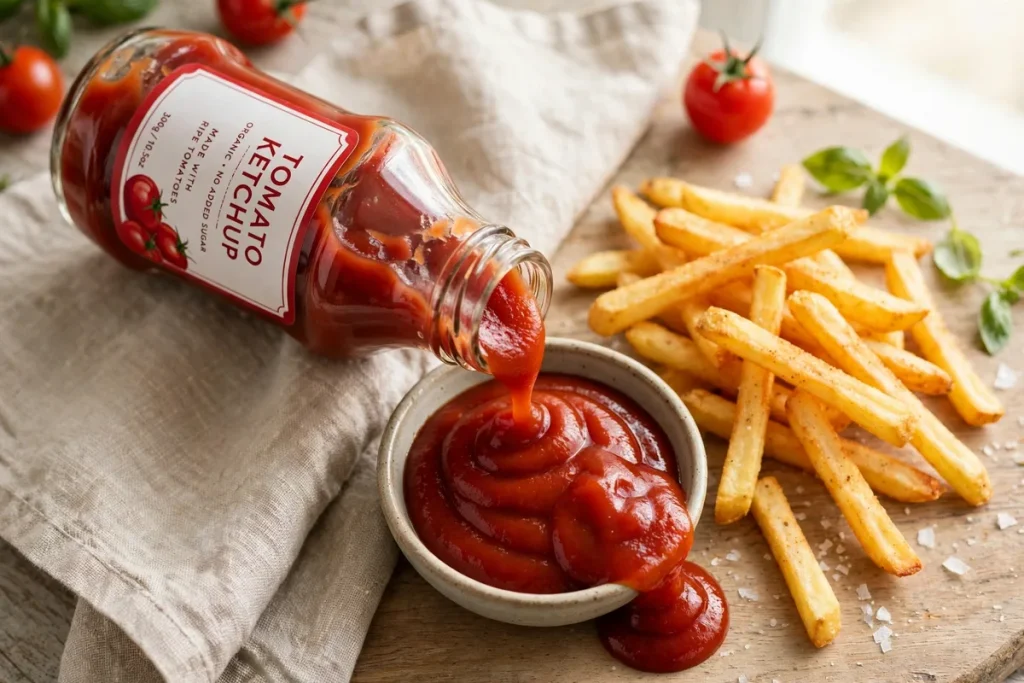

Ketchup calories come to about 19 per tablespoon, which sounds like nothing — until you count how many tablespoons actually end up on the plate. A normal serving with fries or a burger is rarely one tablespoon; two or three is typical, and that turns a “free” squeeze into about 40 to 60 calories and 8 to 12 grams of sugar before you have eaten anything else. Ketchup is not a diet disaster, but it is not the innocent red sauce it pretends to be, either. The real story is not the calories — it is the sugar share hiding inside them.
This guide uses typical label values for regular tomato ketchup, the kind in the squeeze bottle and the fast-food packet. Values vary a little by brand, but the shape of the story is the same everywhere: low calories per spoon, a quarter of the bottle sugar, and portions that are almost always bigger than the label serving. Per tablespoon (17 grams), regular ketchup carries about 19 calories, about 4 grams of sugar, and about 154 milligrams of sodium, with almost no fat and less than half a gram of protein. That is the whole nutritional picture — ketchup contributes flavor, salt, and sugar, and not much else.
Ketchup Calories by Amount
The label serving is one tablespoon, but almost nobody eats ketchup by the tablespoon from a measuring spoon. Here is what the numbers look like at every amount you are likely to meet:
| Amount | Calories |
|---|---|
| 1 teaspoon | About 6 |
| 1 fast-food packet (about 9 g) | About 10 |
| 1 tablespoon (17 g) | 19 |
| Quarter cup (4 tablespoons) | 76 |
| Per 100 g | About 112 |
The packet number is worth remembering. A single fast-food packet is only about 10 calories, which is why grabbing one packet feels harmless. Two packets with a large fries order is already about 20 calories and about 4 grams of sugar, and three packets — common with a big order of fries — is about 30 calories and about 6 grams of sugar, all before the fries themselves are counted. The quarter-cup line is the other one to watch: a quarter cup is 76 calories, which is more than most people expect from a condiment, and it is exactly how much a generous pour over a plate of fries can reach.
Sodium is the quiet second number. At about 154 milligrams per tablespoon, ketchup is not the saltiest condiment on the table, but three tablespoons quietly add about 460 milligrams — roughly a fifth of a day’s sodium — to a meal that probably already has plenty. If you are watching salt, the packet habit deserves as much attention as the sugar.
The Sugar Nobody Counts
Here is the number that reframes the whole bottle. One tablespoon of ketchup weighs 17 grams and carries about 4 grams of sugar, which means sugar is roughly a quarter of ketchup by weight. Tomatoes are not that sweet on their own, so almost all of that sugar is added during manufacturing — sugar or high-fructose corn syrup is usually the second or third ingredient on the label, right behind tomato concentrate and vinegar. Ketchup is, in honest terms, a sweet sauce that happens to be tomato-flavored, not a tomato sauce that happens to be sweet.
That quarter-sugar share is why the portion matters more than the per-spoon number. Four tablespoons of ketchup — a generous but entirely normal amount across a plate of fries and a burger — carry about 16 grams of sugar. The American Heart Association’s daily added-sugar guideline is 25 grams for women and 36 grams for men, so those four tablespoons alone pass half the women’s guideline and nearly half the men’s, before any dessert, drink, or sauce has been counted. To put the spoon in perspective, one tablespoon of ketchup holds about the sugar of a teaspoon of sugar, and most people use several.
None of this makes ketchup a villain. Sixteen grams of sugar is a small share of most days, and ketchup’s real advantage is that it makes plain foods satisfying — a little sweetness on eggs, beans, or grilled meat can be the difference between a meal you enjoy and a meal you abandon. The trap is only the invisibility: because ketchup is counted as a condiment rather than a food, its sugar rarely makes it into anyone’s mental tally. The fix is simple and costs nothing: pour it into a small bowl instead of squeezing it over the plate, and you will see exactly how many tablespoons you are eating. Most people are mildly surprised the first time they do it.
It is also worth knowing what ketchup is not. It is not a meaningful source of lycopene in the amounts people eat — you would need most of the bottle to match a serving of tomato sauce — and the vinegar and salt do not cancel out the sugar. Organic and “natural” ketchups usually carry the same sugar load unless the label says otherwise; the word on the front of the bottle describes how the tomatoes were grown, not how sweet the sauce is. The only label claim that changes the math is “no sugar added,” which is covered below.
Ketchup vs Other Condiments
Ketchup looks very different depending on what you compare it with. Against the creamy dressings it is a clear winner on calories; against the sharp, vinegar-based sauces it looks sugary. Here is the honest per-tablespoon comparison, using typical label values:
| Condiment (per tablespoon) | Calories | Sugar |
|---|---|---|
| Hot sauce | About 3 | About 0 g |
| Yellow mustard | About 9 | About 0 g |
| Ketchup | 19 | About 4 g |
| BBQ sauce | About 29 | About 6 g |
| Ranch dressing | About 73 | About 1 g |
| Mayonnaise | About 94 | About 0 g |
The headline is that ketchup beats mayonnaise on calories by a wide margin — 19 against 94 per tablespoon, a saving of about 75 calories every time you choose one over the other. That is the swap that matters most at a burger joint, where a mayo-heavy build can quietly add a hundred-plus calories of dressing alone. But the comparison cuts the other way on sugar: mayonnaise has almost no sugar, while ketchup carries about 4 grams per spoon, so if added sugar is what you are tracking, ketchup is the worse choice of the two. Ketchup also loses on sodium — it is the lighter condiment, not the virtuous one.
BBQ sauce deserves its own warning because it is the one sauce people reach for as a “step up” from ketchup. At about 29 calories and about 6 grams of sugar per tablespoon, it is sweeter than ketchup on both counts — switching from ketchup to BBQ sauce moves you in the wrong direction on sugar, even though the two sauces feel similar. The genuinely near-free options are yellow mustard at about 9 calories and hot sauce at about 3, both with essentially no sugar. If you love ketchup’s sweetness, a half-and-half mix of ketchup and mustard keeps most of the flavor for roughly half the sugar, and a dash of hot sauce in plain ketchup gives you the kick without a second sugary sauce.
Sugar-Free and Reduced-Sugar Ketchup
For daily ketchup users, the no-sugar-added bottle is the one label claim that genuinely changes the math. No-sugar-added ketchup runs about 10 calories per tablespoon with about 1 gram of sugar — roughly half the calories and a quarter of the sugar of regular ketchup. The sweetness comes from sweeteners such as sucralose or stevia rather than sugar, and the tomato, vinegar, and salt base stays the same. Read the label carefully, though: “reduced sugar” is a softer claim than “no sugar added” and usually lands somewhere between the two, so check the grams per tablespoon rather than trusting the front of the bottle.
On taste, the honest one-line verdict is that it is close but not identical — slightly thinner and less rounded, with a cleaner finish that most people stop noticing after a bottle or two. It is still salty, so the sodium watch from the first section applies unchanged. And for the occasional packet user, the swap is barely worth thinking about: saving 9 calories a spoon matters when you eat ketchup every day, and not at all when you eat it twice a month. Choose the version you will actually enjoy, and count the tablespoons either way.
Frequently Asked Questions
How many calories are in ketchup?
About 19 calories per tablespoon, and about 112 calories per 100 grams. A fast-food packet is about 10 calories.
How many calories are in a tablespoon of ketchup?
About 19 calories, with about 4 grams of sugar and about 154 milligrams of sodium.
How much sugar is in ketchup?
About 4 grams of sugar per tablespoon. Sugar makes up roughly a quarter of ketchup by weight, so 4 tablespoons carry about 16 grams of sugar.
Is ketchup healthier than mayonnaise?
On calories, yes: ketchup has about 19 calories per tablespoon against about 94 for mayonnaise. But ketchup carries about 4 grams of sugar per tablespoon while mayonnaise has almost none, so the lighter choice depends on whether you are watching calories or sugar.
Does sugar-free ketchup have fewer calories?
Yes. No-sugar-added ketchup has about 10 calories per tablespoon and about 1 gram of sugar, roughly half the calories of regular ketchup.
The bottom line is simple. Ketchup calories are small per spoon at about 19, but the sugar is not: roughly a quarter of the bottle is sugar, and a normal meal’s worth of ketchup can quietly carry 8 to 16 grams of it. Pour it into a bowl, count the tablespoons, and ketchup stays exactly what it should be — a cheap, cheerful flavor boost that never pretends to be a health food.



Pingback: Tater Tots Calories per Tot, per Serving and vs Fries
Pingback: Calories in McDonald's Fries Medium, Small & Large — Full Nutrition Guide