Tikka masala calories come in at about 320 per cup for chicken tikka masala, and the honest answer up front is this: the chicken is innocent — the creamy sauce carries the calories. Every number in this guide is a typical value — tikka masala has no single official label, and restaurant recipes vary by how much cream and oil go into the sauce.
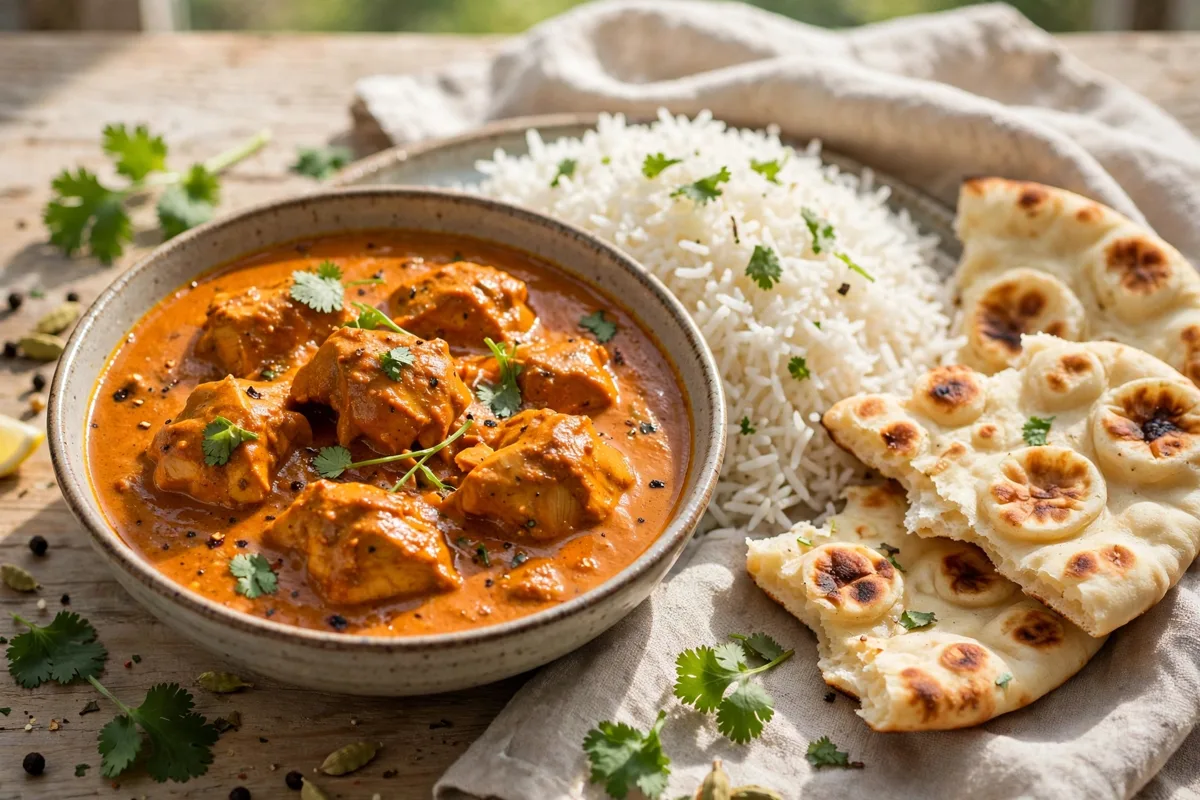
Tikka masala is one of those dishes that sounds lighter than it is. The chicken itself is lean, grilled protein, and the tomato base is light too. But the classic restaurant sauce is finished with heavy cream and a generous spoonful of oil or ghee, and those two ingredients quietly add more than a third of the calories in the cup. That is not a reason to skip it — it is a reason to know what you are ordering, and to know how easily a few swaps bring the number down without losing the dish.
Tikka Masala Calories by Serving
These are typical values for chicken tikka masala unless another version is named. A restaurant portion is usually bigger than a measuring cup, which is why it lands higher.
| Serving | Typical calories | Notes |
|---|---|---|
| Chicken tikka masala, 1 cup | About 320 | Typical range 280–380 by cream and oil |
| Restaurant portion, about 1.5 cups | About 480–540 | Richer sauce and a bigger scoop |
| Lighter homemade cup (yogurt-based, less oil) | About 240–260 | Chicken breast, yogurt sauce |
| Paneer tikka masala, 1 cup | About 360–400 | Paneer is richer than chicken |
The range on the standard cup — roughly 280 to 380 — comes almost entirely from the sauce. A tomato-forward version with a splash of cream sits at the low end; a rich, buttery restaurant version with a full cream finish sits at the high end. The chicken inside barely moves the number at all.
Where the Calories Sit: Cream, Oil and Sauce
Break a cup of chicken tikka masala into its parts and the story becomes obvious. The chicken is the lightest part of the bowl, and everything that makes the sauce luxurious is what costs you.
| Part of the cup | Typical calories | Notes |
|---|---|---|
| Grilled chicken tikka pieces | About 160–190 | Lean breast, marinated and grilled |
| Tomato-onion base | About 20–30 | Tomatoes, onion, ginger, garlic, spices |
| Cream in the sauce | About 70–90 | Heavy cream finish, the biggest single add |
| Oil or ghee in the sauce | About 60–70 | Tempering and finishing fat |
| Sauce calories in the cup, all together | About 130–160 | Cream plus oil, on top of the chicken |
That sauce figure — roughly 130 to 160 calories per cup — is the lever. A restaurant that ladles the sauce generously and finishes it with extra butter can push the cup toward 380, while a lighter kitchen that leans on tomatoes and yogurt can land near 280 without changing the chicken at all. The spices themselves are nearly free; it is the fat that carries flavor and calories together. And the sodium is worth a plain note too: restaurant masala sauces are usually salty, often well past 800 milligrams per cup, so a homemade version is the easiest place to control both fat and salt.
The Full Plate: Rice and Naan
Almost nobody eats tikka masala from a measuring cup. It arrives with rice, and usually with naan for scooping, and those two companions roughly double the meal. Here is the full plate math, added up from typical values.
| Plate item | Typical calories |
|---|---|
| Chicken tikka masala, 1 cup | About 320 |
| Basmati rice, 1 cup cooked | About 200 |
| One plain naan | About 280 |
| Full plate total | About 800 |
320 plus 200 plus 280 equals 800, and that is the number to keep in mind when the plate arrives. The masala is less than half of it — the naan alone is nearly as much as the curry, and the rice is a full second helping of calories on top. None of that makes the plate a mistake; it is a generous, satisfying meal. But if the number surprises you, it is the bread and rice doing the surprising, not the chicken.
A smaller plate tells the same story in reverse. Half a cup of rice instead of a full one saves about 100, and skipping the naan or sharing it saves the whole 280. Even keeping the masala exactly as it is, a cup of masala with half a cup of rice and no naan lands at about 420 — a completely different meal from the same curry.
A Lighter Tikka Masala
The good news is that tikka masala takes kindly to lightening. You do not have to change the dish — you only have to change the sauce and the plate around it. Here are the swaps that matter, with the math.
| Lighter swap | What it saves |
|---|---|
| Yogurt-based sauce instead of heavy cream | About 60–80 per cup |
| One teaspoon of oil instead of a generous pour | About 40–50 per cup |
| Chicken breast, skin off, grilled | Keeps the protein, trims the fat |
| Half a cup of rice instead of a full cup | About 100 saved |
| Skip the naan or share it | About 280 saved |
Put the first two swaps together and a lighter homemade cup lands at about 250 — comfortably inside the 240 to 260 range — instead of the standard 320. That is a saving of about 70 per cup, and the dish still tastes like tikka masala: the same spices, the same grilled chicken, the same tomato base, just a sauce built on yogurt and a measured spoon of oil instead of cream and ghee.
Build the lighter plate the same way: a cup of the lighter masala at about 250, plus half a cup of rice at about 100, plus a big pile of cucumber, salad or steamed vegetables for very few calories, and the whole plate lands near 350 to 400 — roughly half the classic 800 plate, with the same satisfaction. Or keep the restaurant curry exactly as it is and just halve the rice and skip the naan: 320 plus 100 equals 420, and you have kept everything you love about the dish.
Paneer lovers, take note: paneer tikka masala starts higher, about 360 to 400 per cup, because the cheese itself is rich. The same yogurt-sauce swap helps there too, and a half-and-half plate — half paneer masala, half vegetables — is an easy way to enjoy it without the full count.
The Bottom Line on Tikka Masala
Tikka masala calories are really two numbers wearing one name: about 320 per cup for the chicken curry itself, and about 800 for the full plate with rice and naan. The chicken is lean and the spices are nearly free — the cream and oil in the sauce carry roughly 130 to 160 of each cup, and the bread and rice carry the rest of the plate. Order it, enjoy it, and when you want it lighter, change the sauce and the sides, not the dish.
How many calories in tikka masala?
About 320 calories per cup for chicken tikka masala, with a typical range of 280 to 380 depending on how much cream and oil are in the sauce.
How many calories in a chicken tikka masala meal with rice and naan?
About 800 calories for the full plate: one cup of chicken tikka masala (about 320) plus one cup of cooked basmati rice (about 200) plus one plain naan (about 280).
Is tikka masala high in calories?
Moderate to high, because of the cream and oil in the sauce — roughly 130 to 160 of each cup comes from the sauce alone. The chicken itself is lean, so a yogurt-based homemade version lands much lower, around 240 to 260 per cup.
How many calories in paneer tikka masala?
About 360 to 400 calories per cup — a bit higher than the chicken version, because paneer cheese is richer than chicken.
Can tikka masala fit a weight-loss plan?
Yes. Use the lighter build — a yogurt-based sauce with less oil, about 250 per cup — and pair it with half a cup of rice instead of a full cup, which brings the plate to roughly 350 to 400 calories.