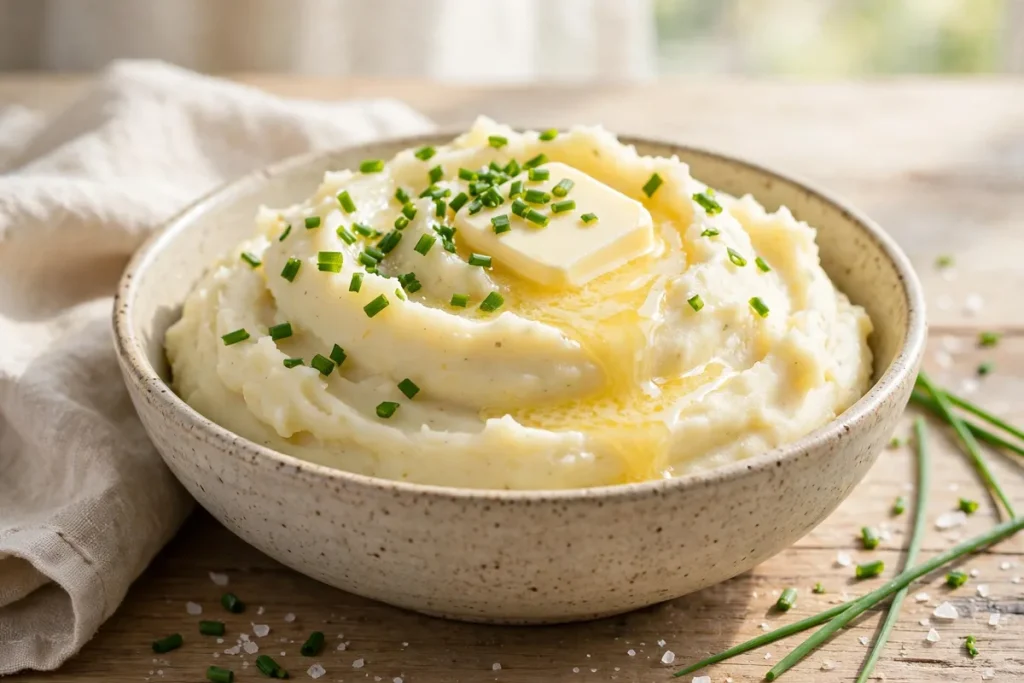

Mashed potatoes calories come in at about 230 per cup for classic homemade mash, and the honest answer up front is this: the potato is not the problem — the butter decides. Every number in this guide is a typical value — mashed potatoes are a home and restaurant dish with no single official label, and recipes vary by how generously the butter and cream are poured in.
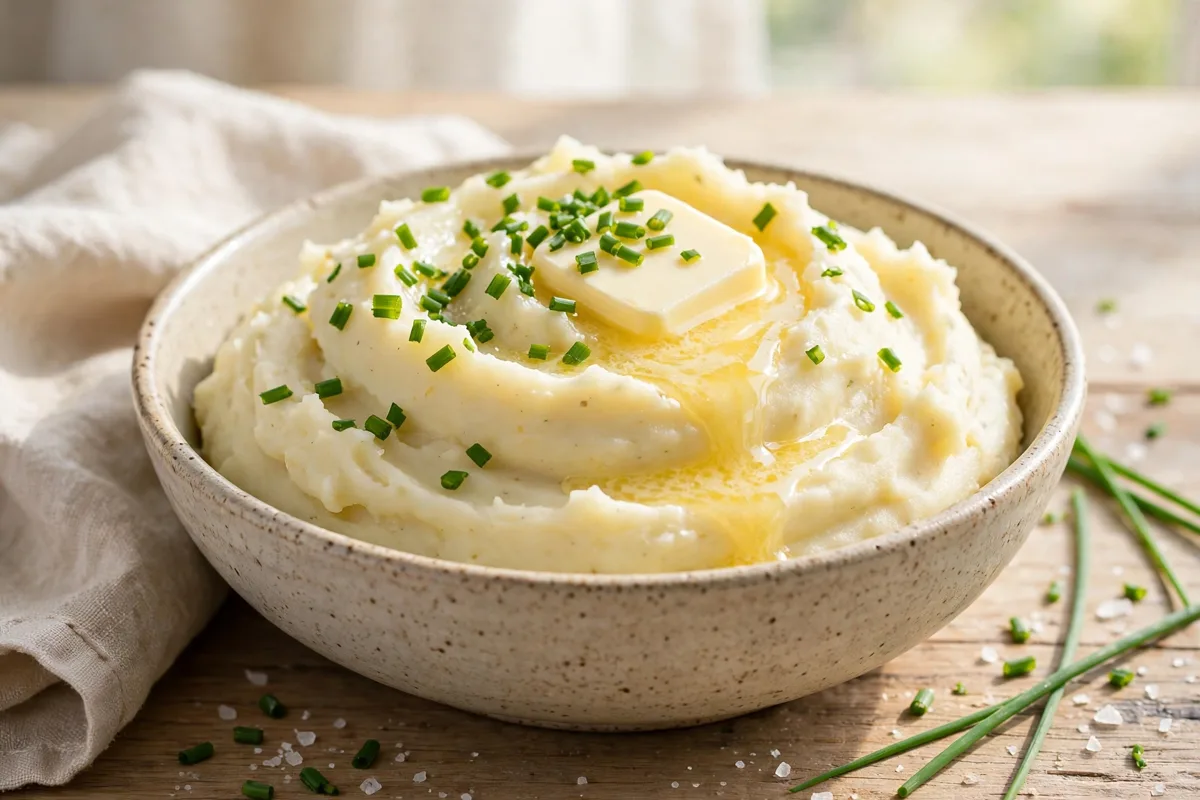
Mashed potatoes feel like a comfort food that should be heavy, and sometimes they are — but the potato underneath is a fairly modest food. A cup of plain mashed potato, mashed with just a splash of milk, lands around 170 to 190 calories. It is the butter, the cream and the gravy ladled on top that push the same cup toward 300. Knowing where the calories sit means you can keep the comfort and trim the count, without giving up the dish.
Mashed Potatoes Calories by Style
These are typical values per cup, with the half-cup side serving shown too — because a half cup is what many restaurants actually plate, even when the menu does not say so.
| Style | Per cup | Half-cup serving |
|---|---|---|
| Plain mashed potato, just milk | About 170–190 | About 85–95 |
| Classic homemade, butter + whole milk | About 230 | About 115 |
| Restaurant style, extra butter and cream | About 280–320 | About 140–160 |
| Lighter mash (skim milk or cooking water, little butter) | About 170–180 | About 85–90 |
| Cauliflower blend (half potato, half cauliflower) | About 130–150 | About 65–75 |
The range on the classic cup — roughly 210 to 250 — comes from the butter. A cook who melts in one tablespoon per cup lands near the low end; a cook who works in two or three tablespoons, plus a splash of cream, lands at the top of the range and beyond. The potato itself barely moves the number at all.
The Butter and Cream Math
Here is the arithmetic that explains the whole table. A plain mashed potato — potato plus a splash of milk — sits near 160 calories per cup. Everything above that comes from what you stir in, and the additions are surprisingly expensive.
| What you add | Typical calories | Notes |
|---|---|---|
| Butter, 1 tablespoon | About 100 | Per tablespoon, stirred in or melted on top |
| Butter, 1 teaspoon (per serving) | About 35 | A light brush, not a pool |
| Whole milk splash (about 2 tablespoons) | About 20 | Cheap, and it keeps the mash creamy |
| Heavy cream, about 1/4 cup | About 100 | The restaurant richness trick |
| Gravy, 1/4 cup ladled on top | About 25–35 | A modest ladle, not a flood |
Now the math writes itself. Start at about 160 for the potato. Add one tablespoon of butter and you are at about 260 — already above the classic 230, because the classic recipe usually spreads that butter across a bigger pot and adds a little milk instead. Add a second tablespoon of butter plus a splash of cream and you are at roughly 360 before the gravy. That is why two servings that look identical on the plate can differ by a hundred calories or more: the butter was measured in one kitchen and poured in the other.
The gravy note is worth keeping in proportion. A quarter cup of gravy adds only about 25 to 35 calories — it is a rounding error next to the butter. If you love gravy, keep it; it is not the part of the plate doing the damage. The same goes for salt and herbs: chives, roasted garlic, black pepper and a pinch of salt add flavor for essentially no calories, which is why they matter so much in the lighter mash below.
Mashed Potatoes vs Other Potato Sides
It helps to see mash next to its cousins, so you can judge whether it is a good trade on a given plate. All of these are typical values, kept brief.
| Potato side | Typical calories | Notes |
|---|---|---|
| Baked potato, medium, plain | About 160 | Skin on, nothing added yet |
| Mashed potatoes, classic homemade, 1 cup | About 230 | Butter and whole milk included |
| Mashed potatoes, lighter, 1 cup | About 170–180 | Skim milk or cooking water, little butter |
| French fries, medium serving | Higher, roughly 350–400 | Frying oil adds up fast |
| Roasted potatoes, 1 cup | About 200–250 | Depends on the oil used |
The honest takeaway: classic mash sits in the middle of the potato family. It costs more than a plain baked potato, because of the butter, but it costs less than fries, because nothing was deep-fried. If you are choosing between mash and fries on a plate, mash is usually the lighter pick — and the lighter mash is lighter still.
A Lighter Mash That Still Tastes Rich
The trick to a lighter mash is to replace the fat with flavor and liquid that costs almost nothing. The potato itself is already creamy when it is mashed well, so you do not need much butter to make it feel rich.
Start with the liquid: mash the potatoes with warm skim milk, or with the starchy water the potatoes cooked in, which adds body for free. Then add just one teaspoon of butter per serving — about 35 calories — melted in, so the butter flavor spreads through the whole bowl. Finish with roasted garlic, a generous handful of chives, black pepper and a pinch of salt. Those flavor builders add essentially nothing to the count, but they make the mash taste like it was made with far more butter than it was.
| Lighter swap | What it saves |
|---|---|
| Skim milk or cooking water instead of whole milk and cream | About 40–60 per cup |
| 1 teaspoon of butter per serving instead of a tablespoon | About 65 per serving |
| Roasted garlic, chives and herbs for flavor | Essentially free |
| Half potato, half cauliflower blend | About 80–100 per cup vs classic |
Put the first two swaps together and the math lands cleanly: a plain base near 160, plus about 35 for the teaspoon of butter, plus a splash of skim milk at roughly 10, lands at about 170 to 180 per cup — right inside the lighter-mash range in the first table. A half-cup serving of that version is about 85 to 90 calories, which is less than a single tablespoon of butter on its own. The cauliflower blend goes further, landing near 130 to 150 per cup, for readers who want the biggest saving and do not mind a slightly lighter texture.
One more honest note: a lighter mash is not a lesser mash. The potatoes still taste like potatoes, the butter is still there to taste, and the bowl still feels like comfort food. You are simply choosing where the calories go — into the potato, not into a pool of melted fat on top.
The Bottom Line on Mashed Potatoes
Mashed potatoes calories are about 230 per cup for the classic homemade version, about 280 to 320 for a rich restaurant style, and about 170 to 180 for a lighter homemade mash. The potato itself is modest at roughly 160 per cup; butter at about 100 per tablespoon is what moves the number. Measure the butter, use skim milk or cooking water, lean on garlic and herbs, and you keep the comfort while cutting the cup by fifty calories or more.
How many calories in mashed potatoes?
About 230 calories per cup for classic homemade mashed potatoes made with butter and whole milk. A plain version with just milk runs about 170 to 190 per cup, and a rich restaurant style runs about 280 to 320 per cup.
How many calories in a half cup of mashed potatoes?
About 115 calories for a half cup of classic homemade mash. A half cup of the lighter version is about 85 to 90, and a half cup of restaurant-style mash is about 140 to 160.
How many calories does butter add to mashed potatoes?
About 100 calories per tablespoon of butter. One teaspoon per serving adds about 35 calories, which is why measuring the butter instead of pouring it is the single biggest saving.
Are mashed potatoes fattening?
The potato itself is modest at roughly 160 calories per cup. What makes mash heavy is the butter, cream and gravy added to it — so the style you choose, not the potato, decides whether it is a light side or a rich one.
How can I make mashed potatoes lower in calories?
Mash with warm skim milk or the reserved cooking water, use just one teaspoon of butter per serving, and add roasted garlic, chives and herbs for flavor. That lighter mash lands at about 170 to 180 per cup, and a half-potato, half-cauliflower blend lands near 130 to 150 per cup.