


A keto diet is a very low-carb way of eating: usually 20-50 g of net carbs a day, with high fat and moderate protein. Cutting carbs that low shifts your body toward burning fat for fuel and producing ketones — a state called ketosis. It is a real metabolic change, not a detox or a cleanse.
This guide gives you the practical version: the exact macros at a glance, the full eat and avoid lists, the keto sides that make meals easy, and a simple 7-day keto meal plan you can actually repeat. It also covers the honest parts — the first-week slump, who should not do keto without a clinician, and why it works when it works.
Who is it for? People who like clear rules, do not mind giving up grains and sugar entirely, and feel better — less hungry, steadier in energy — when meals are built on fat and protein. Who is it not for? Anyone who cannot picture life without bread, fruit and flexibility, and anyone in the caution groups covered near the end. Both answers are legitimate: the best diet is the one still running in six months.
Keto Macros at a Glance
Keto is defined by its macros more than by any single food list. At 2,000 kcal a day, the classic split looks like this:
| Macro | Share of calories | Grams per day (at 2,000 kcal) |
|---|---|---|
| Fat | 70-75% | About 155-165 g |
| Protein | 20-25% | About 100-125 g |
| Carbohydrates | 5-10% | About 20-50 g (net carbs) |
Net carbs means total carbohydrate minus fiber — fiber does not raise blood sugar the way other carbs do, so keto counts only the rest. A leafy salad might hold 8 g of total carbs and 5 g of fiber, which counts as just 3 g net against your day.
Your own calorie level changes the grams, not the ratios. If you want to run the same split at a personal target, our guide to how to calculate macros walks through the arithmetic step by step. And if you are curious what those carbohydrates would normally be doing in your body, our explainer on good carbs covers their usual jobs — keto works by deliberately sidestepping most of them.
Protein is the macro beginners most often get wrong in both directions. Too little and hunger — plus muscle loss — follow; far too much and, for some people, ketosis gets harder to hold, because protein is not a free fuel either. The 100-125 g in the table is the middle path: enough to protect muscle at 2,000 kcal without quietly turning keto into a high-protein diet in disguise.
What Can You Eat on a Keto Diet?
Almost everything on the keto plate is a whole food that happens to be naturally low in carbohydrate. The groups below are the building blocks — if a food fits one of them, it almost certainly fits the diet:
- Meat and poultry — beef, pork, chicken, turkey and lamb; unprocessed is best, and fatty cuts are welcome rather than trimmed away.
- Fish and seafood — especially fatty fish like salmon, sardines and mackerel, which bring the omega-3 fats keto eaters rely on.
- Eggs — the keto staple: cheap, versatile, filling and almost carb-free.
- Cheese and full-fat dairy — hard cheeses, butter, cream and full-fat unsweetened yogurt in moderate amounts (dairy carries a little natural lactose sugar).
- Low-carb vegetables — leafy greens, broccoli, cauliflower, zucchini, peppers, green beans and cucumber; the ones that grow above ground are the usual rule of thumb.
- Avocados and olives — the fruit exceptions: mostly fat and fiber, and very low in net carbs.
- Nuts and seeds, in portions — macadamias, walnuts, almonds, chia and flax; nutritious, but their carbs and calories add up by the handful.
- Oils and cooking fats — olive oil, butter and ghee, coconut oil and avocado oil.
- Berries, in small amounts — raspberries, blackberries and strawberries are the lowest-carb fruits; a small handful, not a bowl.
Drinks follow the same logic: water, sparkling water, black coffee and unsweetened tea are all fine. What matters is that nothing sweetened sneaks in — a single sweet coffee drink can spend the whole day’s carb budget.
One portion note, because it decides results: keto removes the carb ceiling, not the calorie one. Cheese, nuts, oils and cream are all energy-dense, and it is entirely possible to eat at maintenance — or above it — while staying perfectly in ketosis. If fat loss is the goal, the food list gets you into ketosis; the amounts still decide the outcome.
What to Avoid
The avoid list is really one rule: if it is sweet, starchy or made from grains, it is out — because a single serving can use up a whole day’s carbs:
- Grains in every form — bread, pasta, rice, oats, breakfast cereals, flour tortillas and pizza crust.
- Sugar and sweetened drinks — soda, juice, sweet tea and energy drinks, sugar or honey in coffee, and most desserts and candy.
- Most fruit — bananas, apples, oranges, grapes and mangoes are perfectly natural, but their sugar counts like any other carb.
- Starchy vegetables — potatoes, sweet potatoes, corn and peas pack more carbs per bite than the plan allows.
- Beans and lentils — nutritious on almost any other diet, but too carb-heavy for strict keto; this is one of keto’s genuine trade-offs.
- Low-fat products — when fat is removed, sugar is often added to compensate; low-fat flavored yogurts and dressings are classic traps.
- Beer — liquid bread: it combines carbs with alcohol, which pauses fat burning while it is being processed.
Reading labels matters more on keto than on almost any other diet, because sugar hides in sauces, marinades and “healthy” snacks. When in doubt, check the net carbs per serving and count them honestly against your day.
Watch the grey zone, too: milk carries about 12 g of sugar per cup, balsamic vinegar and most barbecue sauces are sweeter than they taste, and plenty of “sugar-free” products are bulked with maltitol, which behaves a lot like sugar. None of these is forbidden by law — keto is accounting, and these are simply the entries people forget to write down.
Keto Sides That Make Meals Easy
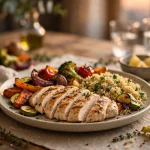
The protein is the easy part of keto — the plate just looks empty where the rice, potatoes or bread used to sit. These sides fix that: they soak up sauces, add the missing volume, and keep net carbs low:
- Cauliflower rice — grated or frozen, fried in butter or oil; the base for stir-fries and curries.
- Cauliflower mash — the potato stand-in, especially good with butter, garlic and a little cream cheese blended in.
- Zucchini noodles — spiralized zucchini under any sauce you would normally put on pasta.
- Creamed spinach — spinach wilted into cream and garlic; the classic steakhouse side.
- Roasted broccoli with cheese — charred edges under melted cheddar; hard to get bored of.
- Cabbage slaw with mayo dressing — crunchy, cheap, and arguably better on day two.
- Avocado salad — avocado, cucumber, olive oil and salt; two minutes, no cooking.
- Garlic-butter mushrooms — the side that makes plain chicken feel like a restaurant meal.
- Green beans with almonds — blanched beans, butter and toasted flaked almonds.
Rotate two or three of these and the week below never feels repetitive — most keto fatigue is really side-dish fatigue.
Most of these sides share a trick: they give fat something to cling to. Butter, oil and cheese sauces are hard to eat on their own, but they disappear happily over cauliflower, greens and mushrooms — which is exactly why meals built this way feel rich rather than restricted, and why people can actually stay on the plan.
Your 7-Day Keto Meal Plan
Here is the whole week, built from the foods above. Meals are deliberately simple and repeatable — leftover dinners become lunches, and nothing needs a specialty ingredient:
| Day | Breakfast | Lunch | Dinner |
|---|---|---|---|
| Day 1 | Eggs scrambled in butter with spinach | Grilled chicken salad with olive oil | Salmon with cauliflower rice |
| Day 2 | Greek yogurt (full-fat, unsweetened) with a few raspberries and walnuts | Tuna salad lettuce wraps | Beef stir-fry with broccoli (no sweet sauce) |
| Day 3 | Cheese omelet with mushrooms | Leftover stir-fry | Baked chicken thighs with creamed spinach |
| Day 4 | Eggs and avocado | Salmon and avocado salad | Pork chops with green beans |
| Day 5 | Keto smoothie (spinach, avocado, unsweetened almond milk) | Egg salad on greens | Turkey meatballs with zucchini noodles |
| Day 6 | Fried eggs with cheese and peppers | Chicken soup with cauliflower | Steak with garlic-butter mushrooms |
| Day 7 | Veggie omelet | Leftover meatballs | Grilled fish with cabbage slaw |
A few ways to make the week work: swap any meal for another day’s — the plan cares about the day’s totals, not the order. Keep protein portions around palm-and-a-half sized (roughly 4-6 oz cooked), and add fat — butter, oil, cheese, a sauce — until you are satisfied rather than stuffed. Snacks, if you need them, come from the eat list: a boiled egg, a small handful of nuts, cheese, or olives. And drink and salt more than you think you need to — the next section explains why.
Notice that breakfasts repeat eggs on purpose: they are fast, cheap and almost carb-free, which makes the most fragile meal of a new routine the most automatic one. If you do not eat breakfast, simply shift those meals later in the day — keto pairs naturally with a smaller eating window for many people, though that is an option, not a requirement. What matters is that the day’s food fits the macros table at the top.
The First Week: Keto Flu and How to Soften It
Many people feel rough for a few days in the first week: headache, fatigue, irritability, brain fog — the cluster nicknamed keto flu. It is not an infection and it is usually not dangerous; it is mostly plumbing. The body stores carbohydrate with water, so when carbs drop, you shed that water quickly — and sodium and other electrolytes go out with it.
That is why the fix is usually electrolytes rather than willpower. Salt your food properly instead of fearing the salt shaker, drink water steadily through the day, and lean on magnesium- and potassium-rich keto foods — leafy greens, avocado, nuts and salmon. A salty broth or an electrolyte drink helps many people through the worst days.
For most people the symptoms fade within a few days as the body adapts to its new fuel. If you feel genuinely unwell — dizzy, faint, a racing heart — stop and get medical advice rather than pushing through. The cautions in the next section matter.
How long the full adjustment takes varies from person to person. The steady energy and mental clarity people actually stay on keto for typically show up somewhere in weeks two to four, once the machinery for burning fat is fully up to speed. Judging the diet by day three is like judging a training plan by the first session’s soreness — it tells you it started, not whether it works.
Who Should NOT Do Keto Without a Clinician
Keto is a medical-grade intervention for some people and a poor idea for others. Talk to a clinician first — and do not start on your own — if you take medication for diabetes or blood pressure (doses often need adjusting quickly as carbs drop), if you are pregnant or breastfeeding, or if you have a kidney, liver or pancreas condition, or a history of eating disorders.
Even for everyone else, the honest downsides deserve a paragraph. Keto is restrictive: restaurant meals, travel and family food all take planning. It is hard socially, because most shared food is carb-based. And fiber intake drops unless you work at it with low-carb vegetables, seeds and avocado — our guide to the highest fiber foods shows why fiber matters and which low-carb sources still help. Long-term, keto’s results depend on the same thing every diet’s results depend on: whether you can stick to it. This article is general information, not medical advice.
Finally, a note on expectations for everyone who does try it: keto is a tool, not an identity. Plenty of people run it for a defined stretch — a few months to break a plateau or settle blood-sugar swings — then move to a looser low-carb pattern they can keep indefinitely. A diet you can leave gracefully is worth more than one you white-knuckle until it breaks.
Making Keto Sustainable
The people who last on keto share a few habits. They repeat meals shamelessly — the plan above rotates a handful of breakfasts and sides on purpose, because deciding less means slipping less. They keep two or three emergency foods everywhere (nuts in the desk drawer, cheese in the fridge, olives in the pantry) so hunger never negotiates with a vending machine. And they plan restaurant answers in advance: a burger without the bun, a salad with olive oil, grilled fish with vegetables — ordered calmly, without a speech.
Tracking helps for the first few weeks, even if you drop it later. A simple food log teaches you where your personal carbs hide — the sauce, the handful, the “healthy” snack — faster than any article can. After that, most long-term keto eaters run on pattern recognition: they know their five meals, their two sides and their one dessert substitute, and the diet quietly becomes just how they eat.
Frequently Asked Questions
What can you eat on a keto diet?
Meat and poultry, fish and seafood, eggs, cheese and full-fat dairy, low-carb vegetables, avocados and olives, nuts and seeds in portions, and oils, butter or ghee — keeping net carbs around 20-50 g a day.
How many carbs can I have on keto?
Most people stay in ketosis at 20-50 g of net carbs per day. Stricter plans sit near 20 g; more flexible ones allow up to 50 g. Net carbs are total carbs minus fiber.
What are the best keto sides?
The ones that fill the plate where starch used to be: cauliflower rice, cauliflower mash, zucchini noodles, creamed spinach, roasted broccoli with cheese, cabbage slaw, avocado salad, garlic-butter mushrooms and green beans with almonds.
Is keto good for weight loss?
It can be: keto works when it creates a calorie deficit and controls appetite — mainly by removing the easy-to-overeat foods. It is not metabolically magic; the deficit still decides. You can work yours out with our maintenance calories calculator.
How long does it take to get into ketosis?
Usually 2-4 days of eating under about 50 g of carbs, once stored glucose runs down. Full fat adaptation — where energy and training feel normal again — takes longer, typically a few weeks.


Pingback: Easy Low-Carb Meals: 12 Dinners + 10 Sides With Net Carb Counts