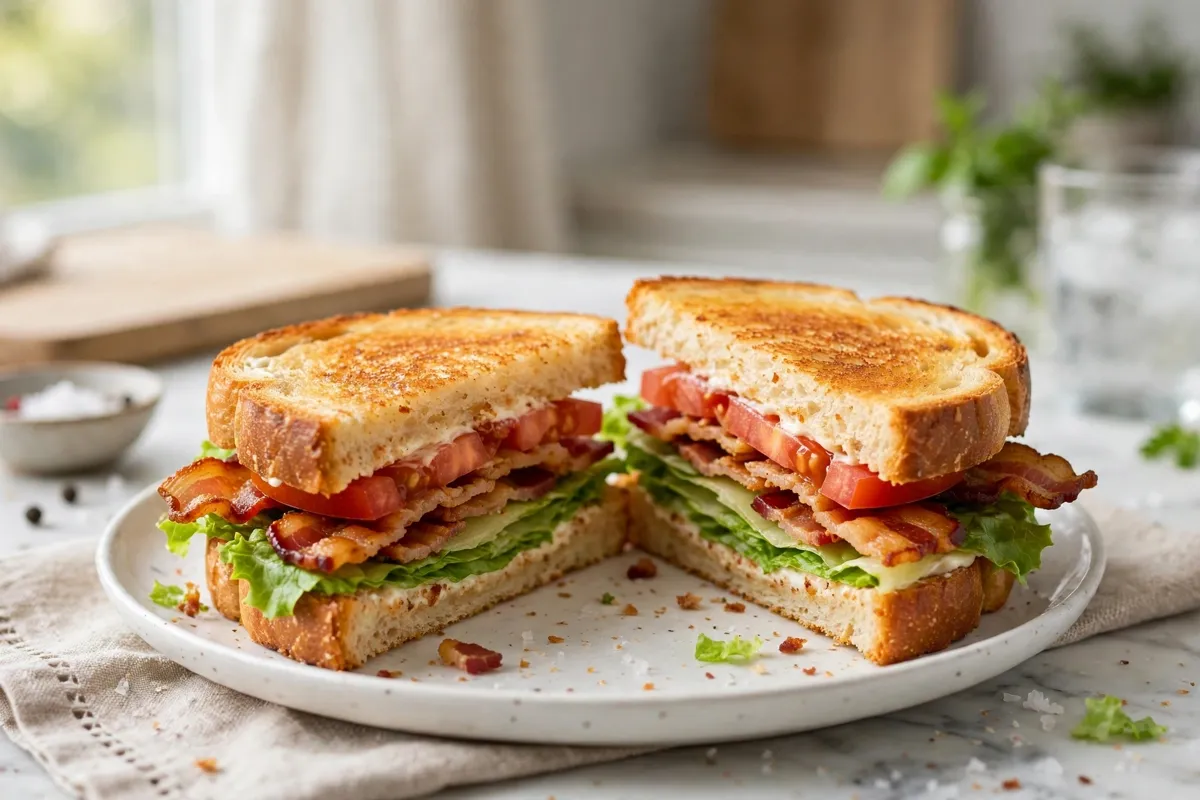
A classic homemade BLT runs about 380 calories. The BLT is one of those sandwiches almost everyone has an opinion about, and almost nobody logs accurately. It looks simple — bacon, lettuce and tomato between two slices of toast — so it is easy to assume it must be light. It is also easy to assume the opposite, because bacon has a reputation. The truth, as the blt nutritional value breakdown below shows, sits comfortably in the middle. A BLT is neither a diet disaster nor a health food. It is a sandwich whose entire nutrition story is decided by two ingredients, and once you can see exactly where the calories, fat and sodium sit, you can keep everything you love about it and quietly fix the parts you do not.
That is what this guide does. It takes a classic homemade BLT apart piece by piece, using standard reference values, so every number is approximate but honest. It then explains why café BLTs run higher, gives a straight verdict on how healthy a BLT really is, and shows the swaps that bring the same sandwich down from about 380 kcal to about 290 kcal — without losing the crunch, salt and freshness that make a BLT worth eating.
Quick Answer: BLT Nutritional Value at a Glance
Quick answer: a classic homemade BLT — 2 slices of toasted white bread, 3 slices of bacon, 1 tablespoon of mayonnaise, lettuce and tomato — is about 380 kcal, with about 13 g protein, 28 g carbs, 22 g fat and roughly 880 mg sodium. Not a diet disaster and not a health food: the whole story is in two ingredients, because the bacon and the mayo carry about 225 of the 380 kcal between them. Everything else in the sandwich — the bread that holds it together and the vegetables that make it fresh — is comparatively modest. Change just the bacon and the spread, and the blt nutritional value changes more than any other edit you could make.
The Classic BLT, Piece by Piece
Here is the classic build, ingredient by ingredient. These are standard reference values for a typical homemade BLT, so treat them as close approximations rather than laboratory figures — your bacon brand and your bread slice will nudge them slightly, but the pattern will not change.
| Ingredient | Calories | Protein | Carbs | Fat | Sodium |
|---|---|---|---|---|---|
| White bread, toasted, 2 slices | 150 kcal | 4 g | 28 g | 1.5 g | 260 mg |
| Bacon, cooked, 3 slices | 130 kcal | 9 g | 0 g | 10 g | 550 mg |
| Mayonnaise, 1 tablespoon | 95 kcal | 0 g | 0 g | 10 g | 70 mg |
| Lettuce, 2 leaves | 2 kcal | 0 g | 0 g | 0 g | 0 mg |
| Tomato, 2 slices | 5 kcal | 0 g | 1 g | 0 g | 0 mg |
| Total | About 380 kcal | About 13 g | About 28 g | About 22 g | About 880 mg |
Read the table from the vegetables up and the story tells itself. The lettuce and tomato together add about 7 kcal — the vegetables are nearly free, in calorie terms, while giving the sandwich its crunch, freshness and volume. The bread is the carb base: 150 kcal and almost all of the 28 g of carbs, which is simply what two slices of toast are. Nothing about that is surprising, and nothing about it is a problem on its own.
The real action is in the middle two rows. Bacon and mayo together are about 59% of the calories and almost all of the fat and sodium in the whole sandwich, from a combined footprint of just four items on the plate. And look at the bacon on its own: 550 mg sodium — about a quarter of the 2,300 mg day — before the bread, the mayo or anything you eat alongside it has contributed a single milligram. That one row is why the rest of this article focuses where it does: fix the bacon and the spread, and you have fixed most of what there is to fix.
Why Café and Diner BLTs Run Higher
If the homemade BLT above is about 380 kcal, why do so many café and diner versions feel — and log — so much heavier? Because almost every element quietly grows. The bread is bigger and thicker, often a chunky café loaf rather than a standard sliced pan. The bacon goes from 3 slices to 4–5 slices, because nobody ever complained about too much bacon. The mayonnaise doubles to 2 tablespoons, spread generously on both slices instead of measured onto one. And the toast is sometimes buttered first, adding fat before the mayo even arrives.
Together, those small changes push real-world BLTs to about 450–700 kcal.
So use this rule: if you did not watch it being made, log about 550 as an honest middle estimate. It will not be perfect, but it is far closer to the truth than logging a homemade 380 kcal for a diner sandwich built with a heavier hand. And if you are ordering, you can pull the number back down with two simple requests — go easy on the mayo, and skip the butter on the toast. Most kitchens are happy to do both, and you will barely notice either change.
Is a BLT Healthy? The Honest Verdict
Start with the good, because there is a fair amount of it. A BLT brings real protein — 13 g, enough to make lunch feel like a meal rather than a snack. It brings genuinely fresh vegetables: lettuce and tomato add crunch, water, fibre and micronutrients for almost no calories at all. And at about 380 kcal, its calories are moderate for a sandwich — comfortably inside most lunch budgets, and well below the burgers and melts it usually sits beside on a menu.
Now the not-so-good. Bacon is a processed meat high in saturated fat and sodium, and it earns that description in the table above: it is the single biggest sodium source and a major fat source in a very small serving. Mayonnaise, meanwhile, is nearly pure fat with little nutrition — 95 kcal in a single tablespoon, with almost nothing else to show for it. Neither ingredient is forbidden, but neither one brings much to the table beyond flavour, and flavour, luckily, is the easiest thing to keep while trimming the rest.
The verdict: a perfectly fine occasional lunch as-is; a genuinely decent regular lunch with the swaps below. It is not the sandwich that matters most — it is how often you eat it and what you pair with it, because fries and soda can double the meal.
Make It Lighter — the Swaps Table
You do not need all of these swaps, and you certainly do not need them all at once. Each one is independent: pick the change you will notice least, bank the saving, and keep the sandwich recognisably a BLT.
| Swap | Calories | What you save or gain |
|---|---|---|
| Whole-grain bread instead of white | 160 kcal for 2 slices | About the same calories, but +4 g fibre — you stay full longer |
| Turkey bacon (3 slices) instead of pork bacon | About 90 kcal | Saves about 40 kcal and roughly a third of the fat |
| Light mayonnaise (1 tbsp) instead of regular | About 35 kcal | Saves about 60 kcal |
| Greek yogurt spread (2 tbsp) instead of mayo | About 20 kcal | Saves about 75 kcal and adds a little protein |
| Add avocado (¼ fruit) | Adds about 60 kcal | Replaces some mayo fat with better fats and fibre — a trade, not a saving |
| Add a sliced egg or chicken (protein boost) | Adds about 70–110 kcal | Adds +6–12 g protein, turning it into a meal that keeps you full for hours |
Now rebuild the sandwich with three of those swaps and watch what happens to the blt nutritional value. The lighter BLT is: whole-grain bread 160 + turkey bacon 90 + light mayo 35 + lettuce and tomato 7 = about 290 kcal, with protein about 12 g. That is roughly 90 kcal lighter with the same sandwich satisfaction — same crunch, same salt, same fresh bite, and almost exactly the same protein. The whole-grain bread even pays you back in fibre, so the lighter version often keeps you full for longer than the original did.
And load the lettuce and tomato freely; they are the cheapest fullness there is — a taller, fresher sandwich for single-digit calories.
The Sodium Problem (and Small Fixes)
Calories get the headlines, but sodium is the BLT’s quieter issue: 880 mg is about 38% of the day in one sandwich, and bacon is the driver. You do not need to solve it completely — small fixes are enough to take the edge off:
- Choose low-sodium bacon when available.
- Blot cooked bacon on paper towel (removes surface fat, helps a little).
- Do not add salty sides (crisps, pickles) to the same meal.
- Balance the rest of the day with fresh, low-salt food.
A BLT is a fair sandwich — about 380 kcal done the classic way, about 290 with three swaps, and you now know exactly which two ingredients decide the number. If you like building sandwiches your way, try the Subway Calorie Calculator — it lets you stack bread, protein, cheese and sauce and see the total change as you build.
Frequently Asked Questions
How many calories are in a BLT sandwich?
About 380 kcal for a classic homemade BLT (2 slices of toast, 3 bacon slices, 1 tablespoon of mayo, lettuce and tomato). Café versions with more bacon and mayo usually land between 450 and 700 kcal.
How much protein is in a BLT?
About 13 g, almost all of it from the bacon (9 g) and bread (4 g). Add an egg or some chicken and the same sandwich reaches 20–25 g.
Is a BLT good for weight loss?
It can fit: the classic version is about 380 kcal, and with whole-grain bread, turkey bacon and light mayo it drops to about 290 kcal with similar protein. The company it keeps — fries and soda — is usually the real problem.
Does toasting the bread change the calories?
No. Toasting removes a little water and changes texture, not energy. What does add up is buttering the toast first — about 35 kcal per teaspoon of butter per slice.
What is the highest-calorie part of a BLT?
The bacon and mayonnaise together: about 225 of the 380 kcal (roughly 59%), plus nearly all the fat and most of the sodium. The lettuce and tomato together are about 7 kcal.