One plain rice cake (about 9 g) has about 35 calories, 0.7 g of protein, 7.3 g of carbs, 0.3 g of fat and 0.4 g of fibre. On paper, that is about as light as snacks get — you could eat three of them and still come in under the calories of a single small biscuit. But rice cakes have a way of fooling the calorie counter. Flavoured versions can carry nearly twice the calories, toppings add far more than the cake itself, and the biggest trap is how many you actually eat: four or five “harmless” cakes quietly add up to bread-level calories. Here is the full picture — the nutrition numbers, the flavoured-cake trap, an honest verdict on whether rice cakes are healthy, and how to top them so they actually keep you full.
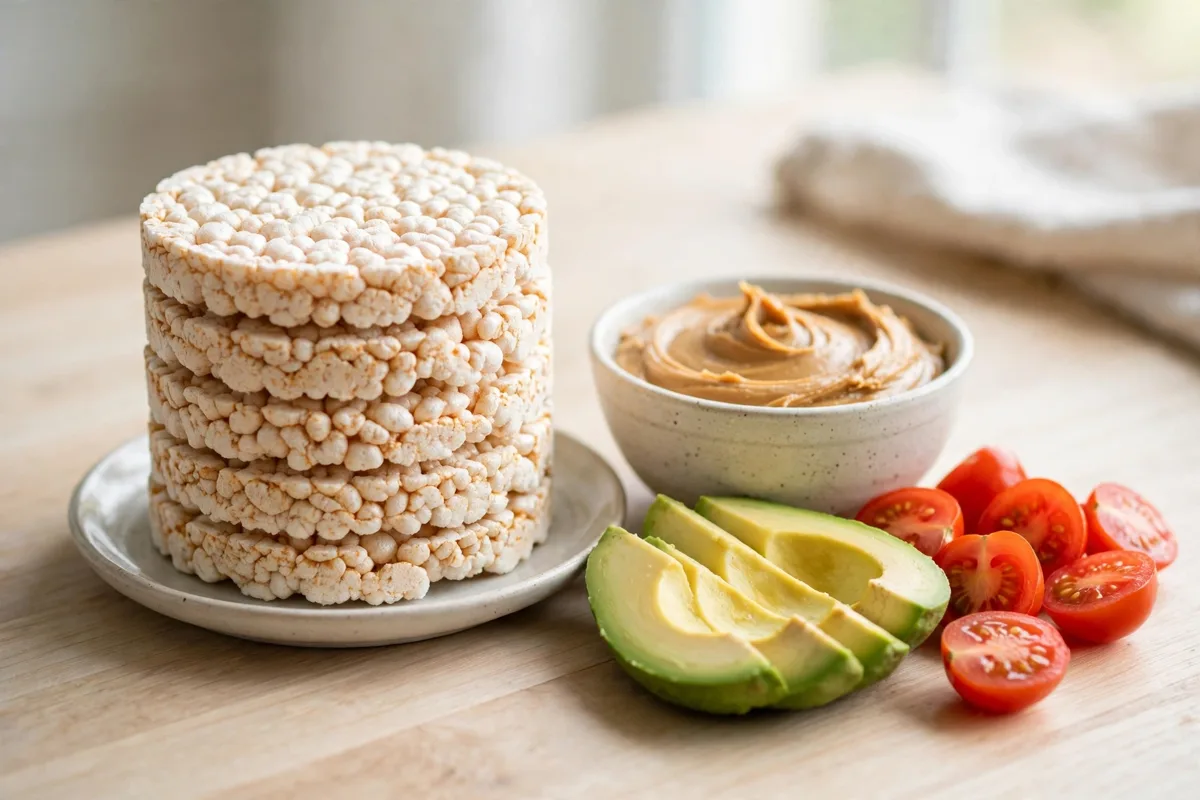
Rice Cake Nutrition: The Numbers
The table below is for one plain brown-rice cake (about 9 g), using USDA-based values, alongside the per-100 g figures. Think of the plain cake as the baseline: every flavoured version and every topping in this article is measured against it.
| Nutrient | Per 1 plain cake (9 g) | Per 100 g |
|---|---|---|
| Calories | 35 | 387 |
| Protein | 0.7 g | 8.2 g |
| Carbs | 7.3 g | 81 g |
| Fat | 0.3 g | 2.8 g |
| Fibre | 0.4 g | 4.2 g |
| Sodium | about 30 mg | about 330 mg (salted versions) |
Note: unsalted cakes have almost no sodium; flavoured cakes tend to be saltier and sweeter, so treat the sodium row as a range, not a promise.
Flavoured Rice Cakes: Calories by Flavour
Plain cakes are the lightest option on the shelf, but the rice-cake aisle is mostly flavoured — and the seasoning, sugar and oil in those coatings change the maths. A chocolate or caramel cake weighs about the same as a plain one yet carries 40–70% more calories. Brands differ, so check the pack: the table below shows typical calories for branded full-size cakes, not a guarantee.
Flavour makes the biggest difference when the cake is eaten on its own — which is exactly when the calories are hardest to notice.
| Flavour | Typical calories (per full-size cake) |
|---|---|
| Plain / lightly salted | 35 kcal |
| White cheddar | about 45 kcal |
| Caramel | about 50 kcal |
| Apple cinnamon | about 50 kcal |
| Chocolate | about 60 kcal |
Then there is the handful trap. Mini rice cakes feel like a free food — tiny, airy, and easy to pop one after another without a second thought. But 30 g of any rice cake, a small handful of minis or about three full-size cakes, is roughly 115 calories — nearly the same as bread. That is the paradox of the rice cake: it is mostly air and mostly rice at the same time. The air makes each piece feel insubstantial; the rice makes the calories add up the moment you stop counting pieces and start counting handfuls.
Are Rice Cakes Healthy? The Honest Answer
Rice cakes sit in a strange spot in nutrition culture: too virtuous for the snack aisle, too processed for the health-food crowd. Both sides have a point, so here is the honest breakdown — what rice cakes genuinely do well, and where they fall short.
The good
- Very low calorie per piece. At about 35 kcal, a plain rice cake is one of the lightest crunchy snacks you can buy — lighter than almost any biscuit, crisp or cracker of a similar size.
- Naturally gluten-free. Plain rice cakes are just puffed rice (plus a little salt), so they are a safe crunchy option for people avoiding gluten — though flavoured varieties need a label check.
- A whole grain, if you buy brown rice. Brown-rice cakes count as a whole grain, which beats the refined white-rice versions on nutrients, even if the difference per 9 g cake is small.
- A crunchy vehicle for nutritious toppings. This is their real strength: a light, neutral base that makes peanut butter, hummus, avocado or tuna feel like a bigger, more satisfying snack.
The weak points
- Puffed and refined, so they digest fast. Puffed rice has a glycaemic index of around 82 — firmly in “high” territory, similar to white bread. Blood sugar rises quickly after plain rice cakes, especially on an empty stomach.
- Very little fibre or protein. With 0.4 g of fibre and 0.7 g of protein per cake, one or two rice cakes rarely keep anyone full for long. Satiety comes from fibre, protein and fat — exactly what a plain cake lacks.
- Easy to eat four or five without noticing. That is 140–175 kcal — the calories of two slices of bread — with none of bread’s staying power. The lightness that makes rice cakes appealing is also what makes them easy to overeat.
How to Build a Rice Cake Snack That Actually Fills You Up
Rice cakes are not the problem; naked rice cakes are. Five rules turn them from a 35-calorie tease into a proper snack:
- Always add protein or fat. Peanut butter, hummus, tuna, cottage cheese or avocado — pick one. This single rule fixes the blood-sugar spike and the hunger problem at once.
- Pre-portion, don’t graze. Take two cakes out of the pack and put the bag away. Eating from the bag is how “one or two” becomes five.
- Add volume with vegetables. Sliced tomato, cucumber or peppers add crunch and bulk for almost no calories, and they slow you down.
- Treat flavoured cakes as the sweet snack they are. A chocolate rice cake is a biscuit wearing a health halo — enjoy it, but log it like one.
- Log the topping, not just the cake. The topping is most of the calories; the people who stall are the ones logging “1 rice cake, 35 kcal” next to two tablespoons of peanut butter.
The Toppings Table: What Really Decides the Calories
Here is the part that matters most: the cake is rarely the calorie problem — the topping is. A plain 35-calorie cake is a blank canvas, and what you spread on it decides whether the snack lands at 70 calories or 200. The table below shows one plain cake plus a normal serving of each popular topping.
| Topping (on 1 plain cake) | Total |
|---|---|
| Peanut butter, 1 tbsp | about 130 kcal |
| Mashed avocado, ¼ fruit | about 105 kcal |
| Hummus, 2 tbsp | about 105 kcal |
| Cream cheese, 1 tbsp | about 85 kcal |
| Tuna salad, 2 tbsp | about 90 kcal |
Toppings are not the enemy — they are the fix. Protein and fat are what make a snack actually satisfy, and a 130-calorie peanut-butter rice cake that keeps you full for two hours beats a “naked” 35-calorie cake that leaves you raiding the cupboard in 20 minutes. The naked cake is the false economy of dieting: the calories you “save” get spent — with interest — on whatever you eat next.
Rice Cakes vs Bread
One slice of white bread (about 27 g) is roughly 75–80 calories, with about 2–3 g of protein and around 1 g of fibre — more filling per bite than a rice cake, and wholemeal bread widens the gap further with extra fibre and a gentler blood-sugar response. Rice cakes win on crunch and portion theatre: a big, crackly disc feels like a substantial snack even though it weighs 9 g. Bread wins on staying power: the denser crumb, the protein and the fibre keep hunger quieter for longer. Neither is “good” or “bad” — they do different jobs. Reach for the rice cake when you want a light, crunchy base for a protein-rich topping; reach for bread when the snack needs to carry you to the next meal on its own.
Are Rice Cakes Good for Weight Loss?
They are useful as a low-calorie base — if paired with protein or fat toppings and counted honestly. A rice cake with peanut butter, tuna or hummus is a genuinely reasonable 90–130 calorie snack with real staying power. They are poor as a standalone “diet food”, because eaten plain they digest fast, satisfy briefly, and invite a second, third and fourth cake. The people who lose weight with rice cakes use them as a delivery system for filling foods; the people who stall eat them by the sleeve while believing each one is “free”.
If rice cakes are part of a bigger plan, make the rest of the plan solid too. Our Weight Loss Meal Plan lays out full days of eating at your calorie target, so a snack like this fits into a structure instead of replacing one.
Who Should Be Careful
Rice cakes suit most people, but three groups should tread carefully:
- People watching blood sugar. With a glycaemic index around 82, plain rice cakes can spike blood sugar — pair them with protein or fat, and don’t eat several plain ones on an empty stomach.
- People watching sodium. Choose unsalted cakes if salt matters to you; salted and flavoured versions run noticeably higher.
- People with coeliac disease. Rice cakes are naturally gluten-free, but flavoured packs are made on shared lines — check for cross-contamination wording before trusting the “gluten-free” halo.
Rice cakes are neither a health food nor a diet villain — they are a 35-calorie crunchy base, and what you build on it decides everything. Top them with protein or healthy fat, count them honestly, and they earn their place. Want to see where a snack like this fits in your day? Check your daily target on our Maintenance Calories Calculator and build from there.
Frequently Asked Questions
How many calories are in a rice cake?
About 35 calories for one plain full-size cake (9 g). Flavoured cakes run higher — roughly 45–60 calories each, with chocolate at the top end — and toppings add more than the cake itself: a tablespoon of peanut butter alone adds about 95 calories.
Are rice cakes good for weight loss?
They can help as a low-calorie, crunchy base, but only with filling toppings and honest counting. A rice cake with peanut butter or tuna is a solid 90–130 calorie snack. Eaten plain, they digest fast — glycaemic index around 82 — and rarely keep you full, which is when the extra cakes creep in.
Are rice cakes healthier than bread?
Not clearly. Bread — especially wholemeal — usually has more fibre and protein and keeps you fuller per bite; a slice of white bread (27 g) has about 75–80 calories with 2–3 g of protein. Rice cakes are lighter per piece and naturally gluten-free. It depends on the job you need the snack to do.
How many rice cakes should I eat as a snack?
One or two with a protein or healthy-fat topping is a sensible snack — roughly 100–150 calories with real staying power. Eating 4–5 plain ones is the classic trap: that’s 140–175 calories, nearly the same as two slices of bread, with none of the fullness.
Do rice cakes spike blood sugar?
They can: puffed rice has a high glycaemic index (around 82), so plain rice cakes — especially several on an empty stomach — can raise blood sugar quickly. Pairing them with protein or fat, such as peanut butter, hummus or tuna, slows the rise considerably.