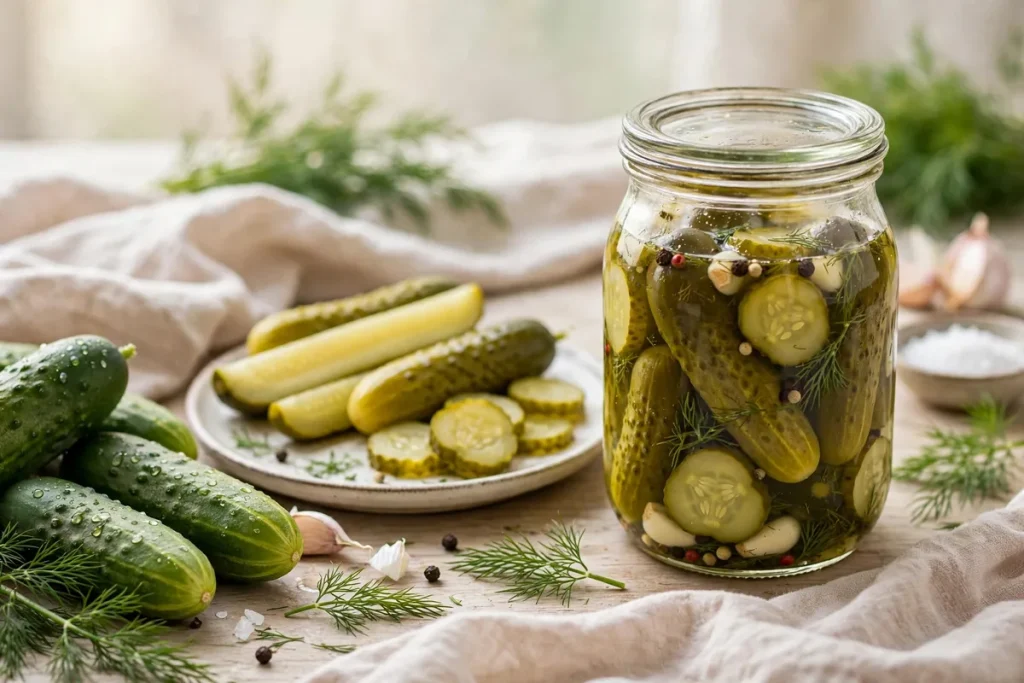

Pickle calories are almost embarrassingly small, at least for dill pickles. A single dill spear is about 5 calories, and a whole medium dill pickle is about 8. That is the quick answer, and it is why pickles show up on so many weight-loss snack lists. But the full answer has a catch, and it lives in the brine: sweet pickles can carry roughly seven times the calories of dill, and every pickle, sweet or dill, carries a serious amount of sodium. A pickle is, after all, a cucumber plus brine, and the brine decides everything.
The values in this article are typical USDA-based values, and they cover the types you will actually find on a supermarket shelf: dill, kosher dill, sour, cornichons, bread-and-butter, and sweet gherkins. We also cover pickle juice and the restaurant favorite, fried pickles, so you can count the whole jar.
Pickle Calories by Type
Start with the headline numbers, all per 100 g, because that is the fair way to compare types. Dill and its close cousins sit at the bottom of the table, while the sweet types sit far above them, and the reason is entirely the sugar in the brine, which we get to below.
| Pickle type | Calories per 100 g |
|---|---|
| Dill | 12 |
| Kosher dill | 12 |
| Sour | About 11 |
| Cornichons | About 18 |
| Bread-and-butter | About 90 |
| Sweet gherkin | About 90 |
For dill pickles specifically, the serving numbers are the ones you will actually use. One spear, about 35 g, is about 5 calories. One whole medium pickle, about 65 g, is about 8 calories. One large whole pickle, about 135 g, is about 16 calories. Even a generous handful of spears straight from the jar barely registers on a calorie budget, which is exactly why dill pickles are such a useful snack: they deliver crunch, salt, and sharp flavor for almost nothing.
Cornichons, the tiny French-style gherkins sold in small jars, sit just above dill at about 18 calories per 100 g. They are worth knowing about because they feel fancy on a cheese board while costing barely more than a dill spear, and their small size makes portion control almost automatic.
Dill vs Sweet Pickles
The gap between dill and sweet pickles comes down to one ingredient: sugar. A dill brine is vinegar, water, salt, dill, and spices. There is essentially no sugar in it, which is why dill pickles land at about 12 calories per 100 g. A sweet brine adds sugar, sometimes a lot of it, and that sugar is what lifts bread-and-butter pickles and sweet gherkins to about 90 calories per 100 g, with about 18 g of sugar per 100 g.
That is roughly seven times the calories of dill, and it changes how you should think about the food. A sweet pickle is not a free vegetable crunch; it is a sweet condiment that happens to be shaped like a cucumber. A 100 g serving of bread-and-butter pickles carries nearly a tablespoon and a half of sugar, which is easy to miss because the vinegar tang hides the sweetness on your tongue.
Sweet pickles are not off-limits, and they are still far lighter than most condiments. Just count them honestly: if you eat sweet pickles, count the sugar, and if you want the near-free crunch, reach for dill. The label tells you which camp a jar falls into, so a quick glance at the sugar line before you buy is the whole trick.
The Sodium Catch
If calories are the good news about pickles, sodium is the catch. Dill pickles are low in calories precisely because they are cucumbers soaked in salty water, and that salt does not disappear when you eat them. These are the numbers to remember:
| Amount of dill pickle | Sodium |
|---|---|
| Per 100 g | About 800 mg |
| Per spear (about 35 g) | About 300 mg |
| Per whole medium pickle (about 65 g) | About 500 mg |
Two whole medium pickles add up to about 1,000 mg of sodium, well over a third of the 2,300 mg daily limit, and that is before the rest of the meal. A whole jar in one sitting, which is easy to do with spears, can quietly carry a full day of sodium on its own. This is the number that matters most for anyone watching their blood pressure, and it is the reason pickles deserve a place in a sodium conversation even though their calories are tiny.
If you watch sodium, check with your doctor about how pickles fit your overall day, and use our guide to low sodium foods to balance the rest of the plate. One practical habit helps: pickles are usually eaten alongside other foods, so pairing a spear or two with fresh vegetables and unsalted protein keeps the meal’s total sodium far lower than a pickle-heavy snack plate.
Pickle Juice and Fried Pickles
Pickle juice, the brine left in the jar, is about 10 calories per 100 ml. It is mostly flavored salt water: vinegar, salt, and spices, with almost no nutrition to speak of. It has a small claim to fame among athletes, though, because small studies suggest it can ease muscle cramps faster than water. The usual explanation is that the sharp vinegar taste triggers a nerve reflex that settles the cramp, rather than the salt replacing anything lost in sweat.
That does not make pickle juice a health drink. It is extremely salty, so a small shot after a hard workout is the context where it makes sense, not a tall glass with lunch. Think of it as a condiment you drink, not a sports drink.
Fried pickles are the opposite end of the spectrum. A restaurant serving of battered, deep-fried pickles runs about 300 to 350 calories, and that figure is an estimate, because batter thickness and frying time vary. The pickle inside is still about 5 calories a spear; the batter and the oil it soaks up do all the damage. Add the ranch dip they are usually served with, and a fried pickle appetizer can cost more than the main course it precedes.
Pickles on a Weight-Loss Budget
For weight loss, dill pickles are one of the best crunch foods available. They are loud, salty, and sharp, which is exactly what a snack needs to be satisfying, and at about 12 calories per 100 g they add volume to a plate without adding weight to your day. They work sliced into sandwiches, chopped into tuna or egg salad, piled next to a burger, or eaten straight from the jar when you want something to chew while dinner cooks.
Two habits keep them working for you. First, stick with dill, kosher dill, or sour, and treat sweet pickles as a sugary condiment rather than a free snack. Second, give your pickles a quick rinse under water before eating them. Rinsing washes off surface brine and cuts some of the sodium, though it cannot remove the salt soaked into the flesh, so a rinsed pickle is still a salty food, just a slightly less salty one.
The jar habit is the one to watch. A whole jar of dill spears is still a small number of calories, but it can carry a day of sodium, and the salt can leave you thirsty and puffy the next morning. Enjoy pickles by the spear or two, not by the jar, and they stay firmly on the helpful side of the ledger.
One more comparison helps put pickles in context. A handful of potato chips at the same crunch level runs several hundred calories, and even a small bowl of salted nuts lands around 160 calories per ounce. A spear or two of dill pickle gives you the same salty crunch for about 5 to 10 calories, which is why pickles are a smarter swap when the craving is really about salt and texture rather than hunger.
Frequently Asked Questions
How many calories are in a pickle?
A whole medium dill pickle (about 65 g) has about 8 calories, and a large whole dill pickle (about 135 g) has about 16. Sweet pickles run much higher, at about 90 calories per 100 g.
How many calories are in a dill pickle spear?
About 5 calories per spear (about 35 g), with about 300 mg of sodium.
Are pickles good for weight loss?
Dill pickles are: about 12 calories per 100 g with real crunch and flavor, so they add volume without adding many calories. Watch the sodium, and skip the sweet and fried kinds if calories are the goal.
How many calories are in pickle juice?
About 10 calories per 100 ml. It is mostly flavored salt water, and small studies suggest it can ease muscle cramps faster than water.
Dill or sweet pickles – which have fewer calories?
Dill, by a wide margin: about 12 calories per 100 g against about 90 for sweet pickles, because the sweet brine adds about 18 g of sugar per 100 g.
The bottom line is simple. If you love pickles, reach for dill: about 5 calories a spear, big flavor, and almost no downside except the salt. Keep sweet pickles in the condiment category, skip the fried ones when calories matter, and enjoy the crunch.