
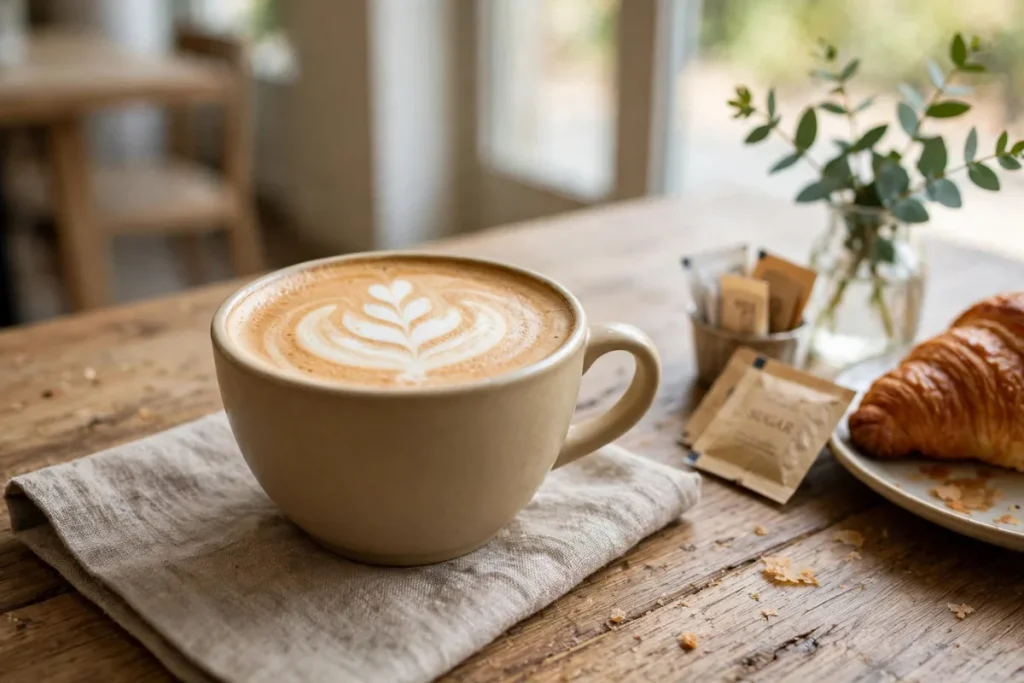

How many calories in a latte? About 150 for a 12 oz whole-milk latte, and about 220 for a 16 oz one. The surprise is how simple that number is: a latte is steamed milk with a nearly free espresso shot, so the milk — not the coffee — decides the total.
That is why two lattes that look identical can land 100 calories apart. Same cup, same espresso, different milk — and a very different drink. Size matters too: every extra few ounces of milk is another chunk of calories, which is why the jump from 12 oz to 16 oz is about 70 calories and the jump to 20 oz is bigger still.
One note before the numbers: latte values vary by cafe, since every shop steams a little differently and plant milks differ by brand. The figures below are typical values for standard cafe sizes and milks — not one chain’s official label — and they are a reliable guide for ordering.

Latte Calories by Size and Milk
Here are the typical values, first by size with whole milk, then by milk at the popular 16 oz size:
| Latte | Calories (typical) | Notes |
|---|---|---|
| 12 oz (Tall), whole milk | About 150 | Usually 1–2 shots of espresso |
| 16 oz (Grande), whole milk | About 220 | Usually 2 shots of espresso |
| 20 oz, whole milk | About 280 | Estimate — bigger cup, more milk |
| 16 oz, 2% milk | About 190 | A modest step down from whole |
| 16 oz, nonfat/skim milk | About 130 | The lightest dairy option here |
| 16 oz, oat milk | About 190 | Similar to 2% milk |
| 16 oz, almond milk | About 100 | The lowest-calorie milk here |
| 16 oz, soy milk | About 170 | Between skim and 2% |
Caffeine rides along with the espresso, not the milk: one shot carries about 75 mg, so a 12 oz latte with 1–2 shots runs roughly 75–150 mg, and a 16 oz latte with its usual 2 shots lands around 150 mg. If you are watching caffeine as well as calories, the shot count — not the milk — is the number to ask about.
The Milk Is the Drink
A latte is mostly milk — roughly three parts steamed milk to one part espresso, topped with a little foam. That ratio is the whole story. Espresso itself runs about 5 calories per shot, which is nearly nothing: even a double shot adds only about 10 calories to the cup. Everything else in the total comes from the milk, so the milk choice moves the number more than anything else you could change.
The table shows how big that swing is. At 16 oz, switching from whole milk (about 220) to almond milk (about 100) saves about 120 calories — more than half the drink — without changing the size or the coffee at all. Switching to nonfat milk (about 130) saves about 90, while oat milk (about 190) lands close to 2% milk (about 190), so it is a flavor choice rather than a calorie saving. Soy (about 170) sits in the middle, lighter than whole but richer than skim.
Two cautions keep the table honest. First, plant milks vary by brand, and sweetened versions run higher than the figures here — if your cafe’s oat or almond milk tastes sweet on its own, it probably is, and the cup will carry a few more calories than the table says. Second, size still matters: a 20 oz almond-milk latte will still outrun a 12 oz whole-milk one, because there is simply more milk in the cup. Milk choice first, size second — that is the order that moves the number.
Flavored Lattes: the Syrup Catch
A plain latte is milk and espresso. A flavored latte is milk, espresso, and syrup — and the syrup is where a light drink quietly becomes a dessert. Each pump of vanilla or caramel syrup adds about 20 calories, and a standard 16 oz flavored latte gets about 4 pumps. That is roughly 80–120 calories of syrup on top of the milk, pushing a 16 oz flavored latte to about 250–300 calories, with sugar around 35–45 grams.
Put it against the plain version and the catch is plain to see: a 16 oz whole-milk latte is about 220, while the same drink flavored runs about 250–300 — a gain of roughly a third, almost all of it sugar. The flavor does not change the caffeine or the milk; it only stacks sweetness on top of a drink that already carries the milk’s calories. Whipped cream, when it is added, pushes the total higher still, though it is not part of the standard flavored-latte figure here.
The fix is easy and does not mean giving up flavor. Ask for half the pumps — 2 pumps instead of 4 cuts the syrup to about 40 calories — or switch to a sugar-free syrup, which keeps the flavor for almost no calories. Either move brings a flavored latte back close to its plain-milk number, and the drink still tastes like the one you ordered.
How to Order a Lighter Latte
Ordering a lighter latte is a three-word habit: smaller, lighter milk, fewer pumps. Start with the size: dropping from 16 oz to 12 oz whole milk saves about 70 calories, and dropping from 20 oz to 12 oz saves about 130. Then pick the milk: almond or nonfat at 16 oz saves about 120 or 90 calories against whole milk, and those savings repeat every single day you order.
Then handle the flavor. If you love vanilla or caramel, ask for half-sweet (2 pumps) or sugar-free syrup, and skip the whipped cream. A 16 oz almond-milk latte, half-sweet, lands well below the 250–300 of a standard flavored whole-milk latte — a drink that still tastes like a treat but no longer eats like one. And if the goal is the lowest-calorie coffee of all, remember that plain black coffee is only about 2–5 calories: the latte’s calories are a choice you make, cup by cup, and every choice here is an easy one.
Frequently Asked Questions
How many calories in a latte?
About 150 for a 12 oz whole-milk latte, and about 220 for a 16 oz whole-milk latte, as typical coffee-shop values.
Which milk makes the lowest-calorie latte?
Almond milk, at about 100 calories for a 16 oz latte. Nonfat dairy milk is next at about 130 for 16 oz.
How much caffeine in a latte?
About 75 mg per shot of espresso. A 12 oz latte usually has 1–2 shots, and a 16 oz latte usually has 2 shots, about 150 mg.
Does a latte have more calories than coffee?
Yes — plain black coffee is about 2–5 calories. The steamed milk in a latte adds the rest, taking a 12 oz whole-milk latte to about 150.
How many calories in a vanilla latte?
About 250–300 for a 16 oz vanilla latte with syrup. Syrup adds about 20 calories per pump, and a standard flavored latte gets about 4 pumps.
The Bottom Line on Lattes
A latte is a milk drink with coffee in it, not the other way around — and once you see it that way, the calories stop being mysterious. Twelve ounces of whole milk runs about 150, sixteen ounces about 220, and every milk swap or syrup pump moves the number in a direction you can now predict. Almond milk takes a 16 oz latte down to about 100; nonfat dairy takes it to about 130; a flavored syrup pushes it up to about 250–300.
None of that makes a latte a bad choice. It is steamed milk and espresso — real food, real protein from the milk, and a genuinely satisfying drink. It just is not a zero-calorie coffee, and treating it like one is how a daily 20 oz flavored latte quietly becomes a second breakfast. Order the size you actually want, pick the milk that fits your day, and ask for half the pumps when you want the flavor without the full sugar load. The latte stays a latte — it just lands where you meant it to.


