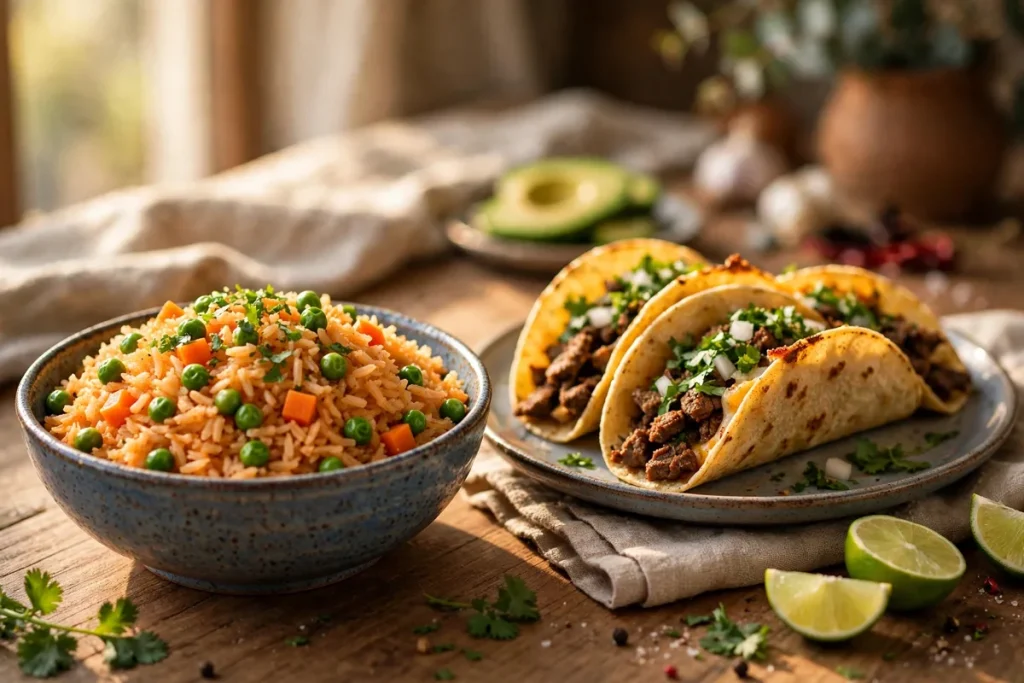

Mexican rice calories come in at about 210 per cup for a typical homemade batch. That is the honest answer, and it is a reassuring one: the fluffy, tomato-tinted rice that shows up beside tacos and enchiladas is not a calorie bomb on its own. The number only climbs when a restaurant kitchen gets generous with the oil used to toast the rice before it simmers.
All the numbers in this guide are typical values, because Mexican rice is a home and restaurant dish, not a single labeled product. Recipes vary — some cooks toast the rice in a tablespoon of oil, others in three — so think of these figures as the usual range, not a laboratory measurement. The pattern, though, is steady: homemade Mexican rice lands around 200 to 220 per cup, and restaurant style lands a little higher, around 240 to 280 per cup.
The good news is that the tomato base — the part that gives Mexican rice its color and its name — adds almost nothing. The rice itself and the oil are the whole story, and both are easy to manage once you know where the calories sit.
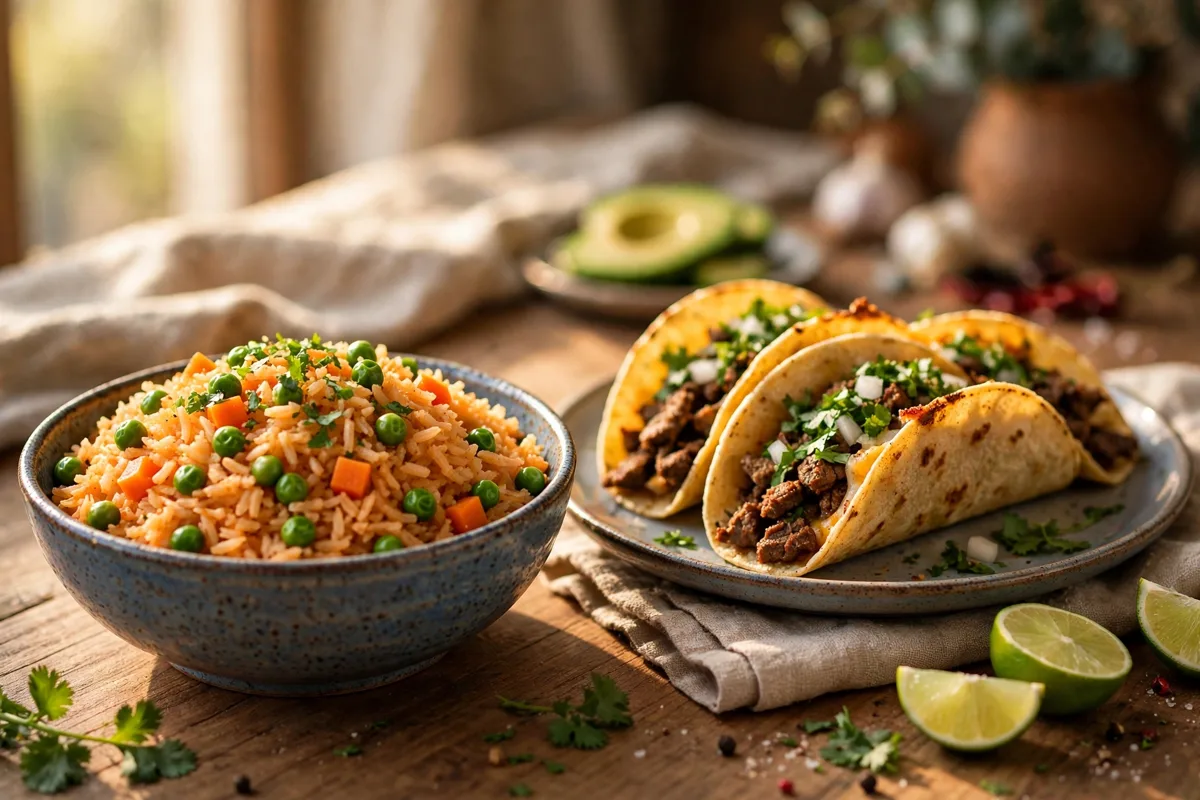
Mexican Rice Calories by Serving
Portion size is the first thing to get right, because Mexican rice is almost never eaten by the cup at a restaurant — it arrives as a side scoop next to the main dish. Here is how the typical numbers stack up:
| Serving | Calories (typical) |
|---|---|
| Half cup, homemade | About 105 |
| 3/4 cup, typical restaurant side | About 185 |
| 1 cup, homemade | About 210 (range 200–220) |
| 1 cup, restaurant style | About 250 (range 240–280) |
| 1 cup, plain steamed white rice (for comparison) | About 205 |
That restaurant side figure is worth pausing on. A typical side scoop is about three-quarters of a cup, not a full cup, so it lands around 185 calories — less than the headline cup number, but still more than a homemade scoop of the same size, because restaurant rice is toasted in more oil.
Where the Calories Come From
Mexican rice has only three real calorie sources, and one of them does almost all the work. Understanding the split makes the whole dish easy to control.
First, the rice itself. Cooked white rice runs about 205 calories per cup on its own, so it is the foundation of the dish — roughly nine-tenths of a homemade cup’s calories before anything else is added. There is no way around that, and no need to be: rice is a normal, filling staple, and a cup of it is a reasonable portion.
Second, the toasting oil, which is where the extra calories live. A tablespoon of oil holds about 120 calories, and it spreads across the whole pot. So one tablespoon in a batch that makes four cups adds about 30 calories to each cup, while three tablespoons add about 90 calories to each cup. That single choice — how much oil goes into the pan before the rice toasts — is the whole difference between a homemade cup at about 210 and a restaurant cup at about 250. Restaurant kitchens toast in more oil because it gives a richer flavor and a glossier finish, and the calories follow.
Third, the tomato base, which is nearly free. Tomatoes, onion, garlic, broth and spices together add only a small handful of calories per cup, mostly from the onion and the broth. The peas and carrots that many recipes stir in add color, fiber and bulk for very few calories of their own. So when someone asks why Mexican rice is not much higher than plain rice, the answer is simple: the tomato part is flavor, not fuel.
Mexican Rice vs Plain Rice
Put side by side, the comparison is almost a tie — and that is the point. A cup of plain steamed white rice runs about 205 calories, and a cup of homemade Mexican rice runs about 210. For roughly five extra calories, you get tomato flavor, vegetables, garlic and spice. That is a very good trade.
Restaurant Mexican rice is the one that pulls away: about 250 per cup against about 205 for plain rice, a gap of roughly 45 calories that comes entirely from the extra toasting oil. It is not a huge gap, and it does not make restaurant rice a bad choice — but it is the reason a restaurant plate, where the rice sits next to beans, cheese and tortillas, can add up faster than people expect. The rice is rarely the problem on that plate; it is just one more scoop in a generous meal.
The honest summary, then, is that Mexican rice is basically plain rice with flavor added. It is not a low-calorie food and not a high-calorie one — it sits right in the middle, at about 210 a cup at home, and the oil is the only lever that moves it much.
Lighter Mexican Rice That Still Tastes Right
The best thing about Mexican rice is that the lighter version tastes almost exactly like the original, because the flavor comes from the tomato, garlic and spices — not from the oil. Here are the swaps that actually move the number.
Use less oil to toast the rice. Toasting in a measured teaspoon of oil, or a light spray of cooking spray, instead of a free pour can save roughly 30 to 90 calories per cup, depending on how generous the original pour was. The rice still toasts and turns golden; it just does not soak up a puddle of fat first. Keep the heat medium and stir often, and you will barely notice the difference.
Mix in cauliflower rice. A cup of cauliflower rice on its own runs only about 25 to 50 calories, so a 50/50 mix of Mexican rice and cauliflower rice lands around 120 calories per cup — nearly half the standard homemade cup — while keeping the tomato flavor and the familiar texture. Season the cauliflower rice the same way, with the same tomato base and spices, so it blends in rather than tasting like a compromise.
Add more vegetables for bulk. Extra peas, carrots, corn, diced bell pepper and onion stretch the pot, so a cup of the finished dish holds a little less rice and a little more vegetable. The calories per cup edge down, the serving looks bigger, and the fiber goes up. It is the same trick restaurants use in reverse: they fill the scoop with rice, you fill it with vegetables.
Watch the scoop, not just the recipe. At a restaurant, a standard side is about three-quarters of a cup at about 185 calories — but second helpings and heaped scoops quietly turn it into a full cup or more. Asking for a smaller scoop, or simply leaving the last few spoonfuls, saves more than most recipe tweaks ever will.
None of this means giving up the dish. A lighter Mexican rice — less oil, a cauliflower-rice mix, plenty of vegetables — still tastes like the rice you wanted in the first place, just at about 120 calories a cup instead of about 210.
How many calories in a cup of Mexican rice?
About 210 calories per cup for a typical homemade batch (range 200–220). Restaurant style runs higher, about 250 per cup (range 240–280).
Why is restaurant Mexican rice higher?
More oil. Restaurants toast the rice in more oil for a richer flavor and glossier finish, and a tablespoon of oil holds about 120 calories spread across the batch.
How many calories in a restaurant side of Mexican rice?
About 185 calories for a typical side scoop of about three-quarters of a cup.
Is Mexican rice healthier than plain rice?
The calories are similar — about 210 per cup homemade versus about 205 for plain steamed white rice. Mexican rice adds vegetables and flavor for roughly the same calories; the oil is the difference.
How can I make Mexican rice lighter?
Toast the rice in less oil or a cooking spray, mix in cauliflower rice (a 50/50 mix lands around 120 calories per cup), and add extra vegetables for bulk.
The Bottom Line on Mexican Rice
Mexican rice calories sit at about 210 per cup at home and about 250 per cup at a restaurant, with a typical side scoop at about 185. The rice itself is the base, the tomato and vegetables are nearly free flavor, and the toasting oil is the one lever that moves the number. Keep the oil measured, mix in some cauliflower rice if you want a lighter cup, and this familiar side stays exactly what it should be: a tasty, reasonable part of the plate.