
Aim for roughly 30-50 g of protein at dinner. That covers a big share of most people’s daily target in one plate — delivered in the meal they are most likely to cook properly and eat socially, rather than grab on the run.
Here are 15 high protein dinners, each with the protein and calories for a generous home serving. The figures are typical estimates — treat them as “about,” because your portion, your recipe and your exact ingredients all move the numbers a little. The list runs from a chicken burrito bowl at about 48 g down to a lentil curry at about 27 g, with meat, fish and plant-based options in between — every one of them clears 27 g.
One honest note before the list: dinner does not have to carry the whole day alone. Spreading protein across breakfast and lunch helps too — but if only one meal gets planned, dinner is the highest-leverage place to start, because it is the meal with the time, the appetite and usually the company to make it satisfying.
Why Dinner Protein Matters
Most people under-eat protein earlier in the day. Breakfast is often mostly carbs, lunch is whatever was quick, and by evening the day’s protein total can be sitting at half of where it should be — which leaves dinner to do the heavy lifting.
A protein-rich dinner earns its place three ways. It supports muscle repair overnight, since the hours after dinner are the longest stretch your body spends rebuilding. It keeps evening snacking down — protein is the most filling of the macros, and a satisfying dinner is the cheapest defense against the 9 p.m. kitchen raid. And if you are eating in a calorie deficit, it helps protect the muscle you want to keep while the fat comes off.
There is also a simple satiety timeline at work. People do most of their unplanned snacking in the three hours after dinner, not before it — and the protein-heavy plate is what stands between you and the pantry for the rest of the evening. A 40 g dinner that genuinely fills you almost always beats a 15 g dinner followed by three “small” snacks that quietly add up to more.
It also fixes a quieter problem: distribution. Evidence on muscle building suggests protein spread across the day works at least as well as one huge serving — but for most people, dinner is the only meal big enough to matter. Getting this one right rescues an otherwise lopsided day.
How much do you need across the whole day? That depends on your weight and your goal — find your personal number with the site’s protein calculator, then use dinners like these to make sure the biggest meal of the day pulls its weight.
The 15 Dinners
Every row is a complete dinner plate, not just a protein source — roughly what lands in front of you at home. Protein and calories are typical estimates for a generous serving and will vary a bit by portion and recipe:
| Dinner | Protein (about) | Calories (about) | Why it works |
|---|---|---|---|
| Chicken burrito bowl (chicken, rice, beans, corn, salsa) | 48 g | 620 kcal | Two protein sources — chicken plus beans — with fiber to match |
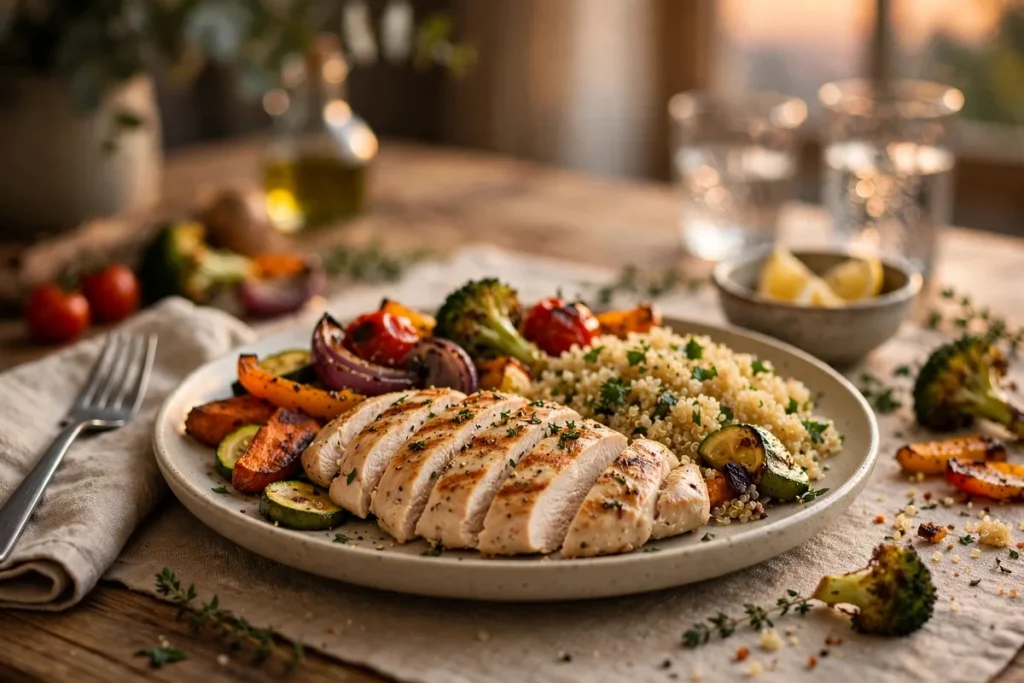
| Grilled chicken breast with sweet potato and broccoli | 46 g | 540 kcal | The lean classic: maximum protein per calorie |
| Steak with green beans | 44 g | 600 kcal | Iron-rich and very filling |
| Greek chicken souvlaki with tzatziki | 43 g | 530 kcal | The yogurt sauce adds protein, not just fat |
| Lean beef and vegetable stir-fry | 42 g | 550 kcal | Fast, veg-heavy and endlessly variable |
| Turkey bolognese with protein pasta | 41 g | 590 kcal | Family-friendly and freezer-friendly |
| Salmon with quinoa and greens | 40 g | 580 kcal | Omega-3s as a bonus |
| Turkey chili with beans | 38 g | 520 kcal | The batch-cooking hero |
| Tuna and white-bean salad | 36 g | 480 kcal | No cooking needed at all |
| Chicken and lentil soup | 35 g | 460 kcal | Protein plus fiber on a budget |
| Garlic shrimp with cauliflower rice | 34 g | 420 kcal | The lowest-calorie dinner on the list |
| Tofu and edamame stir-fry | 31 g | 490 kcal | Plant-based, with two soy proteins |
| Egg frittata with cottage cheese and vegetables | 30 g | 450 kcal | Breakfast-for-dinner, and cheap |
| Cottage-cheese crustless quiche | 29 g | 430 kcal | Meal-prep slices for the week |
| Lentil curry with Greek yogurt | 27 g | 510 kcal | Plant-based with fiber — the yogurt swirl does real work |
Two patterns are worth noticing. The top of the list pairs a lean meat with a protein-carrying side — beans, lentils, quinoa or a yogurt sauce — instead of relying on the meat alone. And the friendliest prices cluster at the filling end: soups, chili, eggs and lentils deliver 27-38 g without a steakhouse budget.
Read the calories column alongside the protein. The most protein-efficient dinners — the shrimp, the chicken-breast classic, the tuna and white-bean salad — deliver 34-46 g for 420-540 kcal, which is why they are staples on weight-loss plans. The richer plates, the burrito bowl and the steak, spend more calories because rice, beans and beef bring energy along with the protein; on a maintenance or muscle-gain day, that trade is the point, not a problem.
A note on servings: these are one-plate dinners as written — the burrito bowl’s rice and beans are already counted, and the steak’s green beans are on the plate. Add a second helping of the vegetable side freely. Double the protein portion and you have blown past 60 g, which is a strategy, not a mistake, on heavy training days.
How to Build Your Own in 30 Seconds
Every dinner above follows the same formula: a palm-and-a-half of a protein source, plus a protein side, plus vegetables. The palm-and-a-half is roughly 5-6 oz cooked — enough chicken, fish, tofu, eggs or lean meat to anchor the plate at around 30 g before the side even joins in.
The protein side is the step most home dinners miss. Rice, potatoes and plain pasta fill the plate without moving the protein total much; beans, lentils, quinoa, edamame or a Greek-yogurt sauce quietly add 6-12 g — which is exactly how the burrito bowl reaches 48 g. Vegetables then take as much of the plate as you want: they are the volume that makes a high-protein dinner feel like a feast rather than a supplement.
Sauces decide whether the formula survives. Yogurt-based sauces — tzatziki, raita, a garlic-yogurt drizzle — add protein as they go. Cheese sauces and creamy dressings mostly add calories: fine when you count them, but a “high-protein dinner” wearing 300 kcal of ranch is really just a normal dinner in costume. Tomato sauces, salsa, mustard and hot sauce sit in the happy middle — near-zero cost, real flavor.
Vegetarian plates follow the same formula with different anchors: tofu, tempeh, eggs, Greek yogurt and cottage cheese all carry the palm-and-a-half role, and the protein side matters even more — edamame, lentils and beans are what pull a meatless plate from 18 g up past 30 g. The plant-based and egg-and-dairy dinners on the list were built exactly that way.
A few small swaps upgrade an ordinary dinner without rebuilding it: trade rice for quinoa (a couple more grams, plus fiber), trade sour cream for Greek yogurt (similar tang, real protein), trade half the pasta for protein pasta or lentils, and trade a cream sauce for a yogurt or tomato one. Each swap is worth a few grams; stacked together, they add up to a whole extra egg’s worth of protein at dinner.
Meal-Prep and Budget Tips
Batch-cook two proteins on Sunday and the week builds itself. A tray of chicken thighs and a pot of turkey chili, for example, cover four dinners between them — reheated as-is, turned into bowls, or sliced over salads — and the soups and chilis on the list genuinely taste better on day two.
Keep the cheap reserves stocked. Frozen shrimp cooks from frozen in minutes and anchors the lowest-calorie dinner on the list; canned tuna and canned beans need no cooking at all; and a rotisserie chicken is the legitimate shortcut — tonight’s dinner and tomorrow’s soup, at a cost per gram of protein that rivals cooking from scratch.
Ranked informally by cost, the list’s budget end is soups, chili, eggs and lentils — the chicken and lentil soup, the turkey chili, the frittata, the quiche and the lentil curry all come in under most takeout prices per serving. The steak and salmon nights are the splurges; planning them once a week keeps the average where you want it. One more budget lever: buy the protein when it is cheap, not when it is dinnertime — chicken, turkey and shrimp all freeze well for months, so a sale-week stock-up quietly lowers the cost of every dinner until the next sale.
Portion for the freezer, not just the fridge. Chili, bolognese sauce, soups and curries all freeze in single portions and reheat into a 30-plus-gram dinner in about ten minutes — the closest thing home cooking has to a ready meal. Label each tub with its protein grams as you pack it, and future-you can plan the whole day at a glance.
And do not overlook breakfast-for-dinner as a budget strategy: the frittata and the quiche on this list cost a fraction of a meat-centered plate per serving, use up the vegetables that are about to turn, and reheat well — which is why they survive in real weekly rotations long after fancier meal-prep plans get quietly abandoned.
What About Protein Timing?
A question follows naturally from a list like this: does dinner specifically need to be the big-protein meal? For muscle and recovery, what matters most is the day’s total, plus getting one solid serving — like the 30-50 g dinners above — somewhere in your evening. Your body draws on the whole day’s supply overnight rather than only on the last thing you ate.
The practical version: eat the dinner that fills you, at the time your life allows, and do not engineer your evening around protein timing. If you train late, dinner naturally lands after the session, which suits recovery fine. Consistency across weeks beats any clever schedule.
One more timing myth deserves retiring: the idea that protein eaten at dinner is handled worse because you sleep afterward. Sleep is when repair happens, and the amino acids from a normal evening meal are drawn on across the night for exactly that. There is no bedtime penalty for protein — if anything, the overnight hours are when a good dinner does its quietest work.
Frequently Asked Questions
How much protein should a dinner have?
About 30-50 g for most adults, which covers a big share of the day in one meal. The daily total matters more than any single meal, though — our guide to how to calculate macros shows how to set yours.
What dinner has the most protein?
From this list, the chicken burrito bowl at about 48 g — chicken plus beans plus rice adds up fast. A double chicken portion in almost any of these dinners passes 60 g.
What are high-protein vegetarian dinners?
The tofu and edamame stir-fry (about 31 g), the lentil curry with Greek yogurt (about 27 g), and the two egg-and-dairy options — the cottage-cheese frittata (about 30 g) and the crustless quiche (about 29 g).
Is 50 g of protein at one meal too much?
No. Your body digests and uses protein across the whole day rather than in single-meal quotas, and larger protein meals are fine for most healthy people — they are exactly what a busy day ending in one real meal calls for.
Are these dinners good for weight loss?
Yes, as long as the total day stays in a deficit — the high protein helps by controlling hunger between meals. The lightest options on the list are the garlic shrimp with cauliflower rice (about 420 kcal) and the chicken and lentil soup (about 460 kcal).