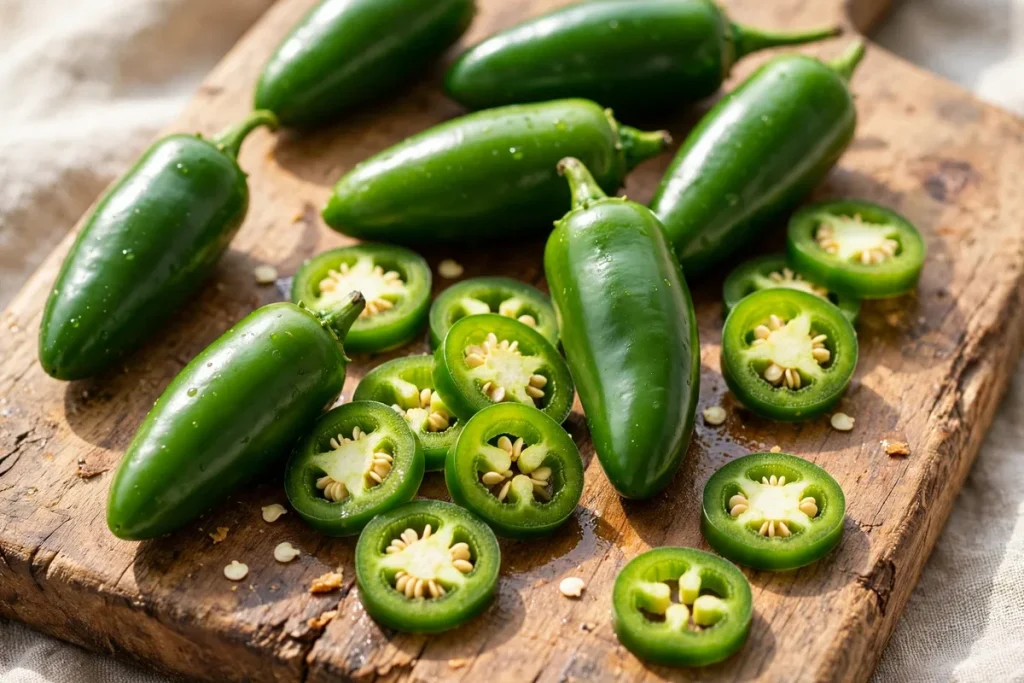

Quick answer: are jalapenos fattening? No — a jalapeño itself is almost nothing: about 4 calories per pepper, about 29 per 100 g, with almost no fat. What makes jalapeños fattening is never the pepper — it is what the pepper gets stuffed with, breaded in, or drowned in.
If you have ever eaten three jalapeño poppers at a party, felt the calorie guilt afterward, and sworn off the pepper itself, this article is for you. The pepper is getting the blame for a crime it did not commit. This is a pattern worth naming: a low-calorie ingredient gets bundled with heavy ones, and the innocent ingredient takes the blame. It happens with jalapeños, with salads, with sushi — anywhere a light food shows up wearing a heavy costume. The fix is always the same: count the components, not the garnish. Below is the honest math — from the raw pepper to the deep-fried popper — plus a clear-eyed look at what capsaicin, the compound behind the heat, can and cannot do for your waistline.
Jalapeño Nutrition Table
A fresh jalapeño is essentially crunchy, spicy water with a vitamin C bonus. Here is the full picture for 100 g of fresh jalapeños — roughly seven medium peppers:
| Nutrient | Per 100 g fresh jalapeño |
|---|---|
| Calories | 29 |
| Fat | 0.4 g |
| Carbohydrates | 6.5 g |
| Fiber | 2.8 g |
| Protein | 0.9 g |
| Sodium | 3 mg |
| Vitamin C | About 119 mg |
The 100 g column is a lot of peppers, so here is the per-pepper line: one medium jalapeño weighs about 14 g and carries about 4 calories. Do the division — you would need to eat roughly 25 jalapeños to reach 100 calories. Nobody eats jalapeños for energy, which is exactly the point.
What the table tells you in plain language: almost no fat (0.4 g), a little fiber (2.8 g), and modest carbs (6.5 g). The standout is vitamin C — about 119 mg per 100 g, well over a day’s worth from a handful of peppers. Vitamin C is water-soluble and fades with long cooking, which is one more reason fresh peppers edge out cooked ones — more on that in the fresh vs pickled question below.
There is a useful way to read this table if you are watching your weight: with 2.8 g of fiber per 100 g and almost no calories, jalapeños are the kind of food you can add generously to a plate without moving the calorie needle. That is the classic volume-eating move — more food, more flavor, barely more energy. The pepper is one of the cheapest flavor upgrades in the entire produce aisle, calorie-wise.
The Popper Trap
If the pepper is so innocent, why does it have a fattening reputation? Because almost nobody eats plain jalapeños. The pepper almost always arrives as a vehicle for something else. Here is the honest per-item math:
| Item | Calories each |
|---|---|
| Raw jalapeño | About 4 |
| Pickled jalapeño slices (1 tbsp) | About 3 |
| Baked cream-cheese popper | About 130 |
| Breaded, deep-fried popper | About 200 |
| Nacho cheese sauce (2 tbsp) | About 90 |
Read that table again: the popper is 30 to 50 times the pepper. A baked cream-cheese popper (about 130) is roughly 32 peppers’ worth of calories; a breaded, deep-fried one (about 200) is 50. The pepper inside is innocent — the calories come from the cheese it is stuffed with, the breading it is coated in, and the frying oil it is cooked in.
Here is the restaurant reality check. Appetizer menus list jalapeño poppers by the half-dozen — six breaded, fried poppers is about 1,200 calories, more than many entire dinners. The pepper contributed about 24 of those calories. Everything else is cheese, breading, and oil. Nobody orders that basket because of the peppers; they order it despite them, and the peppers end up taking the blame.
Baked poppers are the middle path: about 130 each, so two of them (260) is a reasonable snack, while two fried ones (400) is a small meal. And nacho cheese sauce is the other quiet culprit — about 90 calories per 2 tablespoons, and most people pour well beyond that. A basket of fried poppers with cheese sauce for dipping can run several hundred calories deep before the main course even shows up.
This is the article’s angle in one sentence: jalapeños do not make food fattening; fattening food gets decorated with jalapeños. Eat the pepper, skip the deep fryer, and the calorie story stays boring.
Do Jalapeños Burn Fat?
Now the tempting claim: does the heat itself burn fat? Capsaicin, the compound that makes jalapeños hot, has genuinely been studied for this. Here is the honest version.
Capsaicin slightly raises heat production in the body (thermogenesis) and may nudge appetite down a little. In studies, the effect is real but small — a few dozen extra calories a day at most. That is a rounding error in a diet, not a weight-loss method. No pepper, sauce, or supplement changes the fundamental math: calories in versus calories out.
What does the research actually show? Small, short-term bumps in energy expenditure and some evidence of reduced appetite — the headline numbers sit in the tens of calories per day. Meaningful to a scientist measuring precisely; meaningless to a person choosing lunch. Concentrated capsaicin pills have not shown convincing weight-loss effects either, and they can upset the stomach. The pepper on your plate is the pleasant version, and even it is not doing the heavy lifting.
And no — jalapeños do not burn belly fat, or any specific fat. No food does. Fat loss comes from a sustained calorie deficit, and where your body takes the fat from is up to genetics, not peppers. Anyone selling a pepper as a spot-reduction tool is selling you something else entirely.
The real win is subtler and better: heat makes plain food satisfying. A bowl of rice and beans with fresh jalapeño rings tastes like a meal; without them, you might reach for the cheese-laden version instead. Capsaicin’s weight-loss superpower is not thermogenesis — it is flavor per calorie. The pepper helps you enjoy lighter food, which is worth far more than a few dozen extra burned calories.
The Smart Way to Eat Jalapeños
You do not need poppers to enjoy jalapeños. A few low-calorie moves get you all the flavor:
- Fresh rings on eggs, tacos, salads, soups, and grain bowls — about 4 calories a pepper, all flavor.
- Pickled slices on sandwiches and burgers — about 3 calories a tablespoon, but check the brine: pickled peppers carry meaningful sodium.
- Homemade baked poppers: halve the pepper, fill with a modest spoon of light cream cheese, skip the breading, and bake. You keep the spirit of the popper at a fraction of the fried version.
- Watch the dips. Salsa and most hot sauces are light; nacho cheese sauce and ranch dressing are not. The dip is often the whole calorie story.
One caution: heat tolerance varies, and very hot peppers can irritate sensitive stomachs. There is no prize for the hottest pepper — the mild, flavorful jalapeño is already doing the job.
Frequently Asked Questions
Are jalapeños fattening?
No. One raw jalapeño is about 4 calories with almost no fat, and 100 g is only about 29 calories. The pepper itself cannot make you fat — only the cheese, breading, and frying oil it is served with can do that. Judge the preparation, not the pepper.
How many calories in one jalapeño?
About 4 calories for a medium raw pepper weighing around 14 g. You would need to eat roughly 25 of them to reach 100 calories, which is why jalapeños are one of the lowest-calorie flavor boosters in the kitchen — all heat, crunch, and vitamin C for almost no energy.
Are jalapeño poppers fattening?
Yes — about 130 calories each baked and about 200 each breaded and deep-fried. Two fried poppers (400) is a small meal in itself, and you barely tasted the pepper. But notice what changed: it is the cream cheese, breading, and frying oil, not the pepper. The popper carries 30 to 50 times the calories of the raw jalapeño inside it, so count the preparation, not the garnish.
Do jalapeños burn belly fat?
No food burns belly fat directly, jalapeños included. Capsaicin has a small, real thermogenic effect — a few dozen extra calories a day at most in studies — but it is not a weight-loss method on its own. The honest benefit is that heat makes lighter food satisfying, which helps you eat less overall.
Fresh vs pickled jalapeños — which is better?
For nutrition, fresh wins: it keeps the full vitamin C content, about 119 mg per 100 g, since vitamin C fades with heat and long storage. Pickled jalapeños are nearly as low in calories at about 3 per tablespoon of slices, but they lose some vitamin C and pick up sodium from the brine. Both are fine — just read the label if you are watching salt.
The bottom line: are jalapenos fattening? No. The pepper is about 4 calories of heat, crunch, and vitamin C. Respect the pepper, fear the fryer, and enjoy the burn. If heat is your thing, there are few foods on earth that deliver this much flavor for this few calories — which is exactly why the jalapeño earns its place on any plate, diet or not.