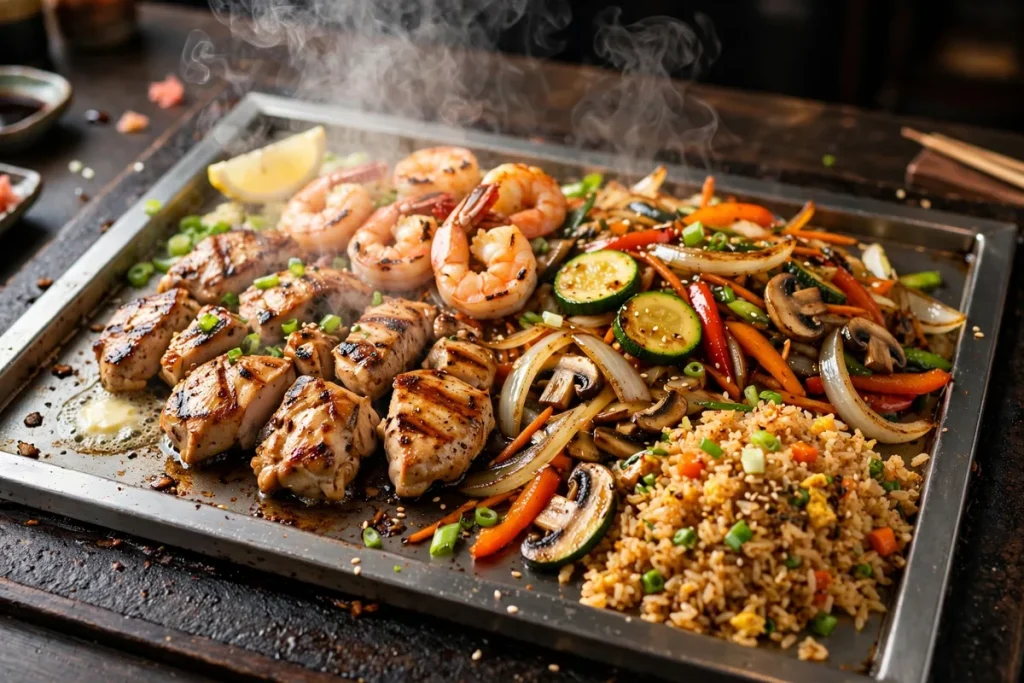

Short answer: yes, hibachi can be a reasonably healthy choice — but it is not automatically one. The grill itself is on your side: lean protein cooked fast over high heat, plus a pile of vegetables. What decides the total is everything around that protein: the butter and oil on the flat-top, the fried rice, and the sauces. A typical hibachi chicken dinner at Benihana adds up to about 1,050 calories, while a lighter order built from the same menu comes to about 630 calories. Same restaurant, same grill — very different dinner.
Hibachi is a cooking style, not a single brand, so there is no one official hibachi label. For this guide we use Benihana’s official U.S. nutrition guide (January 2025) as the chain reference, because Benihana publishes a full dish-by-dish table. Every figure in the table below comes from that guide, for the serving size Benihana prints. Other hibachi restaurants cook the same way, but portions and butter vary, so treat these as a solid reference, not a promise for every grill in town.
Hibachi calories: the Benihana component table
| Component | Benihana serving | Calories | Protein | Source |
| Hibachi chicken | 7 oz | 280 | 44 g | Benihana official |
| Hibachi steak | 7 oz | 230 | 32 g | Benihana official |
| Hibachi shrimp | 14 pieces | 200 | 38 g | Benihana official |
| Hibachi scallops | 7 oz | 140 | 23 g | Benihana official |
| Salmon with avocado | 6 oz | 670 | 46 g | Benihana official |
| Hibachi chicken rice (fried rice) | 9.03 oz | 560 | 15 g | Benihana official |
| Hibachi vegetable rice | 6.9 oz | 410 | 9 g | Benihana official |
| Steamed rice | 6 oz | 300 | 6 g | Benihana official |
| Hibachi vegetables | 4 oz | 40 | 1 g | Benihana official |
| Yum yum sauce (Benihana’s Original) | 1 oz | 170 | 0 g | Benihana official |
| Ginger sauce | 1 oz | 10 | 2 g | Benihana official |
| Benihana onion soup | 6.7 oz | 30 | 1 g | Benihana official |
| Benihana salad | 3.8 oz | 90 | 2 g | Benihana official |
Two hibachi dinners, added up from the table
Typical hibachi chicken dinner: 280 + 560 + 40 + 170 = 1,050 calories. That is hibachi chicken (280) plus a serving of hibachi chicken rice (560), hibachi vegetables (40) and a 1 oz pour of yum yum sauce (170). Add the onion soup (30) and the house salad (90) that usually open the meal and you are at 1,170 calories before dessert. Protein for the main plate is strong: 44 g from the chicken plus 15 g from the fried rice and 1 g from the vegetables, about 60 g in total.
Lighter order: 280 + 300 + 40 + 10 = 630 calories. Same hibachi chicken (280), but steamed rice (300) instead of fried rice, the same vegetables (40), and ginger sauce (10) instead of yum yum. That is 420 calories less than the typical dinner (1,050 − 630 = 420), and you still get about 51 g of protein. Swap the chicken for hibachi shrimp and the lighter plate drops further: 200 + 300 + 40 + 10 = 550 calories.
For the healthiest order of all, take the shrimp version and double the vegetables: 200 + 300 + 80 + 10 = 590 calories, with roughly 46 g of protein. It is a genuinely filling plate for under 600 calories — the trick is simply that the rice and the sauce, not the protein, were doing most of the damage.
What is genuinely good about hibachi
First, the cooking method. Grilling on a flat-top adds flavour without breading or deep-frying, and the proteins themselves are lean: hibachi shrimp at 200 calories for 14 pieces and hibachi scallops at 140 calories for 7 oz are among the lightest restaurant proteins you will find. Second, the vegetables. Onions, zucchini and mushrooms are cooked on the same grill, and a 4 oz portion is just 40 calories — they bulk out the plate for almost nothing. Third, portion honesty: Benihana prints the serving sizes, so you can see exactly what you are getting, which is more than most hibachi counters offer.
What adds up: butter, fried rice, sauce and sodium
Fried rice is the biggest single swing. Benihana’s hibachi chicken rice is 560 calories for 9.03 oz, against 300 calories for a 6 oz portion of steamed rice — a difference of 260 calories before you even touch the sauce. Our own chicken fried rice guide breaks down why: oil, egg and soy sauce turn plain rice into a much denser side.
Then the sauces. Yum yum sauce is the famous one, and at 170 calories per ounce it is almost pure fat — a generous two-ounce pour adds 340 calories, more than the chicken itself in some orders. Ginger sauce, by contrast, is just 10 calories per ounce, so swapping sauces saves 160 calories per ounce. Sodium deserves a line too: the typical dinner above carries about 905 mg of sodium (chicken 120 mg + fried rice 570 mg + vegetables 65 mg + yum yum 150 mg), which is manageable, but spicy versions and extra soy sauce push it well past 1,500 mg. Teriyaki versions are sweeter as well as saltier — Benihana’s teriyaki chicken is 370 calories against 280 for plain hibachi chicken, and our teriyaki chicken guide explains the sugar in the glaze.
How to order a lighter hibachi dinner
- Sauce on the side, and pick ginger over yum yum. One ounce of yum yum is 170 calories; ginger sauce is 10. Dipping instead of pouring easily halves what you actually eat.
- Swap fried rice for steamed rice. That one change saves about 260 calories at Benihana’s serving sizes, and you still get a proper rice portion.
- Double the vegetables. An extra 4 oz of hibachi vegetables is only 40 calories and makes the lighter plate feel like a full dinner.
- Pick shrimp or scallops for the lightest protein. At 200 and 140 calories, they beat chicken (280) and steak (230) per Benihana serving — and note that Benihana’s lean steak portion is actually lighter than its chicken, so do not assume chicken is always the low-calorie pick.
- Watch the soup and salad course. The onion soup (30 calories) is a free win, but the house salad’s dressing is where calories hide — ask for it on the side if you can.
The bottom line
Hibachi earns its healthy reputation honestly — grilled lean protein and vegetables are a great foundation. It only stops being healthy when the extras take over: fried rice instead of steamed, a free pour of yum yum sauce, and a sweet teriyaki glaze. Order the protein grilled plain, keep the sauce on the side, and you get a restaurant dinner that is high in protein, full of vegetables and around 550–630 calories. That is a genuinely good deal.
Sources
All dish-level figures in this post come from Benihana’s official “Nutritional Information — U.S.” guide (January 2025), published at benihana.com. Serving sizes are Benihana’s own; other hibachi restaurants will differ in portion size and in how much butter and oil goes on the grill, so use these numbers as a reference for a typical hibachi dinner, not as a label for every restaurant.
Is hibachi healthy?
Yes, it can be. Hibachi is grilled lean protein plus vegetables, which is a healthy foundation. Whether the meal stays healthy depends on the extras: fried rice, butter and oil on the grill, and sauces like yum yum sauce (170 calories per ounce) are what push a hibachi dinner from around 630 calories to over 1,000.
How many calories are in a hibachi dinner?
A typical hibachi chicken dinner at Benihana is about 1,050 calories: hibachi chicken (280) + hibachi chicken rice (560) + hibachi vegetables (40) + yum yum sauce (170). A lighter order with steamed rice and ginger sauce is about 630 calories.
Is hibachi good for weight loss?
It can be, if you order it light. A lighter hibachi chicken order is about 630 calories with around 51 g of protein, which is filling for the calories. The typical fried-rice-and-yum-yum dinner at about 1,050 calories can still fit a weight-loss day, but it leaves much less room for everything else.
What is the healthiest hibachi order?
Hibachi shrimp or scallops with steamed rice, double vegetables and ginger sauce on the side. At Benihana’s serving sizes that is about 590 calories for the shrimp version (200 + 300 + 80 + 10), with roughly 46 g of protein.
Is hibachi fried rice healthy?
Not especially. Benihana’s hibachi chicken rice is 560 calories per 9.03 oz serving, against 300 calories for steamed rice, because of the oil it is fried in. It is fine occasionally, but swapping it for steamed rice saves about 260 calories.